
















Our Top Choice
Why These Features Matter:
Pathway solar lights are one of those “small” upgrades that quietly change how a house feels. The front walk stops being a black tunnel. The backyard stops eating flip-flops. Guests stop doing that polite little shuffle where they pretend they can see the step.
But solar lighting is also where optimism goes to die if the details are wrong. A light that looks great at 4 p.m. can turn into a sad, blue-tinged glow stick by 9. Stakes can snap in hard soil. “Warm white” can read like a hospital hallway. And anything marketed as weatherproof will still find a way to trap water like it’s their job.
This guide is about the features that actually make pathway solar lights feel reliable in daily life — not impressive on a product page.
Brightness That’s Useful (Not Blinding, Not Decorative)
The sweet spot for pathway lighting isn’t “runway landing.” It’s just enough to outline edges and changes in elevation: the lip of a stair, the corner of a planter, the place the dog inevitably stops to inspect. Too dim and the lights become lawn jewelry. Too bright and suddenly the front walk feels like a convenience store parking lot.
- Look for a defined pool of light on the ground, not just a glowing cap. The former helps with footing; the latter is mostly vibes.
- Diffused lens beats harsh pinpoint LEDs if the lights are near eye level on steps or lining a narrow path. Pinpoint beams can feel oddly interrogative.
- Consistent brightness matters more than peak brightness. The “wow” moment at dusk is meaningless if it fades into a murmur by the time dinner ends.
Warmth of Light: The Difference Between “Garden Party” and “Security Perimeter”
Light temperature is where otherwise-solid solar sets can go off the rails. Many pathway lights skew cool because cool LEDs read “bright” even when they aren’t actually illuminating much. Warm light reads calmer, more expensive, and more like a home.
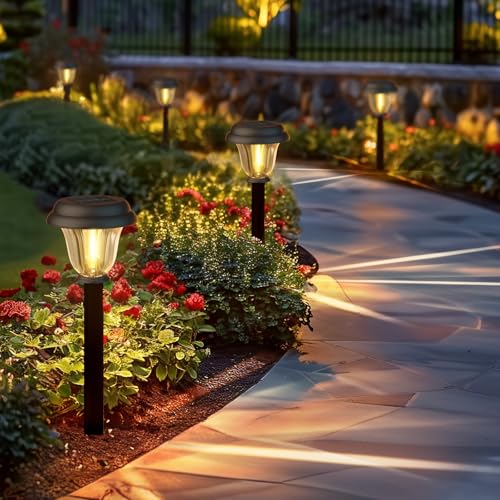
- Warm white tends to flatter plants, brick, and stone. Cool white can make greenery look gray and hardscape look a little… municipal.
- Avoid anything that leans blue. Blue light makes walkways look icy and faces look tired, which is not the vibe for “welcome.”
- Amber can be gorgeous if the goal is cozy and discreet — but it won’t “light the way” as strongly. It’s mood lighting with a side of navigation.
Small truth: product photos lie here more than anywhere. Real-world review photos at night are worth their weight in gold.
Battery + Runtime: The Part No One Wants to Think About (Until It’s 8:30 p.m.)
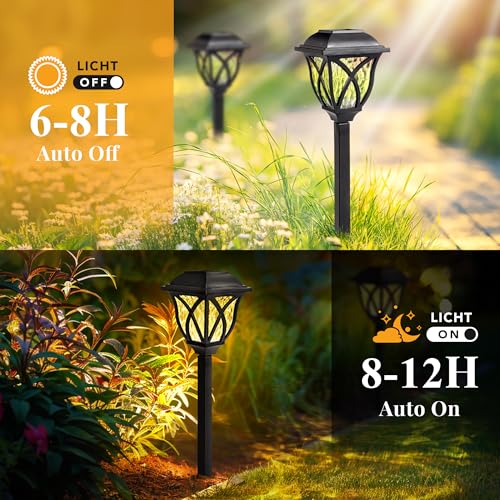
Solar lights are basically a daily negotiation between the sun and a tiny battery. In summer, almost anything works. In winter, shaded yards and short days separate the adults from the children.
- Prioritize runtime over “maximum brightness.” Pathway lights should last through the last dog walk, not just the first cocktail.
- Replaceable batteries are underrated. When a set starts fading after a year or two, being able to swap batteries is the difference between maintenance and landfill.
- Cold-weather performance matters if the lights live in a place where winter is a real season, not an aesthetic.
Expectation management: even great solar lights will have moody nights after several cloudy days. The goal is “still useful,” not “defies physics.”
Solar Panel Placement: The Sneaky Key to Not Hating Them
The biggest reason solar pathway lights disappoint is painfully simple: the panel doesn’t get enough sun. A light can be well-designed and still doomed if it’s tucked under shrubs like it’s hiding from the neighborhood.
- Panels on top of the light are easiest but can be compromised by shade from plants, porch overhangs, or even decorative caps.
- Separate panels (with a small cable) can be dramatically better for tricky yards — the light goes where it’s needed, the panel goes where the sun actually is.
- Angle and cleanliness matter. A film of pollen or dust sounds minor until it quietly shaves your runtime every night.
Annoying-but-true: if the path is in full shade all day, solar lighting will always be a little aspirational. That’s where low-voltage wired systems start making more sense.
Weather Resistance: Rain Is Fine. “Wet” Is the Problem.
Most lights can handle rain. The real test is what happens after rain: pooled water in the lens, condensation that never fully clears, or a slow creep of rust that turns “matte black” into “sad pepper shaker.”
- Look for tight seams and decent gaskets around the battery compartment. That’s where water loves to sneak in and stay awhile.
- Drainage is a feature. Lights that trap water inside the shade tend to get cloudy or flickery over time.
- Metal finishes vary wildly. Some “stainless” is more of a suggestion; powder-coated options often look better longer.
Note: sprinklers are sneakier than storms. Direct, repeated spray can wreck lights that survive normal rain just fine.
Stake Design: The Difference Between “Quick Install” and “Snapped in Half”
Everyone loves the idea of pushing a stake into soil and calling it a day. The reality: soil can be compacted, rocky, clay-heavy, rooty, or full of mystery debris from the previous owners’ landscaping era.
- Two-piece stakes can be sturdier if they’re well-made, but they’re also an extra point of failure if the plastic is flimsy.
- Thicker stakes survive real yards. Thin stakes are fine for soft garden beds; they do not enjoy gravel paths or hard-packed ground.
- Install hack that saves heartbreak: loosen the ground first (a screwdriver, a tent stake, even a drill bit in tough soil), then place the light. Forcing it is how stakes become modern sculpture.
Motion Sensing vs. Steady Glow: Decide What You Actually Want at Night
Motion sensors sound smart — until the yard turns into a strobe whenever a branch moves or a cat conducts its nightly patrol. For pathways, a low steady glow is often more calming and more useful.
- Steady lighting is better for hospitality. It signals “this is the way” without startling anyone.
- Motion boost can work if it’s subtle: a gentle lift in brightness, not a full floodlight moment.
- Overly sensitive sensors are exhausting. The kind that trigger from passing cars or wind-blown plants will make the yard feel weirdly jumpy.
Spacing and Layout: The Part That Makes It Look Intentional
The fastest route to a “nice yard” look is restraint. Too many lights turns a walkway into a lit-up zipper. Too few and people still step off the edge.
- Wider spacing looks more elevated. Many homes look better with fewer, better-placed lights than with a dense runway.
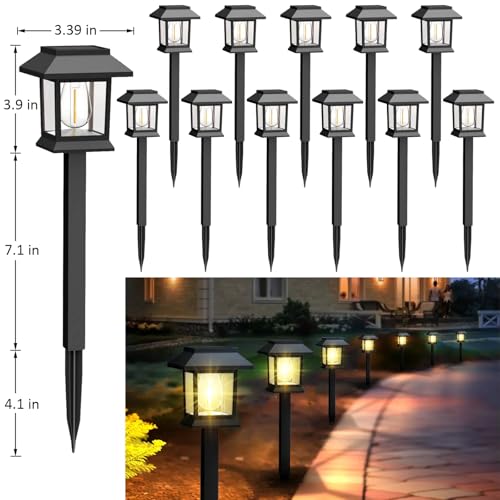
- Staggering can feel more natural along garden borders than perfectly symmetrical placement, which can read a little suburban showroom.
- Think about what needs light: steps, turns, thresholds, and the spot where the path meets the driveway (a classic ankle-twister zone).
Materials and Finish: “Looks Expensive” Is Often Just “Doesn’t Look Cheap”
The best-looking pathway lights don’t try too hard. They disappear in daylight and quietly do their job at night. Cheap sets tend to have glossy plastic, awkward proportions, and a light color that screams “discount aisle.”
- Matte finishes hide wear. Gloss shows scratches, water spots, and sun-fade faster.
- Glass or quality diffusers age better than thin, clear plastic that yellows and clouds.
- Proportion matters: lights that are too short get swallowed by plants; too tall and they start feeling like little sentries.
Things to Know Before Buying (So You Don’t End Up Rage-Returning)
- Solar lights love direct sun. A beautiful shaded walkway may need a separate-panel design or a different system altogether.
- Sets vary wildly. Even within the same brand, quality control can mean one light is dimmer or a different color. Buying one set first can save a lot of annoyance.
- Expect seasonal mood swings. Short winter days and snow cover will reduce performance. That’s normal; the question is how gracefully they degrade.
- Maintenance is minimal, not zero. Occasional panel wiping and battery replacements (if possible) keep a set from slowly fading into uselessness.
Honest Caveats (Because Outdoor Lighting Is a Little Humbling)
Even very good pathway solar lighting has limits:
- It won’t replace real landscape lighting for dramatic uplighting or consistent all-night illumination.
- It may not satisfy security needs if the goal is strong, reliable brightness regardless of weather.
- It can look messy if the yard is messy. Solar lights politely illuminate the fact that the edging is crooked and the mulch needs help. Consider it motivation.
Quick Guidance: Picking the Right “Type” for Your Home
- For a classic front walk: warm white, moderate brightness, sturdy stakes, and a clean, simple silhouette.
- For a landscaped garden path: softer diffusion, lower brightness, wider spacing, and a finish that disappears in daylight.
- For a shady side yard: prioritize panel placement (or separate panels), and be realistic about runtime.
- For households with kids/pets: shorter, sturdier fixtures with diffused light (fewer sharp glares at eye level) and parts that can survive being bumped.
The right pathway solar lights don’t announce themselves. They just make the house feel more navigable, more welcoming, and a little more finished — like someone thought about how people actually move through it at night.
1,000,000+ shoppers use Buyer's Guide every week to find the best products and services online.

Helping millions of users make smarter purchases online.

