


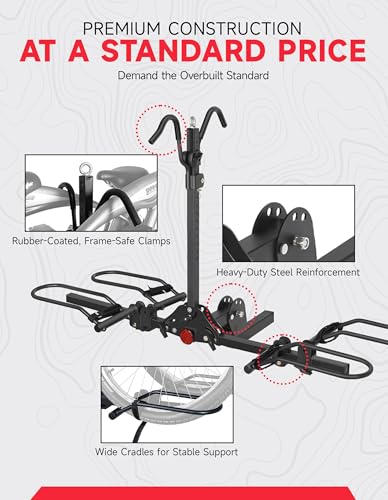




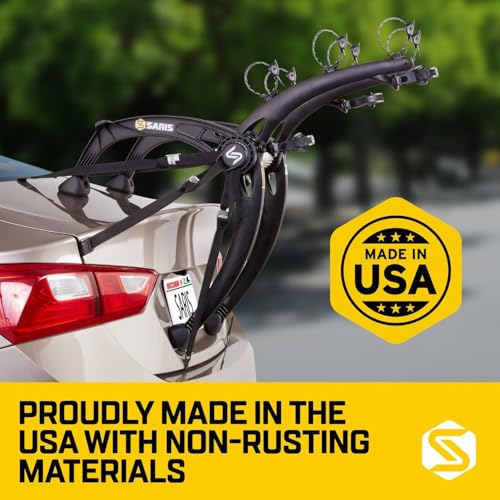





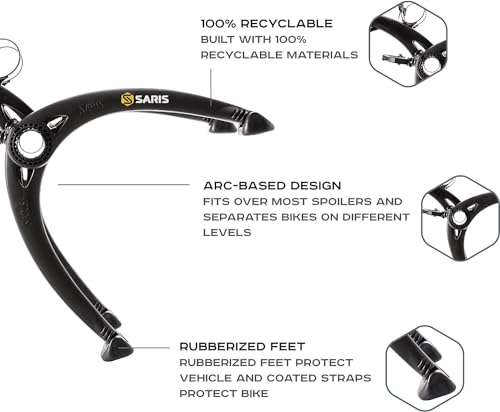


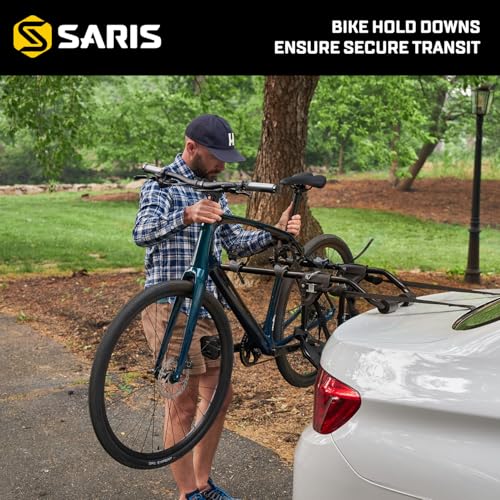


We also considered 10 others:


Our Top Choice
The order above is not editorial opinion, and it is not paid placement. It comes from what shoppers across our network actually do - which no hitch bike racks for suv they compare, and which they ultimately buy. We re-rank as new data comes in, so the long-term favorites have to keep earning their spot against new entrants. The full method, including how we make money.
No-Hitch Bike Racks for SUVs Buyer's Guide
No-hitch SUV bike racks trade convenience against fit precision: the rack must clamp to a hatch, tailgate, or trunk-like rear surface without a receiver to carry the load. The sharpest concerns are whether the rack clears spoilers, rear wipers, cameras, and bumper contours, and whether its straps, feet, and hooks stay secure at highway speed without damaging the vehicle.
SUV Fit
No-hitch racks depend on the vehicle body for support, so a small mismatch in hatch angle, spoiler shape, or bumper contour can affect safety and paint protection. A rack that fits one SUV well may need different strap routing or may not be appropriate for another body style.
Check the maker’s fit guide for your exact SUV year and trim, not just the model name, and confirm whether the upper hooks are approved for plastic spoilers, glass hatch edges, rear wipers, backup cameras, and power liftgates. Look for wide, padded feet that land on structural metal or glass-supported areas rather than flexy bumper covers, and avoid racks that require sketchy strap angles to clear the hatch. Owners often report very good fit once adjusted, but sentiment is mixed because vehicle fit is still dependent on the specific car and sometimes takes positioning tweaks or extra attachments. Instructions are also called out as a weak spot, so a rack with clear fit charts and strap-position markings is safer for SUV use.
Road Security
A no-hitch rack is held by strap tension and friction, so stability depends on correct tightening, clean contact points, and balanced bike loading. Movement that seems minor in a driveway can grow into shifting feet, loosening straps, or bike sway on rough roads or at highway speeds.
Prioritize six-strap or otherwise well-anchored designs, strong cam buckles, anti-sway bike cradles, and lower straps that prevent the rack from walking upward on an SUV hatch. Load the heaviest bike closest to the vehicle, retighten after the first few miles, and avoid opening the hatch with the rack or bikes installed. Owner feedback supports this concern: many buyers say bikes stay secure during normal driving and highway trips when tightened properly, and sturdy trunk mounts feel confident. But stability is also reported as hit or miss, with some owners describing feet shifting, parts sliding, or less reassurance on faster and longer drives.
Easy Setup
These racks are often chosen because they avoid a hitch, so setup should not become a barrier to using the bike. The first installation matters most because arm angles, strap routing, and hook placement determine both security and vehicle protection.
Look for tool-free adjustment, labeled straps, repeatable arm positions, and a design that can be removed without leaving hardware on the SUV. For occasional trail trips, a rack that installs in minutes after the first setup is more practical than one that requires remeasuring every time. Owners frequently praise straightforward installation and removal once the straps are understood, with several noting that setup becomes quick after the first attempt. The caution is that unclear instructions can delay safe setup, so do not treat “universal” as a substitute for careful first-fit testing.
Hardware Life
No-hitch racks concentrate load through relatively small hardware and contact points, so weak parts can create both bike-loss and road-safety risks. Durability is especially important for SUV use because hatch angles and higher mounting positions can put extra stress on straps and feet.
Inspect strap webbing thickness, stitching, buckle bite, hinge locks, cradle rubber, foam pads, and hook coating before trusting a rack on longer drives. Avoid flimsy feet, loose pads, thin hooks, or hardware that can loosen under vibration; replace worn straps rather than trying to extend their life. Sentiment is strong but divided here: many owners describe solid build quality and a firm feel once anchored, yet durability is the biggest watch-out in the feedback. Reported failures include straps, harnesses, brackets, foam pads, feet, and low-cost hardware loosening, breaking, or wearing too soon, in some cases creating serious safety concerns.
Bike Fit
A rack’s advertised capacity is only useful if the bikes fit the cradles, stay separated, and remain within the weight limit. SUV owners often carry mixed fleets, so frame shape, handlebar width, tire size, and pedal overlap can matter as much as the number of trays or arms.
Match the rack to your real bikes: confirm per-bike and total weight limits, check whether step-through, kids’, full-suspension, or small-frame bikes need an adapter bar, and leave enough spacing to prevent handlebars, pedals, and derailleurs from rubbing. Be cautious with heavy e-bikes unless the rack is specifically rated for that load, because trunk-style no-hitch racks are often designed around standard bicycles. Owner feedback says these racks generally do the job well for short trail trips and longer drives when loaded correctly. Buyers also report good results with two adult bikes and sometimes three when arranged carefully, which reinforces the need to treat maximum capacity as a packing problem, not just a number.
Carry Value
Many shoppers choose a no-hitch rack because they need a simple carrier without modifying the SUV. Portability and storage matter because these racks are often taken off between rides to restore hatch access, visibility, and everyday convenience.
For casual or backup use, favor a lightweight rack that folds or stores flat, is easy to keep in the cargo area, and can be installed without tools when plans change. If you carry bikes every week, drive long highway distances, or need frequent hatch access, weigh that convenience against the limits of a strap-on design. Owners repeatedly frame this category as strong value for getting bikes on the road without a hitch, and compact one-piece or fold-up shapes are praised for handling and storage. The same feedback also suggests setting expectations: these are often loved as practical basic carriers, not necessarily as premium long-haul systems.
1,000,000+ shoppers use Buyer's Guide every week to find the best products and services online.

Helping millions of users make smarter purchases online.


