

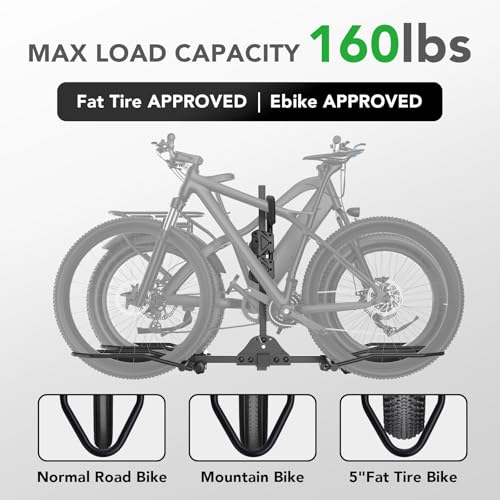
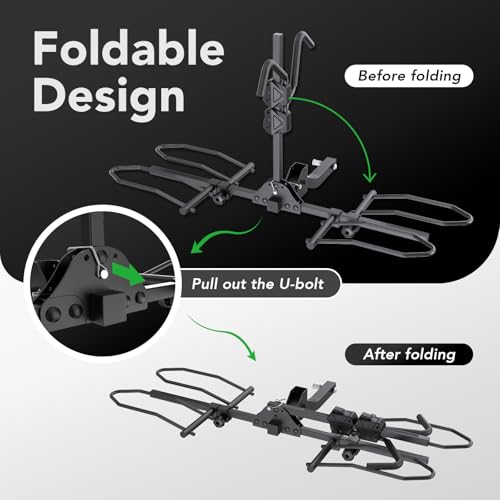



Bikes stay secure and stable in transit, even on longer drives and rougher routes.
Assembly and day-to-day handling are easy for most owners, including mounting the rack and loading bikes.
The TrailXpert bike rack comes across as sturdy and well made, with buyers praising its solid construction and confidence-inspiring build.
Bikes stay secure and stable in transit, even on longer drives and rougher routes.
Assembly and day-to-day handling are easy for most owners, including mounting the rack and loading bikes.
The TrailXpert bike rack comes across as sturdy and well made, with buyers praising its solid construction and confidence-inspiring build.
Bikes stay secure and stable in transit, even on longer drives and rougher routes.
Assembly and day-to-day handling are easy for most owners, including mounting the rack and loading bikes.
The TrailXpert bike rack comes across as sturdy and well made, with buyers praising its solid construction and confidence-inspiring build.
The detachable ramp is a major usability win for e-bikes, making loading and unloading heavy bikes much easier.
Assembly is generally manageable rather than intimidating, especially for owners who are comfortable working with hitch-mounted hardware.
The Young Electric hitch rack comes across as a heavy-duty, well-finished carrier that feels strong enough for two e-bikes.
The detachable ramp is a major usability win for e-bikes, making loading and unloading heavy bikes much easier.
Assembly is generally manageable rather than intimidating, especially for owners who are comfortable working with hitch-mounted hardware.
The Young Electric hitch rack comes across as a heavy-duty, well-finished carrier that feels strong enough for two e-bikes.


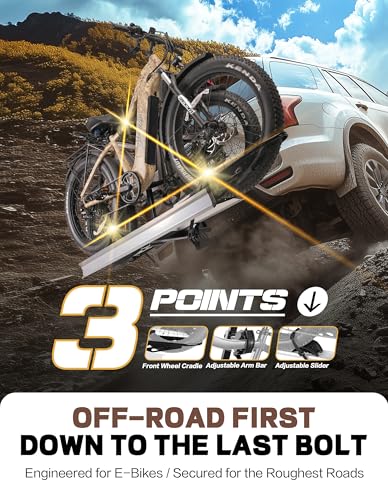
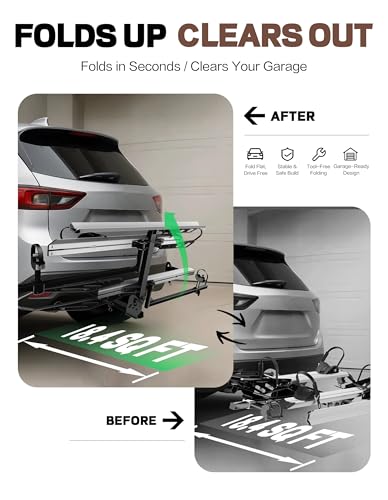
The detachable ramp is a major usability win for e-bikes, making loading and unloading heavy bikes much easier.
Assembly is generally manageable rather than intimidating, especially for owners who are comfortable working with hitch-mounted hardware.
The Young Electric hitch rack comes across as a heavy-duty, well-finished carrier that feels strong enough for two e-bikes.
Bikes feel securely clamped in place, giving owners confidence even with heavy e-bikes at highway speeds.
Its weight helps it feel solid, but the carrier can be difficult for one person to mount, remove, or lift back into position.
The Young Electric e-bike rack comes across as a heavy-duty, well-made carrier that holds up over long trips.
Bikes feel securely clamped in place, giving owners confidence even with heavy e-bikes at highway speeds.
Its weight helps it feel solid, but the carrier can be difficult for one person to mount, remove, or lift back into position.
The Young Electric e-bike rack comes across as a heavy-duty, well-made carrier that holds up over long trips.


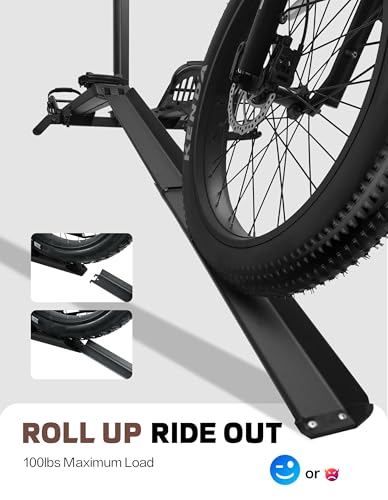

Bikes feel securely clamped in place, giving owners confidence even with heavy e-bikes at highway speeds.
Its weight helps it feel solid, but the carrier can be difficult for one person to mount, remove, or lift back into position.
The Young Electric e-bike rack comes across as a heavy-duty, well-made carrier that holds up over long trips.
Four-bike capacity is a major strength, especially for families who want to carry multiple bikes without wrestling them onto a hanging-style rack.
Assembly and build quality are more uneven: many setups go smoothly, but some buyers run into fit, quality-control, or durability concerns.
The Young Electric platform bike rack comes across as a sturdy, road-ready carrier that performs well for families hauling bikes without paying premium-brand prices.
Four-bike capacity is a major strength, especially for families who want to carry multiple bikes without wrestling them onto a hanging-style rack.
Assembly and build quality are more uneven: many setups go smoothly, but some buyers run into fit, quality-control, or durability concerns.
The Young Electric platform bike rack comes across as a sturdy, road-ready carrier that performs well for families hauling bikes without paying premium-brand prices.


Four-bike capacity is a major strength, especially for families who want to carry multiple bikes without wrestling them onto a hanging-style rack.
Assembly and build quality are more uneven: many setups go smoothly, but some buyers run into fit, quality-control, or durability concerns.
The Young Electric platform bike rack comes across as a sturdy, road-ready carrier that performs well for families hauling bikes without paying premium-brand prices.
The Meeviz hitch bike rack is received as a functional two-bike carrier, with the platform-style hitch design and tilt feature fitting what buyers need from this kind of rack.
Overall quality comes across as a clear strength, giving the rack the feel of a well-made option rather than a flimsy accessory.
The Meeviz hitch bike rack is received as a functional two-bike carrier, with the platform-style hitch design and tilt feature fitting what buyers need from this kind of rack.
Overall quality comes across as a clear strength, giving the rack the feel of a well-made option rather than a flimsy accessory.


The Meeviz hitch bike rack is received as a functional two-bike carrier, with the platform-style hitch design and tilt feature fitting what buyers need from this kind of rack.
Overall quality comes across as a clear strength, giving the rack the feel of a well-made option rather than a flimsy accessory.


Bikes ride securely once adjusted, staying stable on long trips and rough roads without noticeable wobbling for most buyers.
The CRINDAR hitch rack is easy to put together and mount, with buyers describing straightforward assembly and a clean fit in the hitch receiver.
The rack feels heavy-duty and well built, with several owners emphasizing its beefier construction and sturdy feel compared with generic alternatives.
Bikes ride securely once adjusted, staying stable on long trips and rough roads without noticeable wobbling for most buyers.
The CRINDAR hitch rack is easy to put together and mount, with buyers describing straightforward assembly and a clean fit in the hitch receiver.
The rack feels heavy-duty and well built, with several owners emphasizing its beefier construction and sturdy feel compared with generic alternatives.
Bikes ride securely once adjusted, staying stable on long trips and rough roads without noticeable wobbling for most buyers.
The CRINDAR hitch rack is easy to put together and mount, with buyers describing straightforward assembly and a clean fit in the hitch receiver.
The rack feels heavy-duty and well built, with several owners emphasizing its beefier construction and sturdy feel compared with generic alternatives.


It performs well for hauling multiple bikes and is often seen as an especially good value compared with pricier carriers.
Assembly is generally straightforward, especially with basic hand tools or a socket set available.
The MAXXHAUL bike rack is widely received as a heavy-duty, well-built carrier that feels stronger than expected for the price.
It performs well for hauling multiple bikes and is often seen as an especially good value compared with pricier carriers.
Assembly is generally straightforward, especially with basic hand tools or a socket set available.
The MAXXHAUL bike rack is widely received as a heavy-duty, well-built carrier that feels stronger than expected for the price.
It performs well for hauling multiple bikes and is often seen as an especially good value compared with pricier carriers.
Assembly is generally straightforward, especially with basic hand tools or a socket set available.
The MAXXHAUL bike rack is widely received as a heavy-duty, well-built carrier that feels stronger than expected for the price.
The ARKSEN hitch rack is widely appreciated as a sturdy, well-made carrier that feels solid in the receiver, especially when the anti-rattle device is used.
The rack is seen as a strong value for the money, giving buyers a capable e-bike carrier without paying for the highest-priced options.
The ARKSEN hitch rack is widely appreciated as a sturdy, well-made carrier that feels solid in the receiver, especially when the anti-rattle device is used.
The rack is seen as a strong value for the money, giving buyers a capable e-bike carrier without paying for the highest-priced options.


The ARKSEN hitch rack is widely appreciated as a sturdy, well-made carrier that feels solid in the receiver, especially when the anti-rattle device is used.
The rack is seen as a strong value for the money, giving buyers a capable e-bike carrier without paying for the highest-priced options.


Assembly and hitch installation are consistently described as quick and straightforward, especially with the included no-sway bolt.
Capacity is a strong selling point, with enough room for multiple bikes and confidence that it can handle the full four-bike load.
The Allen Sports hitch rack comes across as a sturdy, dependable, budget-friendly way to haul bikes without paying Thule or Yakima prices.
Assembly and hitch installation are consistently described as quick and straightforward, especially with the included no-sway bolt.
Capacity is a strong selling point, with enough room for multiple bikes and confidence that it can handle the full four-bike load.
The Allen Sports hitch rack comes across as a sturdy, dependable, budget-friendly way to haul bikes without paying Thule or Yakima prices.
Assembly and hitch installation are consistently described as quick and straightforward, especially with the included no-sway bolt.
Capacity is a strong selling point, with enough room for multiple bikes and confidence that it can handle the full four-bike load.
The Allen Sports hitch rack comes across as a sturdy, dependable, budget-friendly way to haul bikes without paying Thule or Yakima prices.
The Rockland RokRack is widely received as a solid, well-made carrier that does what buyers expect for hauling e-bikes.
Bike loading and removal are generally easy, especially with the tire straps and seat-post strap that click in and out.
Assembly is doable for many buyers, but the directions can be confusing and may require trial and error.
The Rockland RokRack is widely received as a solid, well-made carrier that does what buyers expect for hauling e-bikes.
Bike loading and removal are generally easy, especially with the tire straps and seat-post strap that click in and out.
Assembly is doable for many buyers, but the directions can be confusing and may require trial and error.


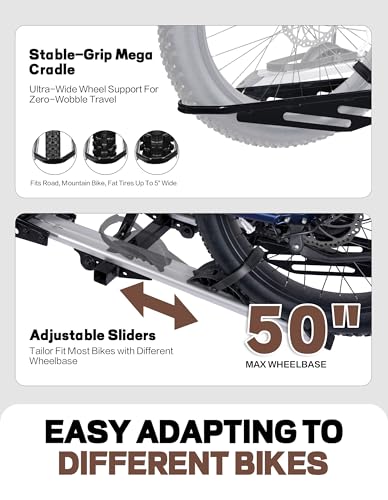
The Rockland RokRack is widely received as a solid, well-made carrier that does what buyers expect for hauling e-bikes.
Bike loading and removal are generally easy, especially with the tire straps and seat-post strap that click in and out.
Assembly is doable for many buyers, but the directions can be confusing and may require trial and error.
We also considered 10 others:


Our Top Choice
Bikes stay secure and stable in transit, even on longer drives and rougher routes.
Assembly and day-to-day handling are easy for most owners, including mounting the rack and loading bikes.
The TrailXpert bike rack comes across as sturdy and well made, with buyers praising its solid construction and confidence-inspiring build.
Bikes stay secure and stable in transit, even on longer drives and rougher routes.
Assembly and day-to-day handling are easy for most owners, including mounting the rack and loading bikes.
The TrailXpert bike rack comes across as sturdy and well made, with buyers praising its solid construction and confidence-inspiring build.
Bikes stay secure and stable in transit, even on longer drives and rougher routes.
Assembly and day-to-day handling are easy for most owners, including mounting the rack and loading bikes.
The TrailXpert bike rack comes across as sturdy and well made, with buyers praising its solid construction and confidence-inspiring build.
The order above is not editorial opinion, and it is not paid placement. It comes from what shoppers across our network actually do - which hitch bike racks they compare, and which they ultimately buy. We re-rank as new data comes in, so the long-term favorites have to keep earning their spot against new entrants. The full method, including how we make money.
Hitch Bike Racks Buyer's Guide
Hitch bike racks are a tradeoff between carrying capacity, vehicle compatibility, and the physical effort of loading heavy bikes behind a moving vehicle. The sharpest concerns are whether the rack truly matches the hitch and bike weights, and whether it keeps bikes stable without making every loading session a struggle.
Hitch Fit
A hitch rack is only as safe as the connection between the carrier and the vehicle. Receiver size, hitch rating, ground clearance, and anti-rattle hardware determine whether the load feels planted or shifts over bumps and highway miles.
Start by matching the rack to the vehicle, not just to the bikes: confirm receiver size, hitch class, tongue-weight rating, shank depth, pin-hole alignment, bumper or spare-tire clearance, and whether the rack is approved for the vehicle type you will use. For heavier platform racks and e-bike loads, a 2-inch receiver and an anti-rattle or threaded hitch pin are especially important; a loose adapter or undersized hitch can turn a capable rack into a wobbling, unsafe setup. Owner feedback strongly supports this: racks that feel solid in the receiver, especially when an anti-rattle device is used, are praised for secure mounting, while some buyers still report setup-dependent wobble or movement on rough roads.
Bike Fit
Hitch racks often advertise a bike count, but the practical fit depends on weight, tire width, wheelbase, and frame shape. A rack that fits two light mountain bikes may be unsuitable for two heavy e-bikes or a mixed family load.
Check the real bike limits before buying: per-bike weight rating, total rack capacity, wheelbase range, tire-width range, tray spacing, and whether the clamp works with step-through, carbon, kids’, fendered, fat-tire, or e-bike frames. Four-bike racks can solve family hauling, but loading order and handlebar/pedal overlap can make the last bikes tight; two-bike e-bike racks need enough tray strength and spacing for heavy frames and wide tires. Owners consistently like racks that carry multiple bikes, heavy e-bikes, and fat-tire bikes securely, but sentiment also shows that four-bike loading can feel tight or less confidence-inspiring on some setups.
Road Stability
Bike movement is more than an annoyance; it can damage frames, loosen hardware, and stress the hitch connection. The best setups control both rack wobble and bike-to-bike movement with secure clamps, straps, and receiver hardware.
Look for redundant bike retention: wheel cradles or trays, ratcheting arms or frame hooks, strong wheel straps, and a hitch-tightening system that removes play at the receiver. For highway use, rough roads, or long trips, avoid racks that rely on only one contact point per bike or require improvised strap routing; heavy e-bikes need careful strap tension and clamp placement before departure. Owner reports are strongest where bikes stay secure and stable in transit, including longer drives, rougher routes, and highway speeds, while mixed feedback notes that stability can depend on tightening and strap adjustment.
Loading Access
A hitch rack may be safe on the road but frustrating if every ride starts with heavy lifting or blocked cargo access. Loading height, rack weight, tilt design, and folding controls determine whether the rack is convenient enough to use often.
For heavy bikes, prioritize a ramp, low tray height, wide wheel trays, and a loading sequence that does not require lifting the full bike above waist height. Also check whether the rack tilts with bikes loaded, folds when empty, clears the hatch or tailgate, and can realistically be mounted by one person; many heavy-duty racks feel reassuring on the road but are awkward to install, remove, or raise into storage position. Owners repeatedly praise straightforward mounting, loading, tilt access, and especially ramps for heavy e-bikes, while also noting that rack weight can make one-person handling difficult.
Build Quality
Hitch bike racks live outside the vehicle in vibration, weather, road grime, and leverage from bouncing bikes. Strong materials and dependable hardware reduce looseness, corrosion, and assembly problems over time.
Inspect the construction details that carry the load: welds, tray thickness, hinge play, coating quality, hitch pin hardware, strap durability, and whether replacement bolts or small parts are standard sizes. Clear instructions and complete hardware matter because an incorrectly assembled hitch rack can loosen under vibration; if instructions are poor, dry-fit everything and torque fasteners carefully before the first trip. Owners often describe well-built racks as sturdy, heavy-duty, and confidence-inspiring, but the main watch-outs are uneven assembly experience, quality-control concerns, unclear paper instructions, and occasional missing or problematic bolts and nuts.
Real Value
The cheapest hitch rack is not always the best value, especially when bike security and vehicle compatibility require extra accessories. Good value comes from matching the rack’s real capability and included features to the way you ride and travel.
Judge value by the usable features you actually need: rated load, tray style, included locks, anti-rattle hardware, tilt function, ramp, fat-tire compatibility, and whether the rack can expand or fold for your storage space. A lower-cost rack can be a smart buy if it safely matches your bikes and vehicle, but it is poor value if you must add separate straps, adapters, locks, or lifting aids to make it work. Owner sentiment repeatedly highlights strong value when racks deliver heavy-duty performance, multi-bike carrying, built-in locking, and practical platform features without feeling flimsy.
1,000,000+ shoppers use Buyer's Guide every week to find the best products and services online.

Helping millions of users make smarter purchases online.


