









We also considered 10 others:


Our Top Choice
Compare Features


The order above is not editorial opinion, and it is not paid placement. It comes from what shoppers across our network actually do - which natural non-toxic sunscreens they compare, and which they ultimately buy. We re-rank as new data comes in, so the long-term favorites have to keep earning their spot against new entrants. The full method, including how we make money.
Natural Non-Toxic Sunscreens Buyer's Guide
Natural non-toxic sunscreens usually mean choosing mineral UV filters and shorter ingredient lists, but the real tradeoff is whether the formula is wearable enough to apply in the full amount and reapply. The sharpest issues are mineral-film performance, white cast on your skin tone, and whether “natural” extras such as oils, tallow, botanicals, or fragrance will help your skin barrier or irritate it.
Finish
How a sunscreen finishes on your skin affects whether you’ll actually want to wear it every day, especially on your face. Look for a tint or color that blends naturally with your skin tone, and decide whether you prefer a matte, dewy, or softly glowing appearance. Watch out for formulas that leave a chalky cast, look too shiny, or make your skin tone appear uneven.
For finish, decide first whether you need a face-friendly everyday sunscreen or a richer outdoor/body formula: oil-prone or makeup-wearing shoppers should look for a quick-set, low-shine finish, while dry skin may benefit from a more emollient, dewy formula. In this niche, avoid assuming “natural” means cosmetically elegant—tallow, plant oils, butters, and waxes can leave shine, transfer, or a noticeable scent. Owner feedback supports this tradeoff: many users like these sunscreens for making skin feel soft, hydrated, and healthier-looking, and some say they clear quickly with little white residue, but others find the face finish greasy or tallow-scented.
Texture
Texture matters because a sunscreen you dislike wearing is less likely to be applied generously and reapplied as needed. Look for a formula that feels comfortable for your skin type—lightweight and non-greasy if you’re oily or layering under makeup, richer if you’re dry—and watch for thick, sticky, or residue-heavy formulas that can feel unpleasant or transfer onto clothing.
For texture, prioritize a mineral formula that spreads easily at the correct sunscreen dose, not just a tiny test dab; thick zinc pastes, gritty balms, or separated oil-heavy formulas can lead to under-application. If you have dry or sensitive-leaning skin, a smooth cream with moisturizing ingredients may be a better fit, while acne-prone shoppers should be cautious with heavy occlusive oils and butters. Owner sentiment backs the value of a smoother texture: users often praise these formulas for rubbing in more lightly than many zinc oxide sunscreens, feeling comfortable rather than sticky or heavy, and leaving skin hydrated instead of dried out.
Application
You want a non-toxic sunscreen that spreads evenly, blends without excessive rubbing, and absorbs comfortably so you’re more likely to apply the right amount. Look for smooth coverage that doesn’t leave patchy white streaks, heavy residue, or pilling under makeup or moisturizer. If it feels difficult to spread or leaves gaps, you may end up with uneven protection.
For application, choose a sunscreen you can apply evenly over the face, ears, neck, hairline, and body without dragging, pilling, or leaving gaps; mineral sunscreens protect by forming an even film, so patchy application is a real protection failure. For swimming, sweating, hiking, or beach use, look for labeled water resistance and a texture that can handle reapplication over damp or salty skin. Owner reports reinforce that application quality matters: shoppers commonly praise smoother mineral formulas that rub in comfortably, cover well, blend quickly, and feel wearable enough for daily face or all-day use.
Protection
You want a non-toxic sunscreen that actually prevents burns, not just one with a clean ingredient list. Look for broad-spectrum protection with an SPF level suited to your exposure, plus clear water-resistance guidance if you’ll be sweating or swimming, and watch for formulas that need frequent reapplication or rub off easily during outdoor activity.
For protection, verify the regulated SPF, broad-spectrum labeling, active mineral filter, and water-resistance claim rather than relying on “natural,” “reef-friendly,” or moisturizing ingredients as proof of UV protection. For daily incidental exposure, SPF 30 can be reasonable when applied correctly; for fair skin, intense sun, high altitude, beach days, swimming, or long outdoor work, SPF 50 and frequent reapplication are safer targets. Owner sentiment is positive when these basics are met: users describe dependable SPF 30 and SPF 50 protection during beach, pool, hiking, surfing, swimming, sweating, golfing, and other long outdoor conditions, especially when they reapply.
Skin
Because sunscreen sits on your skin for hours, you want a formula that matches your skin type without causing dryness, stinging, breakouts, or redness. Look for moisturizing ingredients if your skin is dry, fragrance-free or minimal-ingredient formulas if you’re sensitive, and non-comedogenic textures if you’re acne-prone or oily. Mineral non-toxic sunscreens can be gentler for many people, but always watch for irritation from added fragrances, essential oils, or heavy occlusives.
For skin compatibility, treat “natural” as a starting point, not a guarantee: mineral zinc oxide is often a good choice for sensitive skin, but essential oils, fragrance, citrus extracts, nut oils, lanolin-like ingredients, tallow, and heavy butters can still trigger irritation, breakouts, or allergy concerns. Sensitive, rosacea-prone, children’s, and post-procedure skin should favor fragrance-free, simple mineral formulas and patch test before full use; dry skin may prefer moisturizing versions, while acne-prone skin should be more selective with rich occlusives. Owner feedback aligns with this: many shoppers are drawn to mineral and reef-friendly ingredient profiles for sensitive or family use, and users often report moisturizing, non-burning, non-drying wear, including on fair or sensitive skin.
Cast
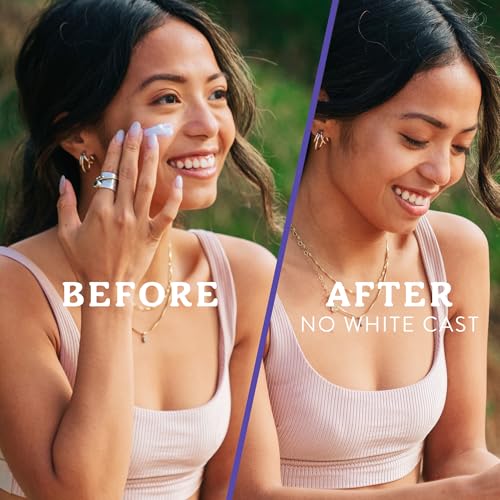
A sunscreen’s white cast matters because even a safer-feeling formula can be frustrating if it leaves your skin looking chalky, gray, or uneven—especially on deeper skin tones or when worn daily. Look for options that rub in smoothly and dry down clear or sheer, and be cautious with mineral sunscreens that use zinc oxide or titanium dioxide, which are more likely to leave visible white residue if the formula isn’t well blended.
For cast, test the sunscreen at a full, real-use amount and again after reapplication; many mineral formulas look clear when applied thinly but turn white, gray, or streaky when enough is used for protection. Shoppers with deeper skin tones may want a well-matched tinted mineral formula, while those avoiding tint transfer should look for zinc formulas specifically reported to blend down without chalkiness; non-nano or heavier zinc formulas may be more visible. Owner sentiment is mixed in exactly this way: many users say mineral formulas blend quickly with little to no white cast, including some with melanated skin, but others report lingering white film, especially after heavier application or reapplying.
1,000,000+ shoppers use Buyer's Guide every week to find the best products and services online.

Helping millions of users make smarter purchases online.


