











We also considered 10 others:


Our Top Choice
The order above is not editorial opinion, and it is not paid placement. It comes from what shoppers across our network actually do - which mole traps they compare, and which they ultimately buy. We re-rank as new data comes in, so the long-term favorites have to keep earning their spot against new entrants. The full method, including how we make money.
Mole Traps Buyer's Guide
Mole traps are a precision tool: the trap must be strong enough to fire cleanly underground, but forgiving enough to set safely and place exactly in an active run. The biggest buying risks are choosing a trap that is hard to stabilize in loose soil, or blaming the trap when the real problem is poor tunnel selection.
Active Runs
A mole trap only works when the animal actually passes through the trigger zone. Because mole tunnel networks include both active travel runs and abandoned feeding tunnels, placement matters as much as trap style. The best pick makes it practical to target fresh, reopened runs rather than relying on repellents or guesswork.
Prioritize traps designed to sit directly in the mole’s travel path, with a trigger pan, loop, or scissor mechanism that spans the tunnel without collapsing it. Before buying, consider whether your yard has shallow raised surface runs, deeper main runs, or soft soil, because some trap styles need a clean tunnel shape to work well. Avoid assuming that any disturbed mound is a good set location; press down a short section of tunnel and check whether it is reopened before committing traps there. Owner feedback strongly supports this: catching results are often strong when traps are placed on active tunnels, and many buyers report success after sprays, repellents, poisons, or older trap styles failed. Sentiment also shows the main caveat clearly: results can depend on patience, placement, and finding fresh active runs.
Setting Control
A trap that is difficult to arm will be used less accurately and checked less consistently. Mole trapping often requires resetting, relocating, and confirming whether the trap has fired, so the setting process should not feel like a wrestling match. Clear fired indicators also help prevent unnecessary digging and handling.
Look for a trap with a positive arming action, a trigger lock that engages predictably, and a clear above-ground or easy-to-see fired indication. If hand strength, mobility, or kneeling is a concern, favor designs that can be set with a handle, foot pressure, or minimal hand force, and avoid traps that require fingers near jaws, springs, or pinch points. Also check whether the trap can be released safely after a false fire, because some designs are easy to set but awkward to disarm. Owner sentiment backs this as a major separator: buyers often praise traps that are easy to arm and easy to tell when fired, while others report needing several tries before the trip lock engages or finding the trap tricky to set or release after springing.
Tunnel Fit
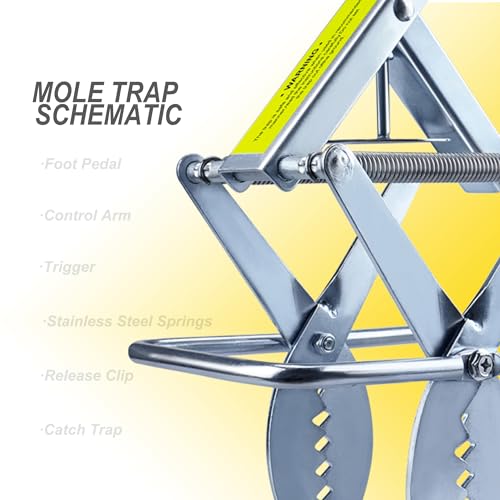
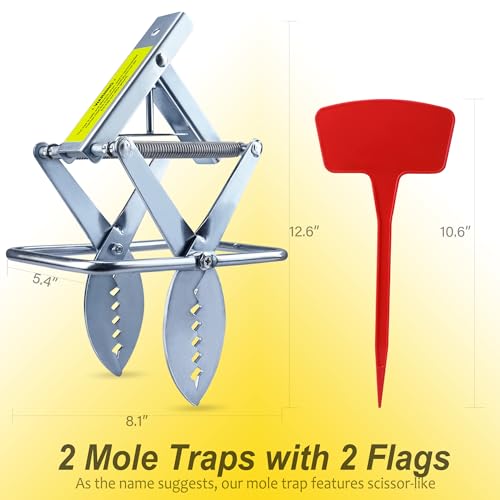
Even a powerful trap can miss if it rocks, tilts, or shifts out of the tunnel. Mole runs are narrow, uneven, and often soft from recent digging, so the trap must stay aligned with the travel path after you cover or backfill it. Stability is especially important for scissor and plunger-style mechanisms that need the animal to hit the trigger squarely.
Choose a trap with a stable base, legs, stakes, or a geometry that resists wobbling once set in soil. The trap should fit the tunnel width without crushing the run closed, and it should stay upright when lightly backfilled or covered to block light and air. In sandy, loose, or very wet soil, avoid designs that depend on perfect sidewall support unless you are willing to pack the soil carefully around the trap. Owners identify stability as a real watch-out: some traps can rock in the tunnel, making them harder to set securely and increasing the chance of poor alignment.
Build Strength
Mole traps work outdoors in dirt, moisture, and repeated spring cycles. Weak springs, bend-prone jaws, sloppy pivots, or flimsy plastic can turn an otherwise good design into a missed-catch machine. A durable mechanism also matters because a yard may require multiple sets over several days.
Inspect for heavy-gauge metal or reinforced structural parts, corrosion-resistant finishes, tight pivots, and a spring or scissor action that closes with authority. Avoid traps with thin jaws, loose linkages, weak trigger parts, or components that look likely to bend when pushed into compacted soil. The mechanism should be forceful enough to dispatch the mole when tripped, but not so crude that it is hard to control during setup. Owner feedback is favorable when build is solid: buyers describe sturdy traps that handle repeated yard use, dependable quality over multiple days of mole activity, and working mechanisms that feel forceful enough to do the job.
Clear Setup
Instructions matter more in mole trapping than in many yard tools because small setup mistakes can make a trap look ineffective. The buyer needs to understand how to find a run, open it, position the trigger, cover the set, and interpret a fired trap. Clear guidance reduces wasted days and unnecessary handling of a live spring mechanism.
Favor traps with clear step-by-step instructions, diagrams for tunnel placement, and guidance on how to identify active runs. If you are new to mole trapping, look for designs with simple visual cues for trigger position and fired status, and be prepared to practice the arming sequence before placing it in a tunnel. Avoid models whose setup depends on vague alignment or hidden latches unless there is strong instructional support. Owner sentiment shows why this matters: instructions are a common weak spot, and some buyers need outside videos or trial and error before setup clicks, even though others get the traps working quickly.
Yard Value
The value of a mole trap depends less on the shelf cost and more on whether it solves the active yard problem. A reusable, sturdy trap can be worthwhile if it clears repeated activity, but a trap that is hard to place or poorly matched to your soil can feel like wasted effort. Buyers should think in terms of a trapping campaign, not a single set-and-forget attempt.
Plan for enough trapping coverage to work the active run system rather than relying on one random placement. Reusable traps with durable mechanisms are usually more sensible for recurring mole pressure, while simpler options may be enough for a small, clearly located problem. Avoid judging value before you have confirmed active runs and given the trap several proper placements, because poor site selection can make a capable trap look bad. Owner sentiment is divided in exactly this way: successful buyers often decide the results justify the upfront spend, while unsuccessful buyers feel they wasted time when the traps do not work in their particular yard.
Don't miss the latest sales on Mole Traps and more. Get the best Black Friday deals today!

1,000,000+ shoppers use Buyer's Guide every week to find the best products and services online.

Helping millions of users make smarter purchases online.