





















We also considered 10 others:


Our Top Choice
The order above is not editorial opinion, and it is not paid placement. It comes from what shoppers across our network actually do - which mole killers they compare, and which they ultimately buy. We re-rank as new data comes in, so the long-term favorites have to keep earning their spot against new entrants. The full method, including how we make money.
Mole Killers Buyer's Guide
Buying a mole killer is really a tradeoff between pushing pests out safely and eliminating active tunnelers decisively. The sharpest concerns are matching the method to the actual animal and getting the treatment into active runs without creating risk for pets, kids, or backyard animals.
Control Method
Mole control fails when the product’s action does not match the animal or the goal. Repellents try to make the soil/tunnels undesirable and often need persistence, while toxic baits depend on correct placement and acceptance in active runs.
Start by deciding whether you need a repellent program or a lethal treatment. Castor-oil-style repellents are best when you want to push moles or voles out of turf, beds, or animal-access areas; baits are a more aggressive choice for active tunnel systems but must be placed exactly where the target pest travels. Also confirm you are dealing with moles rather than voles or gophers, because surface runways, plant chewing, plugged mounds, and raised feeding ridges call for different tactics. Owner feedback supports this split: repellent results are often described as mixed, with some yards becoming mole- or gopher-free after repeat applications while others see only partial improvement or no change. Buyers also report that some treatments reduce activity without fully driving every mole away, while poison-style baits are often described as straightforward and effective for some active mole or gopher problems.
Placement Accuracy
Moles spend most of their time underground, so surface treatment only works if it reaches the paths they are using. The best product is the one you can apply accurately to fresh tunnels, mounds, or active zones without guessing or over-treating the whole yard.
Look for directions that clearly explain where to apply: fresh raised ridges, reopened holes, active tunnels, perimeter bands, or broad lawn coverage. For baits, tunnel placement is the make-or-break step; dropping material into inactive holes wastes product and raises safety concerns. For granules or liquids, make sure the format matches your tools—broadcast spreader for larger lawns, pump or spot sprayer for liquid zones, and a controllable pour spout for edges or hot spots. Owners repeatedly praise products that are simple to put down when directions are followed, including granules spread over the lawn and watered in, liquids run through a pump or spot sprayer, and bags with handles or resealable pour nozzles. Sentiment also notes that placement in fresh holes or tunnels is an important part of the process, and that spreader settings may need adjustment depending on the granule material.
Yard Safety
Mole products are used in lawns where pets, children, wildlife, and backyard animals may contact treated soil. Safety depends on the active approach, label restrictions, watering-in requirements, and whether treated areas can be isolated during and after application.
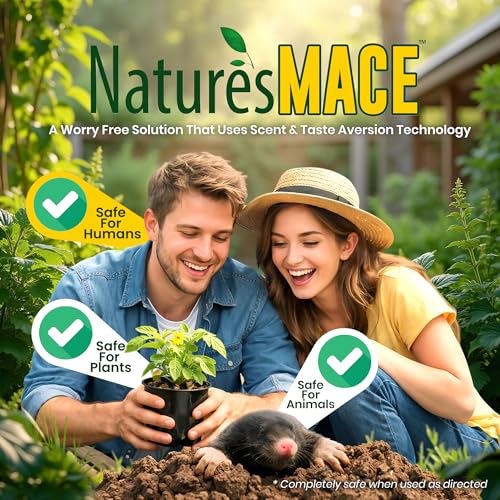
Choose the least hazardous method that fits the severity of the problem. In yards used by dogs, kids, chickens, rabbits, or other free-ranging animals, favor repellents with clear animal-access guidance and avoid loose toxic bait unless it can be buried or placed exactly as labeled in inaccessible tunnels. If you use poison, plan for restricted access, careful cleanup of spills, and storage away from feed, seed, and pet areas. Owner sentiment shows why this matters: many buyers feel reassured by simple castor-oil-style or all-natural formulas when treating around pets, kids, or backyard animals, and some specifically want pest control without harsh odors or environmental concerns. At the same time, some buyers are uneasy using poison even when they need to protect the lawn.
Coverage Plan
Coverage claims can be misleading because active infestations often need staged treatment, perimeter work, and repeat applications. A careful buyer should calculate treated square footage, reapplication timing, watering needs, and the amount needed if moles move to a new section.
Do not buy only for the label’s maximum coverage; buy for the actual pattern you will treat. Moles often need a push-out approach: treat the active area first, then extend outward or retreat after rain, watering, or renewed activity. For liquids, check mix rate and sprayer capacity; for granules, check pounds per square foot and whether your lawn size requires multiple bags. Avoid assuming one treatment will solve an established tunnel network. Owners often report that results can require staged or repeat applications rather than a one-and-done whole-yard treatment, and some infestations need treatment over a couple of weeks. Value complaints commonly appear when multiple bags are needed and mole activity continues, especially when coverage and staying power feel inconsistent.
Result Tracking
The clearest sign of success is reduced fresh activity, not the immediate disappearance of old tunnels. Because moles can move, avoid judging too quickly, but also do not keep reapplying indefinitely if damage is worsening.
Before treating, flatten a few raised ridges and mark fresh mounds or holes so you can tell whether activity is new. After application, watch for new ridges, reopened holes, and movement to untreated borders. Strong picks make it easy to follow a schedule and evaluate progress; weak fits leave you spending more while fresh damage continues. If the lawn looks worse after careful application, switch tactics rather than repeating the same approach blindly. Owner sentiment is sharply split here: some yards show fewer holes quickly or no activity after treatment, while others still have digging after careful application. Several owners note that damage can continue or feel worse where a repellent does not take hold, and that some products reduce activity without fully removing every mole.
Mess Control
Application form affects both success and cleanup. Granules, sprays, and baits each have different failure modes: uneven spreading, greasy surface residue, missed tunnels, or unsafe loose material.
Match the form to the site. Granules are convenient for lawns if they spread evenly and can be watered in; liquids can reach targeted zones but should not be over-applied on grass; baits should be used only where tunnel placement is precise. If treating a play lawn, kennel run, or high-traffic path, avoid any method that leaves slick residue, visible piles, or loose bait on the surface. Owners describe granules as generally straightforward, especially with spreaders or controlled-pour packaging. Liquid oil-based treatments can work when mixed and sprayed as directed, but some buyers report messy, greasy, or slick grass when too much remains on the surface.
1,000,000+ shoppers use Buyer's Guide every week to find the best products and services online.

Helping millions of users make smarter purchases online.


