










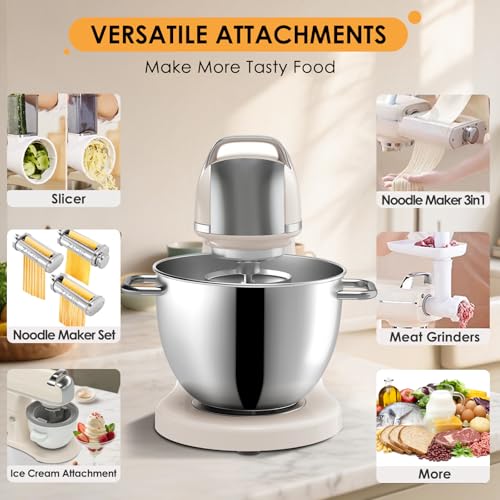


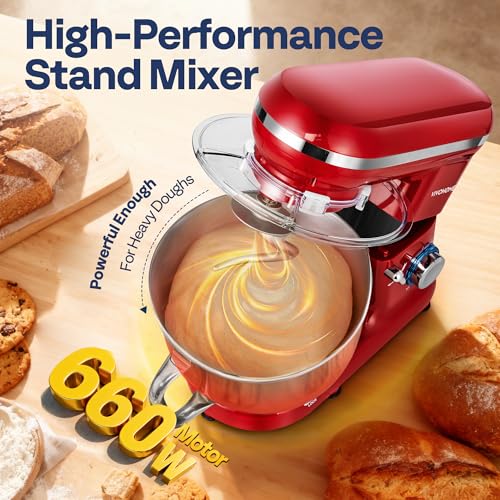

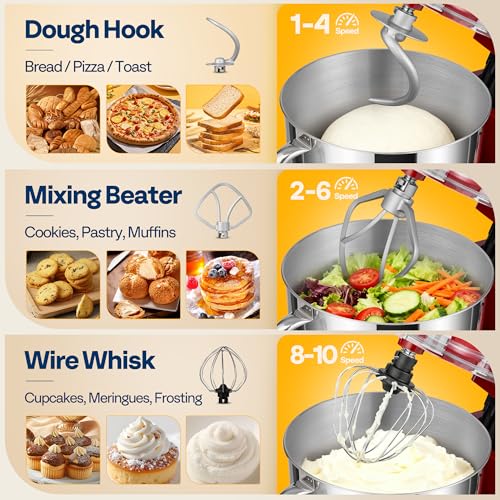


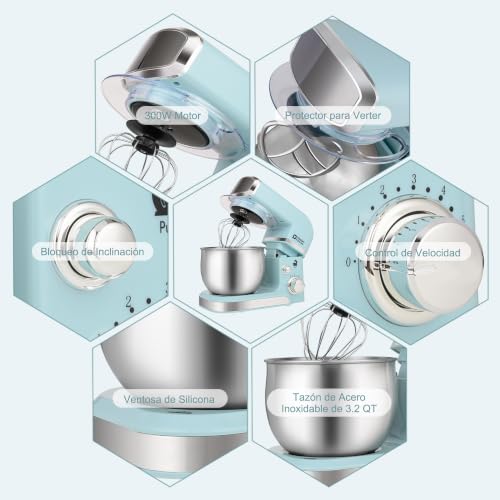


We also considered 10 others:


Our Top Choice
Compare Features


The order above is not editorial opinion, and it is not paid placement. It comes from what shoppers across our network actually do - which mixers for bread dough they compare, and which they ultimately buy. We re-rank as new data comes in, so the long-term favorites have to keep earning their spot against new entrants. The full method, including how we make money.
Mixers for Bread Dough Buyer's Guide
Bread dough stresses a mixer differently than cake batter: the issue is not just speed, but sustained torque, heat control, bowl stability, and whether the hook can knead a stiff mass without walking the machine across the counter. Prioritize the maker’s stated dough/flour capacity, low-speed strength, and drivetrain durability over generic wattage or a long list of accessories.
Performance
Performance matters because a mixer that blends evenly, beats smoothly, and kneads reliably will give you better results across everyday recipes, from cake batter to bread dough. Look for consistent mixing without leaving dry pockets on the bowl, enough power and stability for thicker doughs, and speed settings that let you handle delicate whipping as well as heavy kneading without splattering or straining.
For bread dough, look for a mixer that can knead at low speeds for several minutes without bogging down, overheating, or needing you to stop and rescue the dough; check the stated maximum flour or dough weight, not just motor wattage. A strong dough hook, stable bowl lock, and enough torque for low-hydration bread or pizza dough matter more than high top speed. Owner feedback supports this: buyers praise capable mixers for making heavy doughs and large bread batches much easier, with some noting quiet, smooth operation and strong results on bread and pizza dough as well as everyday baking tasks.
Build
A mixer’s build quality affects how well it handles heavy doughs, frequent use, and years of wear without wobbling, overheating, or loosening up. Look for sturdy materials, tight-fitting attachments, a stable base, and controls that feel solid; be cautious of lightweight housings, excessive vibration, or parts that flex under pressure.
For bread use, favor a heavy, rigid build with metal drivetrain components where possible, a secure bowl connection, non-slip feet, and oversized dough attachments that do not flex under load. Avoid mixers that feel light, wobbly, or overly plastic if you plan to make dense dough weekly, because kneading creates twisting forces that can loosen hinges, strain gears, or make the mixer creep. Owners tend to reward models that feel sturdy, commercial-like, robust, and stable on the counter, and they especially appreciate large bowls and heavy-duty accessories for bread-making sessions.
Ease
A mixer that’s easy to use makes everyday prep smoother, especially when you’re adding ingredients, changing speeds, or cleaning up between tasks. Look for intuitive controls, stable handling, easy-to-attach accessories, and a bowl or head design that gives you good access without awkward maneuvering. Watch out for controls that are hard to read, attachments that feel fussy to lock in, or designs that make scraping, pouring, and cleanup more cumbersome.
For frequent bread baking, ease of use means controlled starts, simple bowl access, and cleanup that does not punish you for sticky dough; look for a true slow-start setting, a usable splash/flour guard, easy attachment release, and controls you can operate with floury hands. Timers and lights can help during kneading, but they are secondary to being able to add flour gradually, monitor gluten development, and remove dough without fighting the bowl or hook. Owner sentiment backs these priorities: slow speed control is valued for reducing flour dust, while straightforward setup, easy cleaning, secure counter behavior, and quick attachment changes make mixers feel practical for regular baking.
Value
A mixer’s value comes down to whether its performance, durability, and included features justify what you spend. Look for a model that handles your typical mixing tasks reliably without paying for capacity, attachments, or settings you will rarely use. Watch out for low-cost mixers that feel underpowered or flimsy, since they can end up being less economical if they struggle with regular use.
For this category, value comes from buying enough mixer for your real dough routine: occasional sandwich loaves can justify a simpler machine, but weekly stiff doughs call for stronger construction, better heat tolerance, and parts that will not wear out quickly. Do not overpay for accessory bundles if the core mixer cannot handle bread, and do not underbuy if the motor or gears are likely to struggle with your batch size. Owners often describe good value when a mixer combines dependable performance, solid build, useful attachments, and long-term usefulness; lighter-duty options are appreciated most by occasional bakers or those doing mostly everyday kitchen tasks.
Size
A mixer’s size and weight affect where you can keep it, how easily you can move it, and whether you’ll actually want to pull it out for regular use. If you have limited counter or cabinet space, look for a footprint that fits your storage plan and a weight you can comfortably lift; heavier mixers may feel more stable during tough tasks but can be a hassle to move. Also watch for height clearance under cabinets and whether attachments or bowls need extra storage room.
Choose size by where the mixer will live and how often you will lift it, because the mass that keeps a bread mixer stable can also make it inconvenient to store. A compact mixer is attractive for small kitchens, but very small bowls may limit usable dough capacity; a heavier machine may knead better and stay planted, but it often needs a dedicated counter spot, low shelf, or sturdy cart. Owner feedback reflects this exact tradeoff: compact designs are liked for small kitchens, mid-size bowls feel manageable for many households, and heavier machines are praised for stability while also being difficult for some people to move.
Capacity
Capacity determines whether a mixer can handle the batches you actually make, from small amounts of frosting to large batches of dough. Look for a bowl size that matches your usual recipes, but remember that bigger is not always better: oversized bowls can struggle with very small quantities, while undersized ones may crowd ingredients, strain the motor, or cause splashing.
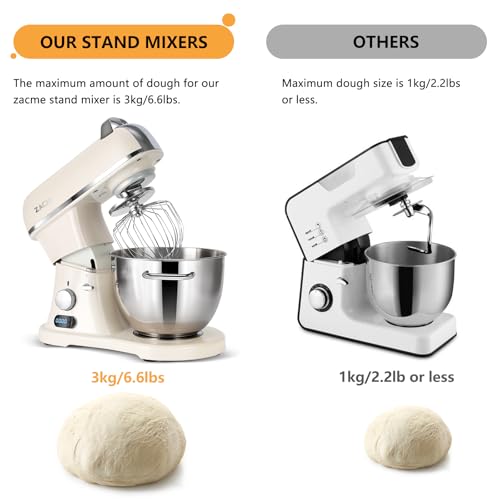
For bread dough, judge capacity by usable dough load rather than bowl quarts alone: dense dough climbs hooks, needs headroom, and can overload a mixer before the bowl looks full. Match the bowl and hook geometry to your baking pattern—small batches must still contact the hook properly, while double batches or multiple loaves need enough bowl volume, torque, and stability to knead without strain. Owners strongly appreciate larger bowls and oversized attachments for big bread, cookie, and dough batches, while mid-size bowls are often seen as a practical middle ground; some also note that very large or unusual bowl designs can make dough handling less convenient despite the extra volume.
1,000,000+ shoppers use Buyer's Guide every week to find the best products and services online.

Helping millions of users make smarter purchases online.


