









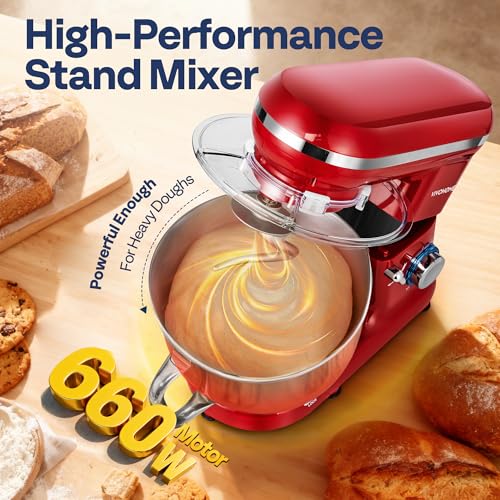





We also considered 10 others:


Our Top Choice
Compare Features


The order above is not editorial opinion, and it is not paid placement. It comes from what shoppers across our network actually do - which budget stand mixers they compare, and which they ultimately buy. We re-rank as new data comes in, so the long-term favorites have to keep earning their spot against new entrants. The full method, including how we make money.
Budget Stand Mixers Buyer's Guide
Budget stand mixers are a compromise between convenience and mechanical limits: many are excellent for cakes, cookies, frostings, and occasional dough, but not all can survive frequent heavy kneading. The sharpest checks are stability under load, true usable capacity, and whether the attachments and locking points are sturdy enough for the recipes you actually make.
Build
A mixer’s build quality affects how well it handles heavy doughs, frequent use, and years of wear without wobbling, overheating, or loosening up. Look for sturdy materials, tight-fitting attachments, a stable base, and controls that feel solid; be cautious of lightweight housings, excessive vibration, or parts that flex under pressure.
For a budget stand mixer, prioritize the parts that determine whether it will stay stable and usable under load: a rigid head or bowl-lift mechanism, a bowl that locks positively, non-slip feet, metal beaters/hooks where possible, and attachment shafts that do not wobble. Be cautious of mixers that feel light for their advertised capacity, rely heavily on thin plastic around stress points, or advertise “commercial” looks without clear evidence of sturdy accessories, because budget models often fail first at hinges, locking tabs, gears, or accessory hubs. Owner feedback supports that some low-cost mixers can feel dependable, steady, and well built for everyday baking, with several buyers praising sturdy accessories, large bowls, and good quality for the money.
Performance
Performance matters because a mixer that blends evenly, beats smoothly, and kneads reliably will give you better results across everyday recipes, from cake batter to bread dough. Look for consistent mixing without leaving dry pockets on the bowl, enough power and stability for thicker doughs, and speed settings that let you handle delicate whipping as well as heavy kneading without splattering or straining.
Match the mixer to the heaviest thing you actually make, not the highest wattage printed on the box: cakes, cookies, whipped cream, pancake batter, and buttercream are reasonable targets for many budget mixers, while frequent bagel, pizza, or whole-wheat bread dough demands stronger torque, better cooling, and a dough hook that reaches the bowl properly. Look for multiple low speeds that start gently, overload or thermal protection, and reviews mentioning dense dough performance without walking, burning smells, or gear strain; avoid assuming a high watt number alone means it can knead heavy dough safely. Owners generally report good results for everyday jobs like cakes, cookies, biscuits, dressings, and light doughs, and some higher-capacity budget machines are praised for fast, smooth mixing and bread-dough handling.
Value
A mixer’s value comes down to whether its performance, durability, and included features justify what you spend. Look for a model that handles your typical mixing tasks reliably without paying for capacity, attachments, or settings you will rarely use. Watch out for low-cost mixers that feel underpowered or flimsy, since they can end up being less economical if they struggle with regular use.
The best value in a budget stand mixer is not the biggest bowl or longest feature list; it is the cheapest model that can handle your normal batch size without overheating, wobbling, or requiring hard-to-replace proprietary parts. Occasional bakers should avoid overbuying a bulky machine that will sit unused, while frequent bakers should spend their budget on stability, usable speed control, and durable core attachments rather than novelty accessories. Owner sentiment backs this tradeoff: buyers often see budget mixers as worthwhile alternatives to premium machines for everyday baking, especially when they are easy to use, clean, and capable enough for common home recipes.
Ease
A mixer that’s easy to use makes everyday prep smoother, especially when you’re adding ingredients, changing speeds, or cleaning up between tasks. Look for intuitive controls, stable handling, easy-to-attach accessories, and a bowl or head design that gives you good access without awkward maneuvering. Watch out for controls that are hard to read, attachments that feel fussy to lock in, or designs that make scraping, pouring, and cleanup more cumbersome.
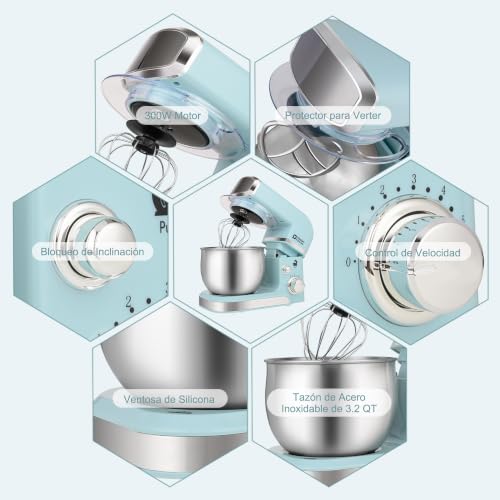
For budget mixers, ease of use depends on practical details that prevent mess and frustration: a tilt head or lift mechanism with enough clearance under cabinets, a bowl handle, clear speed markings, a splash guard with a usable pour chute, dishwasher-safe or easy-rinse attachments, and enough weight or suction to stay put while mixing. If you plan to store it between uses, check the footprint, total weight, cord storage, and whether attachments nest in the bowl; a mixer that is technically powerful but awkward to move or clean may not get used. Owners commonly praise budget models that are straightforward to set up, operate, clean, and keep steady, with some liking helpful touches such as lights, timers, smaller bodies, or detachable hand-mixer designs.
Capacity
Capacity determines whether a mixer can handle the batches you actually make, from small amounts of frosting to large batches of dough. Look for a bowl size that matches your usual recipes, but remember that bigger is not always better: oversized bowls can struggle with very small quantities, while undersized ones may crowd ingredients, strain the motor, or cause splashing.
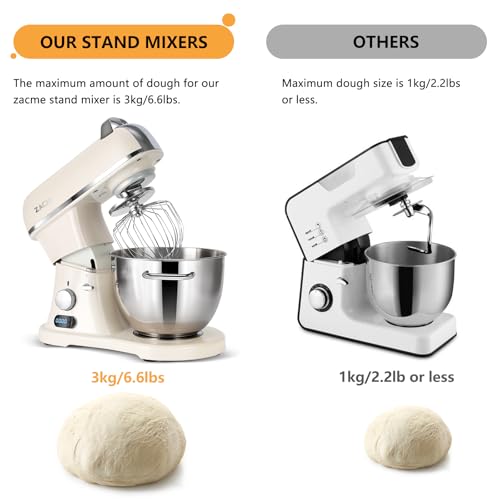
Choose capacity by recipe volume and minimum batch performance, not just the largest quart number: a 3–4 quart bowl may suit small households and single cakes, 5–6 quarts is more flexible for cookies and standard bread loaves, and 7–8+ quarts only makes sense if the beater and hook still reach small batches well. Large bowls can keep flour contained and support batch baking, but they can also leave small amounts unmixed at the bottom or sides, especially on budget machines with less precise planetary action; also check counter clearance and bowl shape, including center-post designs that may complicate dough handling. Owner feedback supports larger bowls as a real advantage for bigger recipes and bread sessions, though some note that design quirks and motor noise can make large-capacity dough work less convenient.
Attachments
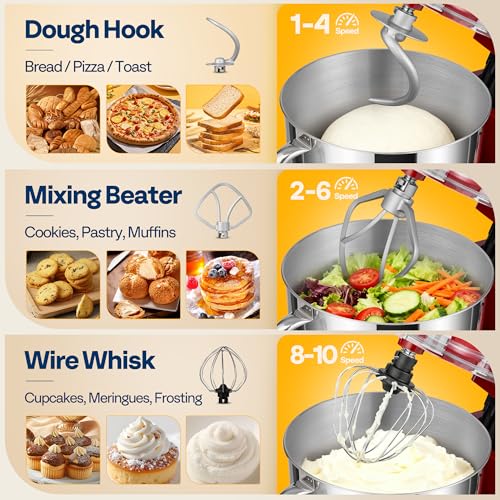
The attachments and speed settings determine how much your mixer can actually do beyond basic mixing, so look for accessories you’ll use often—such as beaters, dough hooks, whisks, or specialty tools—and make sure they’re easy to attach, clean, and store. More speeds can give you better control for delicate folding, whipping, kneading, or heavy batters, but avoid paying for extra accessories or settings that don’t match the recipes you regularly make.
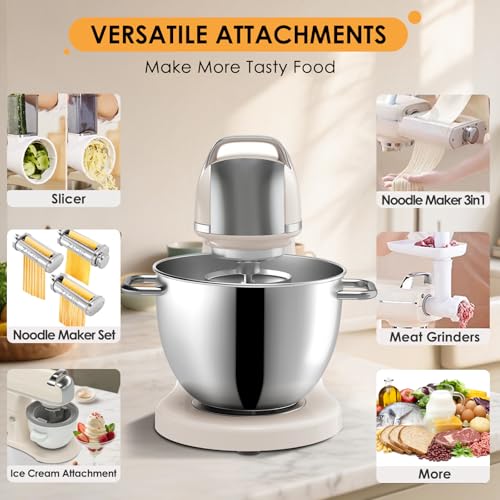
Inspect the included attachments as carefully as the mixer: for this category, the flat beater, dough hook, and whisk should fit tightly, clear the bowl correctly, and be made from materials that will not chip, rust, or flex under dough. Extra attachments such as grinders, blender jars, or specialty tools can add value, but only if they are sturdy, easy to clean, and replaceable; budget bundles sometimes look generous while the accessory pieces are the weakest link. Owners like the convenience of included tools and versatile designs, including models that switch between stand and hand use, but durability concerns around cracked, leaking, or short-lived accessories are a clear watch-for.
1,000,000+ shoppers use Buyer's Guide every week to find the best products and services online.

Helping millions of users make smarter purchases online.


