











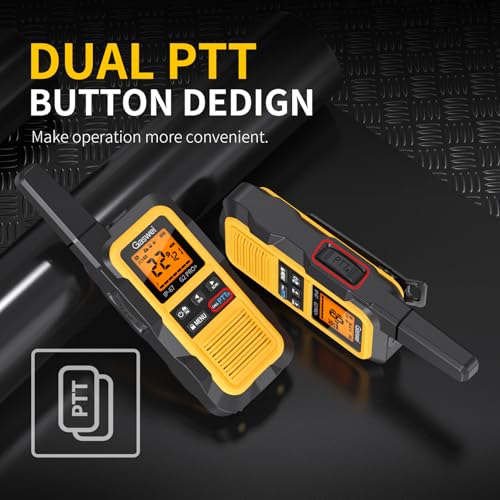


We also considered 10 others:


Our Top Choice
The order above is not editorial opinion, and it is not paid placement. It comes from what shoppers across our network actually do - which long distance walkie talkies they compare, and which they ultimately buy. We re-rank as new data comes in, so the long-term favorites have to keep earning their spot against new entrants. The full method, including how we make money.
Long Distance Walkie Talkies Buyer's Guide
Long distance walkie talkies are a tradeoff between advertised range and real-world obstacles: hills, walls, decks, trees, vehicles, and crowded channels can shrink usable distance quickly. The sharpest buying concerns are whether voices stay clear when people spread out, whether batteries last through the outing, and whether the radios are rugged and simple enough for every user in the group.
Real Range
Long-distance walkie talkies are limited less by the number on the box and more by terrain, building materials, antenna position, and local interference. A careful buyer should match the radio to the actual setting, such as open acreage, jobsite structures, cruise decks, wooded trails, or neighborhood blocks.
Treat every range claim as a best-case line-of-sight number, not what you will get through hills, concrete, cabins, ship decks, tree cover, or warehouse shelving. For true long-distance use, prioritize radios with proven real-world reception in the same environment you will use them in, enough legal transmit power for that radio class, a usable antenna design, and channel options that let your group move away from congestion; avoid buying solely by the largest printed mileage claim. Owner feedback strongly supports range as a deciding factor for neighborhoods, farms, acreage, parks, cruise ships, warehouses, slopes, jobsites, and outdoor trips, but it also shows the main failure mode: walls, terrain, distance, and obstacles can cut coverage far sooner than advertised.
Clear Audio
A radio that technically connects is still frustrating if words are muffled, clipped, or buried in static. Clear audio matters most when messages are short and practical, such as directions, safety checks, backing a trailer, coordinating a group, or calling across a property.
Look for loud, intelligible voice transmission at normal speaking volume, not just a high range rating. Good long-distance radios should have a clear speaker, a usable microphone, low static within range, an easy-to-find volume control, and accessory audio that does not become the weak link; for emergency or work use, avoid sets where earpieces, headsets, or speaker output are reported as inconsistent. Owners repeatedly describe clear audio as enough for check-ins, outdoor coordination, emergency use, caregiving, and group communication, while mixed reports note that clarity can fall with distance, walls, or weaker signal.
Battery Life
Long-distance use often happens away from outlets, cell service, or quick replacements, so battery failure can end the whole communication plan. Runtime, charging convenience, and long-term charging durability are just as important as the radio’s stated range.
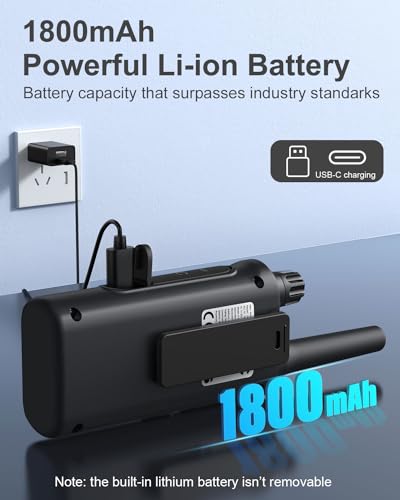
Choose battery systems around your longest outing, not just standby claims. Rechargeable lithium packs are convenient for families, events, worksites, camping, and travel, but the best sets also make charging simple, show battery status clearly, and can be topped up between uses; for emergency kits, consider whether replaceable batteries or charging from a power bank is possible. Owner sentiment is especially positive around rechargeable radios lasting through long outings, long standby time, quick top-ups, and lithium batteries being preferred over disposable AAA-powered sets, though some longer-term charging reliability is reported as uneven.
Rugged Build
Long-distance radios are often used where phones are inconvenient or unavailable, which means they may be dropped, rained on, clipped to gear, or handled by kids and crews. A tough radio protects the communication plan, while weak clips, doors, buttons, or accessories can create failure points even when the electronics work.
For outdoor, family, jobsite, farm, hunting, camping, or emergency use, prioritize drop-resistant housings, grippy buttons, belt clips that do not snap easily, water resistance appropriate to the setting, and battery doors that stay secure. If rain, snow, muddy hands, kids, or work trailers are part of the use case, avoid toy-like builds and check whether the radio is merely splash-tolerant or actually rated for wet conditions. Owners strongly praise durable sets that survive rain, water exposure, drops, kids, rough handling, harsh outdoor use, trips, and everyday work, while accessory durability can be less consistent than the radios themselves.
Simple Controls
Walkie talkies are often handed to people who will not read a manual in the moment. Simple controls reduce missed messages, wrong-channel problems, accidental setting changes, and frustration during travel, outdoor activity, work, or emergencies.
Match the controls to the least technical person who will carry the radio. For families, kids, older adults, caregiving, events, and crews, look for obvious push-to-talk operation, channel lock, readable channel indicators, simple pairing across the set, silent/vibrate options when needed, and privacy-code controls that are useful but not easy to change accidentally. Owners consistently praise radios that work without much setup or fiddling, are easy for kids and older adults, include lock features to prevent accidental changes, and respond quickly once in usable range.
Group Fit
A good long-distance radio set is not just one strong unit; it has to fit the whole group’s size, habits, and charging routine. The best value comes when the pack count, portability, accessories, and channel compatibility match the way the radios will actually be used.
Buy the number and type of radios your group actually needs, and confirm they can all share channels, privacy codes, chargers, clips, and accessories. Multi-packs are useful for families, camping groups, warehouses, caregiving, festivals, trips, and emergency plans, but small lightweight radios are better only if they are still loud, durable, and easy to keep charged; also consider licensing rules for the radio service you choose so every user can operate legally. Owner feedback supports multi-radio bundles as strong value for groups, with lightweight designs praised for travel and frequent carrying, and broad usefulness across road trips, festivals, kids nearby, backing trailers, off-roading, jobsites, camping, hunting, farms, and neighborhoods.
1,000,000+ shoppers use Buyer's Guide every week to find the best products and services online.

Helping millions of users make smarter purchases online.


