













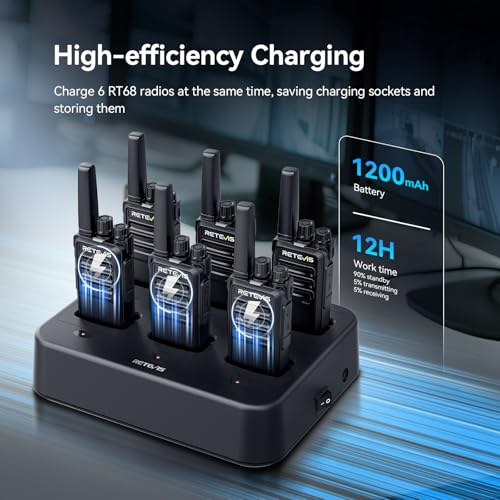


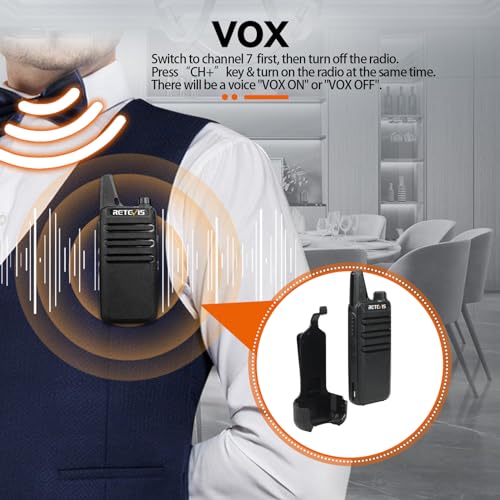


We also considered 10 others:


Our Top Choice
The order above is not editorial opinion, and it is not paid placement. It comes from what shoppers across our network actually do - which frs radios they compare, and which they ultimately buy. We re-rank as new data comes in, so the long-term favorites have to keep earning their spot against new entrants. The full method, including how we make money.
FRS Radios Buyer's Guide
FRS radios are bought for quick, license-free group communication, but the real tradeoff is that small, fixed-antenna handhelds cannot overcome hills, buildings, trees, or weak batteries the way advertising range numbers imply. The best picks for this niche balance real-world range, clear voice audio, all-day power, rugged handling, and simple push-to-talk operation for families, crews, trips, and outdoor use.
Real Range
FRS range is limited by terrain, obstructions, antenna design, and radio power, so advertised maximums are best treated as ideal-condition figures. A careful buyer should match the radio to the environment where it will actually be used, whether that is a campsite, jobsite, ski area, neighborhood, or road trip convoy.
Shop first for realistic range, not the largest number on the package. For FRS radios, range depends heavily on line of sight: open fields, vehicles in convoy, farms, ski slopes, and job sites are much easier than dense woods, hills, concrete buildings, or urban neighborhoods. Favor radios with full-power FRS channels, good squelch behavior, clear channel selection, and enough range for your actual use case; avoid assuming maximum advertised range will apply unless you are in unusually open conditions. Owner sentiment strongly supports range as a major differentiator: buyers often report clear communication across neighborhoods, farms, job sites, vehicles, outdoor settings, and roughly mile-scale open conditions. At the same time, owners repeatedly note that longer-distance performance varies by terrain and that real-world range is often far below advertised maximums, making expectation-setting essential.
Clear Audio
A radio with marginal range can still be useful if the voice is clear, but a noisy or garbled radio quickly becomes frustrating. Speaker quality, microphone pickup, squelch behavior, and volume output all affect whether short push-to-talk messages are understood the first time.
Prioritize clean voice audio over extra novelty features. A good FRS radio should make speech intelligible at arm’s length, from a jacket pocket, in a moving vehicle, around equipment, or outside in wind, with enough speaker volume and limited static. Look for clear transmit/receive audio, useful volume steps, a stable push-to-talk response, and preferably an earpiece or headset option for noisy work, skiing, events, or hunting-adjacent group use; avoid radios that sound thin, toy-like, or easily garbled. Owners consistently praise clear audio with little static, clean reception at short and normal distances, and enough volume for work crews, outdoor use, vehicles, and quick coordination. Several owner points specifically connect audio clarity with avoiding miscommunication, which matters when the radio is being used for safety, jobsite tasks, or keeping a group together.
Battery System
FRS radios are often used away from outlets, so runtime and charging design can matter as much as transmit range. A strong battery setup reduces missed calls, keeps a group connected through the day, and gives you a recovery plan when a pack ages or a charger fails.
For trips, workdays, and emergency backup, check the battery system as closely as the radio body. Favor radios that can last a full day of intermittent use, recharge without fuss, and ideally accept replaceable standard cells or spare packs so a dead proprietary pack does not sideline the whole unit. Charging docks can be convenient at home or in a shop, while USB or vehicle charging helps on road trips; avoid sets where each radio must be manually fussed with or where replacement batteries are hard to source. Owners often praise battery life that holds through long stretches, full days of intermittent use, and regular outdoor or work use, with convenient charging afterward. The negative side is specific: some rechargeable packs and charging docks draw complaints, including manual charging hassles, packs that do not hold up well, and component failures within months.
Rugged Build
FRS radios are handled, clipped, dropped, packed, and used outdoors more often than many small electronics. Housing strength, seals, clips, battery doors, and charging hardware all affect whether the radios remain dependable after repeated real-world use.
Match ruggedness to the environment: family amusement-park use needs pocket durability, while farms, ski days, construction sites, and wet campsites call for tougher housings, sealed ports, secure battery doors, sturdy belt clips, and a meaningful water- or weather-resistance rating. Fixed antennas should feel protected rather than flimsy, buttons should resist accidental damage, and charging contacts should not be exposed in a way that invites corrosion or dirt buildup. If radios will be shared by kids, crews, or large groups, durability is not cosmetic—it determines whether the set survives normal handling. Owners describe better sets as rugged, well-built, and able to withstand daily farm, jobsite, outdoor, rough, or all-weather use while staying in good condition. Sentiment is not uniformly perfect, however: some owners report uneven long-term durability, especially failed charging docks or components after months of use.
Easy Handling
FRS radios are often handed to children, guests, coworkers, or relatives who will not read a manual. Straightforward controls and carry-friendly size help the group communicate quickly instead of losing time to settings, locks, or accidental channel changes.
Choose radios that are simple under pressure: a large push-to-talk button, readable channel display, easy volume control, keypad lock, belt clip, and glove-friendly controls matter more than complicated menus. For families and mixed groups, make sure everyone can set the same channel and privacy code quickly, and remember that privacy codes do not encrypt conversations—they only filter what you hear. Compact radios fit better in ski jackets, packs, and pockets, but they still need controls large enough for quick contact at stores, venues, campsites, or job sites. Owners repeatedly value quick setup, simple everyday operation, easy controls, good volume access, belt clips, and large push-to-talk buttons. They also like no-license simplicity for families at large venues and stores, and some note that the radios are easy to carry in ski jacket or cellphone-sized pockets.
Kit Value
FRS radios are usually bought as a group communication system, not as a single gadget. The right package should cover the whole group and include the accessories needed to keep every unit charged, carried, and ready to use.
Buy the kit around the number of people who actually need a radio, plus one spare if communication is important. Multi-radio packs can be a better fit for families, crews, camps, ski groups, and road trips than buying individual units, but only if every radio includes the needed batteries, chargers, clips, and compatible accessories. Value is not just low cost; it is getting enough reliable handsets, usable range, clear audio, and charging gear without paying for features your group will not use. Owners often describe multi-radio sets as a strong value, especially for families wanting simple communication without a phone plan. They also connect good value with dependable function, ruggedness, respectable range, and clear audio, while noting that battery and charging weaknesses can undercut the bargain.
1,000,000+ shoppers use Buyer's Guide every week to find the best products and services online.

Helping millions of users make smarter purchases online.


