

















We also considered 10 others:


Our Top Choice
The order above is not editorial opinion, and it is not paid placement. It comes from what shoppers across our network actually do - which lamp timers they compare, and which they ultimately buy. We re-rank as new data comes in, so the long-term favorites have to keep earning their spot against new entrants. The full method, including how we make money.
Lamp Timers Buyer's Guide
Lamp timers sit at the intersection of convenience and safety: they need to switch lighting predictably without becoming the weak link in a bedside lamp, grow light, aquarium, reptile enclosure, coop, or candle-warming setup. The sharpest tradeoff is between simple reliable scheduling and extra features like app control, dimming, color, or heat adjustment, which add flexibility but also more setup and compatibility points to check.
Schedule Control
Scheduling is the core reason to buy a lamp timer, and the right model depends on whether you need one daily on/off cycle or several timed routines. Precise timekeeping matters more for plant lights, reptile lights, aquarium lighting, and coops than for casual accent lighting. A good timer should also make changes easy when seasons, daylight, or routines shift.
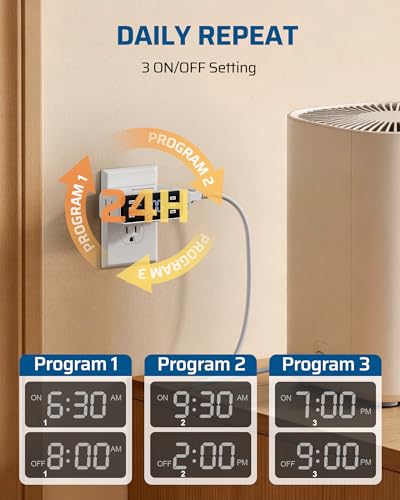
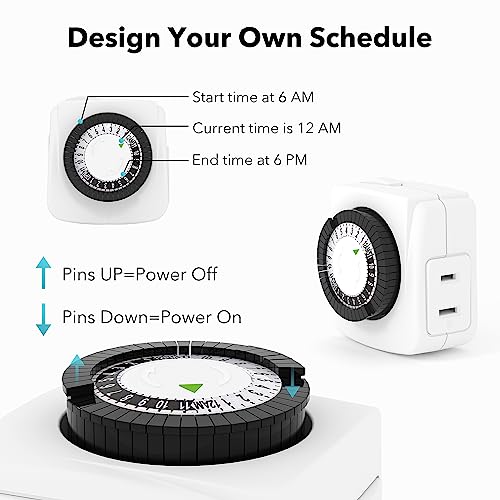
Look for actual clock-time programming, multiple daily programs, and a clear manual override if the lamp controls a routine that affects plants, pets, or security. For grow lights, aquarium lights, reptile lights, and coops, avoid vague analog tabs or timers known to drift if the photoperiod needs to stay consistent; for candle warmer lamps, a countdown or auto-off timer is especially useful because it limits unattended heating. Owner feedback strongly supports programmable scheduling as a major strength for lights, plant growth lamps, and coops, and buyers liked being able to set actual times and multiple programs. The main caution is that time accuracy received more mixed feedback from owners who needed very precise timing.
Load Safety
A lamp timer is only safe if its electrical rating matches the device plugged into it. LED lamps, incandescent bulbs, grow lights, heat-adjacent candle warmers, and specialty pet lights can place different demands on a timer. Choosing the wrong rating can cause nuisance shutoffs, overheating, or early failure.
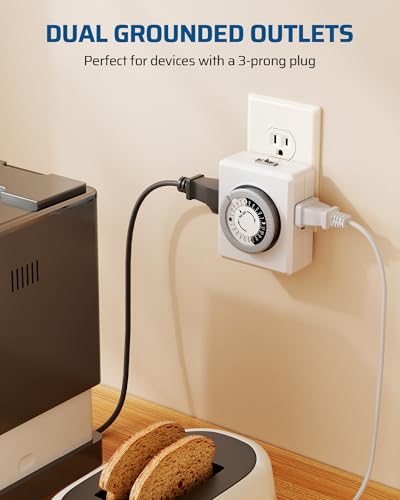
Check the timer’s maximum wattage and amperage, and match it to the exact device you will plug in rather than assuming all “lamp” loads are the same. Use grounded outlets for grounded plugs, avoid daisy-chaining with power strips unless the timer is explicitly rated for that use, and do not use a basic lamp timer for heaters, high-wattage fixtures, or heat equipment unless the instructions specifically allow it. For candle warmer lamps, an auto-off timer helps reduce the risk of forgetting a heated device, but it does not replace placement on a stable, heat-safe surface away from fabrics. Owner sentiment reinforces this safety angle: shoppers praised timer convenience for enjoying candles without worrying about an open flame or forgetting shutoff, and they valued timers that reliably controlled lamps, aquarium lights, reptile lights, grow lights, and similar devices.
Everyday Controls
Even a capable timer becomes frustrating if changing a schedule requires repeated manual checks or confusing button sequences. Clear controls matter most when the timer is tucked behind furniture, used by multiple household members, or adjusted seasonally. The best interface is the one you can correct quickly without resetting the whole routine.
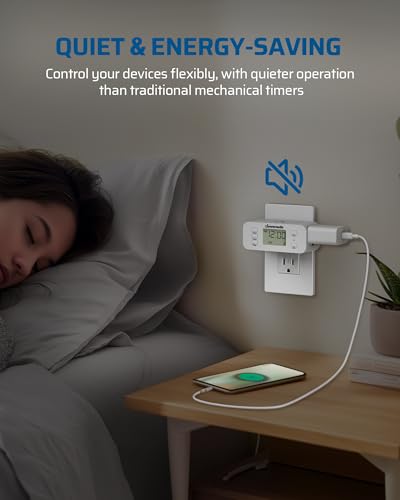
Prioritize a readable display, clearly labeled buttons, a dedicated on/off override, and programming steps that do not require unplugging the unit or cycling through hidden modes. If the timer will be used at a bedside or in a living area, also consider whether controls are easy to reach and whether indicator lights are too bright at night. For users managing pets, aquariums, or plants, the ability to quickly confirm the current program is more important than having a long feature list. Owner feedback backs this up: buyers repeatedly described straightforward digital timers as quick to program, easy to read, and simple to adjust, especially for basic on/off schedules.
Smart Connectivity
Smart lamp timers add remote control, voice commands, automations, and scene control, but they also depend on network compatibility. A reliable smart setup should recover cleanly after power or WiFi interruptions and still provide local control when the app is unavailable. Ecosystem fit is essential because not every smart timer works equally well with every home platform.
Before choosing a smart lamp timer or smart timed lamp, confirm the supported ecosystem, WiFi band, app requirements, and whether schedules run locally or depend on the cloud. Look for physical controls as a fallback, because a lamp that cannot be turned on when WiFi drops is a poor fit for a bedside, pet, or security use. Voice control is useful for accent and bedside lighting, while app-based dimming and color scenes matter more if the timer is part of room ambience rather than just automation. Owner sentiment is positive on easy setup and voice control when pairing goes smoothly, but connectivity is mixed: many units link without trouble, while some owners report lost WiFi or repeated connection attempts.
Light & Heat
Some lamp timers simply switch power, while integrated timed lamps and candle warmer lamps also control brightness, color, or heat. These features affect comfort, ambience, fragrance release, and compatibility with bulbs or warmers. The more a device modifies light or heat, the more important it is to check that the timer and dimming method work together safely.
If you are timing a standard lamp, make sure the timer is compatible with the bulb type and do not pair a basic on/off timer with a dimmer or smart bulb setup unless the instructions allow it. For timed candle warmer lamps, look for adjustable brightness or heat, stable lamp height or bulb positioning, and an auto-off setting so fragrance can be released without burning a wick or leaving heat on indefinitely. For mood lighting, color and dimming controls are worth prioritizing only if they are easy to adjust from the lamp, app, or voice assistant you actually use. Owner feedback supports these differentiators: buyers liked adjustable brightness and heat control for tailoring glow and warming speed, reported effective fragrance release with even melting, and appreciated color and brightness controls for changing room mood. Candle longevity was more variable, though many felt warming helped expensive candles last longer than burning.
Fit & Build
Lamp timers often live in crowded outlets, behind nightstands, or in visible living spaces, so shape and build matter more than they first appear. A bulky timer can block the second receptacle or force a lamp plug into an awkward angle. Durable construction and consistent reliability are especially important for routines that run unattended every day.
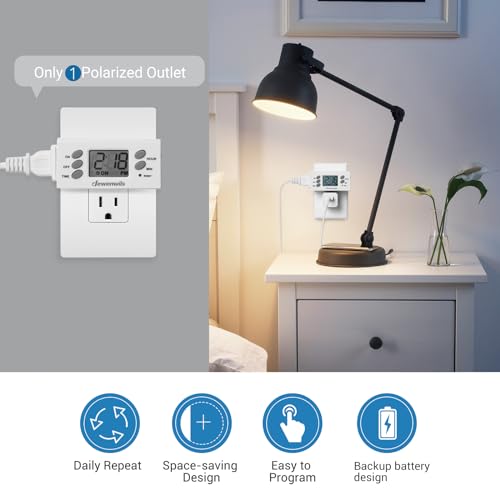
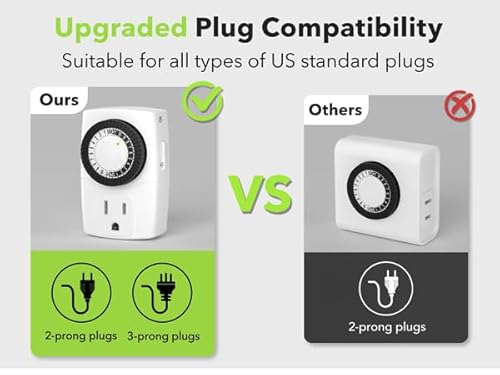
Measure the outlet area before buying, especially if the timer will sit behind furniture, share a duplex outlet, or plug into a wall plate with limited clearance. Side-facing outlets, low-profile bodies, and non-blocking plug layouts are useful when you need to keep another receptacle available. For visible bedside or accent use, clean styling matters, but do not trade away stable construction, secure plug fit, or reliable switching. Owner feedback notes that compact designs are appreciated when they fit neatly and leave another outlet open, while decorative lamp-style units are liked for looking cozy and feeling well made. Value and reliability are less uniform: many buyers felt their timers performed well for the cost, but some reported failures after months of use.
1,000,000+ shoppers use Buyer's Guide every week to find the best products and services online.

Helping millions of users make smarter purchases online.


