








We also considered 10 others:


Our Top Choice
The order above is not editorial opinion, and it is not paid placement. It comes from what shoppers across our network actually do - which floor lamps they compare, and which they ultimately buy. We re-rank as new data comes in, so the long-term favorites have to keep earning their spot against new entrants. The full method, including how we make money.
Floor Lamps Buyer's Guide
Floor lamps have to balance room-scale illumination with a small, safe footprint, so the best choice depends on whether you need true task light, soft ambiance, or a decorative corner accent. The sharpest buying risks are underpowered light for reading, wobbly lightweight construction, and controls that seem convenient until the remote, app, or integrated LED system becomes frustrating.
Light Output
A floor lamp can be a main light source, a reading light, or a mood light, but not every design does all three well. Shoppers should match brightness, beam direction, and dimming range to the actual job the lamp will do, because a lamp that looks bright in photos may still leave a chair, desk, or room corner poorly lit.
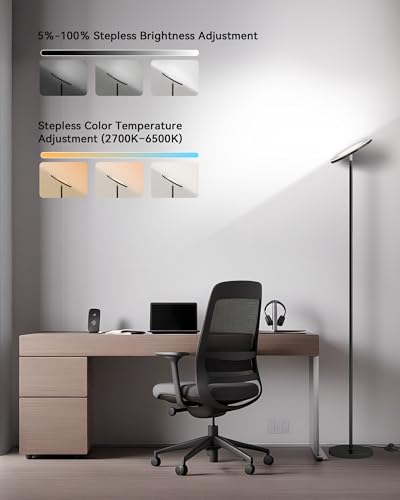
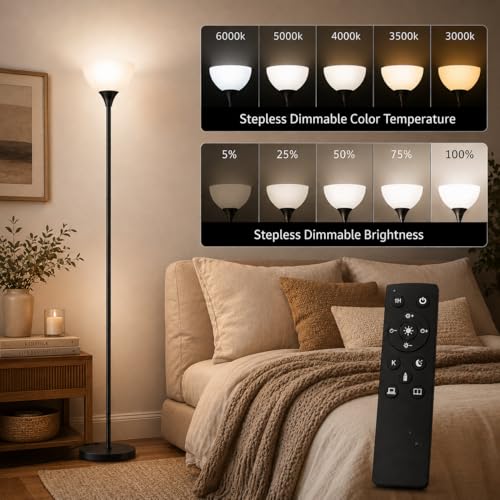
For primary room lighting, look for high-output LEDs or multiple adjustable heads that can throw light upward and outward; for reading, prioritize a directional head, shade, or arm that places light over the page without glare. Check for a wide dimming range, not just a few fixed steps, and make sure warm, neutral, and cool white settings are available if the lamp will move between relaxing, working, and early-morning use. Owner feedback strongly supports brightness as a major separator: many buyers praised lamps that could light rooms without ceiling fixtures, soften down for evening use, and shift between task lighting and mood lighting, while some noted that dimmable output still was not bright enough for everyone’s reading needs.
Controls
Modern floor lamps often rely on remotes, touch controls, apps, timers, and preset scenes instead of a simple switch. These features can make a lamp far more flexible, but they also add points of failure and can be annoying if the interface is confusing or poorly documented.
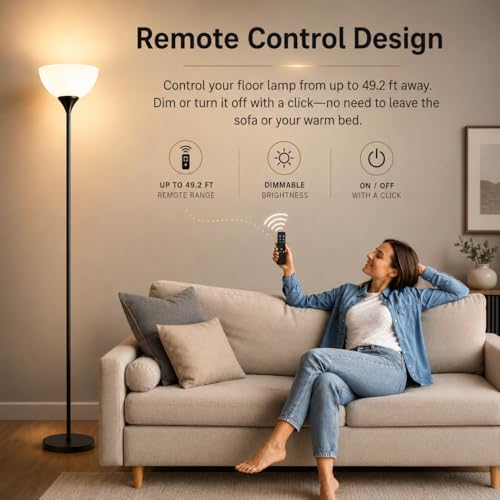
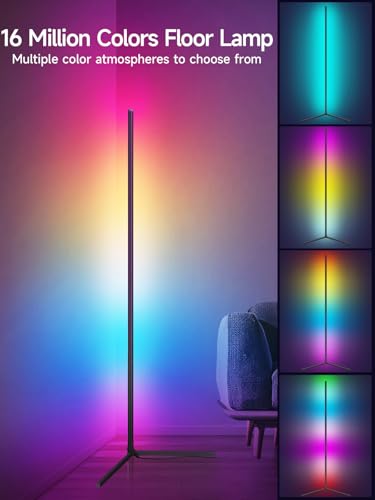
Choose controls based on how the lamp will actually be used: a bedside or reading-chair lamp benefits from a physical switch, touch control, or magnetized remote that is hard to lose, while a color-changing corner lamp may justify app control, timers, and scenes. Look for independent head control if the lamp has multiple light bars or heads, memory for the last brightness/color setting, and compatibility with wall switches or smart plugs if you plan to automate it. Owner sentiment shows the upside clearly, with frequent praise for remotes, app controls, individual light controls, timers, brightness changes, and color-temperature adjustment; it also shows the risk, with some buyers reporting uneven reliability or features that were not explained clearly enough.
Stability
Because floor lamps are tall and narrow, stability matters more than it does for table lamps. A lamp can feel fine when untouched but become a problem if bumped by pets, children, vacuuming, or daily traffic through a room.
Prioritize a weighted base, straight threaded pole sections, tight shade or head hardware, and a cord route that does not tug the lamp off balance. For shelf floor lamps, check the shelf load limits and avoid designs where storage weight sits high without a broad, stable base; for lightweight corner lamps, place them out of bump zones. Owner reports make this a key floor-lamp filter: many buyers liked sturdy, solid-feeling builds that stayed stable while remaining lightweight, but mixed feedback also mentioned lamps that felt flimsy, lopsided, or sturdy only in normal low-contact use.
Room Fit
A floor lamp is furniture as much as lighting, so size, height, shape, and visual style affect whether it solves a room problem or creates clutter. The right lamp should fit the outlet location, walking path, seating height, and décor without blocking doors, curtains, shelves, or sightlines.
Measure the footprint, total height, cord path, and shade or light-bar clearance before choosing, especially for small apartments, tight corners, sofas, bedsides, and desks. Slim pole and corner designs are best when floor space is scarce, arched or multi-head lamps need more clearance, and shelf lamps should be treated as both lighting and small furniture. Owner feedback repeatedly praises slim, modern, minimalist, cute, and polished designs that upgrade a room without taking up much space, and shelf-style designs were valued when they added practical display or storage function.
Setup
Assembly quality affects whether a floor lamp stands straight, stays tight, and feels dependable over time. Lamps with integrated LEDs, proprietary remotes, or unclear manuals may be easy on day one but harder to troubleshoot later.
Look for clearly threaded pole sections, labeled parts, strain relief where the cord exits, accessible fasteners, and instructions that explain pairing, timers, color modes, and reset steps. If the lamp uses replaceable bulbs, confirm socket type, maximum wattage, shade clearance, and LED bulb compatibility; if it uses integrated LEDs, treat the control system and driver reliability as part of the purchase decision because the light source may not be easily replaceable. Owners often described assembly as quick, simple, and straightforward, but the sentiment also flags that advanced features and manuals can be less clear, and that long-term confidence varies when controls or build quality are inconsistent.
Value
A good floor lamp should justify its space with the right mix of light quality, construction, controls, and appearance. Chasing the most features can backfire if the lamp is unstable, dim, or hard to operate, while a simpler lamp can be the better buy if it performs its core job reliably.
Evaluate value by the complete package: usable brightness for your room, dimming and color range you will actually use, a stable base, durable hardware, and controls that do not depend on a fragile accessory. Avoid paying attention only to the number of modes or decorative effects; for daily use, dependable white light, comfortable operation, and solid construction matter more than novelty. Owner sentiment consistently connects strong value with lamps that combine attractive looks, useful adjustments, easy setup, and better-than-expected construction, while mixed reports suggest that value drops quickly when brightness, stability, or control reliability falls short.
1,000,000+ shoppers use Buyer's Guide every week to find the best products and services online.

Helping millions of users make smarter purchases online.


