












We also considered 10 others:


Our Top Choice
The order above is not editorial opinion, and it is not paid placement. It comes from what shoppers across our network actually do - which indoor air quality monitors they compare, and which they ultimately buy. We re-rank as new data comes in, so the long-term favorites have to keep earning their spot against new entrants. The full method, including how we make money.
Indoor Air Quality Monitors Buyer's Guide
Indoor air quality monitors are most useful when they turn invisible pollutants into readings you can act on without becoming a confusing gadget you stop trusting. The big tradeoff is sensor breadth and responsiveness versus readability, battery life, and calibration limits, especially if you are using the monitor to decide when to ventilate, run a purifier, or investigate moisture, fumes, dust, pets, or possible mold sources.
Sensor Trust
An indoor air quality monitor is only helpful if its readings change in believable ways when the room actually changes. Shoppers should look for practical responsiveness, stable baseline behavior, and measurements that are consistent enough to guide ventilation or filtration decisions rather than treating consumer sensors as lab instruments.
Prioritize monitors that respond quickly to real household events: cooking smoke, cleaning sprays, paint fumes, dusty carpets, pet activity, workshop particles, opened windows, or a purifier turning on. For particle tracking, look for PM2.5 at minimum and ideally PM10; for ventilation decisions, CO2 is key; for chemical/fume awareness, VOC or TVOC tracking matters. Avoid models that show dramatic unexplained swings, update too slowly to catch short pollution events, or provide numbers with no trend, color scale, or alert context. Owner reports strongly favor monitors whose readings visibly changed after cooking, cleaning spray, pet dander, carpet cleaner, painting, and opening windows, and several users felt readings were dependable enough for everyday home decisions. Sentiment also shows buyers trust a device more when it produces different results in different rooms or situations, though app-based update behavior can be mixed and should not be the only way you verify real-time changes.
Pollutant Coverage
Different indoor air problems require different sensors, so a monitor with the wrong measurement set can miss the issue a household actually cares about. Broad coverage is especially valuable when symptoms, odors, humidity, dust, cooking fumes, and ventilation problems overlap.
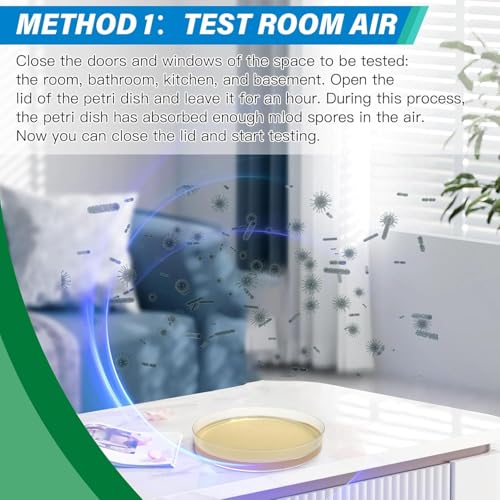
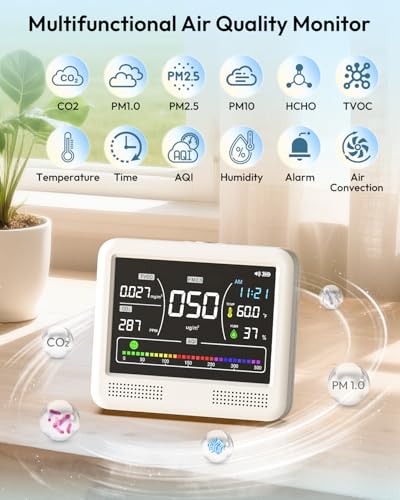
Match the sensor list to your main concern before buying. For wildfire smoke, cooking particles, dust, and pet-related particulates, PM2.5 and PM10 are the core measurements; for stuffy bedrooms, nurseries, offices, and classrooms, CO2 helps show whether ventilation is poor; for cleaning products, painting, new furniture, and odors, VOC or TVOC is important; for mold-risk conditions, temperature and humidity readings are essential even though a standard air monitor does not identify mold species. Formaldehyde detection can be useful in homes with new furniture, flooring, cabinetry, or pressed-wood materials, but it should be viewed as a screening tool rather than a professional test. Owner sentiment consistently rewards all-in-one monitors that cover PM2.5, PM10, CO2, TVOC, formaldehyde, temperature, humidity, and even clock functions. Related mold-testing feedback reinforces that households often need different tools for different questions: monitors can reveal humidity and air-quality changes, while mold kits are used to screen vents, ceilings, basements, HVAC systems, and musty rooms for actual growth.
Readable Alerts
A monitor that is hard to read or interpret will not change household behavior, even if it has good sensors. Clear displays, simple labels, and timely alerts help shoppers move from numbers to action, such as opening windows, adjusting a purifier, or checking a moisture source.
Look for a large, high-contrast display that can be read from across a room and from common placement angles such as a counter, desk, nursery shelf, or bedside table. The best layouts show the most actionable readings up front, use understandable units or color bands, and include alerts that tell you when ventilation or purification is needed without requiring constant app checking. Avoid tiny screens, unlabeled acronyms, dim displays for daytime kitchens, overly bright displays for bedrooms, or alert systems that cannot be silenced or understood. Owner feedback repeatedly highlights large, bright, crisp screens and e-ink-style readability as a major reason monitors are easy to live with. Buyers also valued clear setup, intuitive interfaces, and informative guidance, with mold-test-kit owners especially appreciating clear instructions and photo-based support when interpreting results.
Placement Freedom
Air quality can vary sharply room to room, so a monitor is more useful when it can be moved where the question is. Battery life, charging behavior, and compact size determine whether the device becomes a flexible diagnostic tool or stays parked near one outlet.
Choose a monitor with enough battery life to survive multi-day checks in bedrooms, basements, nurseries, kitchens, workshops, or near suspected problem areas without being tethered to a wall. USB-rechargeable designs are convenient, but check whether continuous alerts, Bluetooth, high refresh rates, or app syncing shorten runtime. Compact cordless units are better for comparing rooms, checking purifier performance, or placing near a vent or work area, while always-plugged models may be acceptable for permanent CO2 tracking in one space. Owner sentiment strongly supports rechargeable, cordless, compact monitors that are easy to move between rooms, with some buyers reporting weeks or longer between charges. The main caution from owners is that app features and real-time update settings can drain the battery faster, so shoppers should treat connectivity as useful but not free.
Home Fit
Indoor air monitors usually sit in visible living spaces, so durability and form factor affect whether they are placed correctly and used consistently. A sturdy, compact, well-finished unit is less likely to be hidden away, knocked over, or ignored.
Favor a stable, compact body with a display angle that works on counters, desks, nursery furniture, shelves, and bedside tables. Good placement matters: avoid blocking intake vents, placing the monitor directly beside a purifier outlet, stove, humidifier, or open window unless you are intentionally testing that source. Materials should feel sturdy enough for frequent relocation, and the unit should not look or feel like a bulky appliance if it needs to live in shared spaces. Owners frequently praised sturdy build, polished presentation, bright screens, compact designs, and finishes that fit naturally in kitchens, living rooms, nurseries, and desks. This matters because a monitor that blends into normal rooms is more likely to stay powered, visible, and useful every day.
Screening Value
Consumer air quality tools are best viewed as screening and trend-tracking devices, not final diagnostic authorities. Good value comes from helping a household decide what to do next, when to ventilate, and when a problem deserves professional investigation.
Buy for the decision you need to make: daily monitors are excellent for trends, source-hunting, ventilation checks, purifier comparisons, and noticing recurring spikes, while mold kits can help screen suspicious areas before paying for professional inspection. Do not rely on a general air monitor alone to declare a home mold-free, identify a contaminant species, or diagnose health symptoms; use it to flag patterns such as high humidity, particle spikes, VOC events, or poor ventilation. For suspected mold, look for kits with multiple samples, clear incubation instructions, comparison guides, and access to interpretation help, but treat serious growth, HVAC contamination, or health concerns as reasons to escalate. Owner sentiment supports strong practical value: buyers used monitors to manage asthma, allergies, cooking fumes, kids, pets, workshops, and healthier home routines. Mold-kit owners also valued being able to screen multiple rooms and appreciated guides, photo review, and support when results were hard to match on their own.
1,000,000+ shoppers use Buyer's Guide every week to find the best products and services online.

Helping millions of users make smarter purchases online.


