









We also considered 10 others:


Our Top Choice
The order above is not editorial opinion, and it is not paid placement. It comes from what shoppers across our network actually do - which air quality detectors they compare, and which they ultimately buy. We re-rank as new data comes in, so the long-term favorites have to keep earning their spot against new entrants. The full method, including how we make money.
Air Quality Detectors Buyer's Guide
Air quality detectors are useful only when the sensor mix matches the problem you are trying to see: fine particles from smoke and cooking, ventilation-related CO2, VOCs from cleaners or paint, humidity conditions, or mold risk. The sharpest buying concerns are false confidence from incomplete sensors and misleading readings caused by placement, humidity, or poorly interpreted mold tests.
Pollutant Coverage
Different indoor-air problems require different sensors, so a detector with the wrong measurement set can miss the issue you care about most. Broader coverage is useful when a household has mixed concerns, but each reading should still be understood as a specific type of measurement rather than a general health verdict.
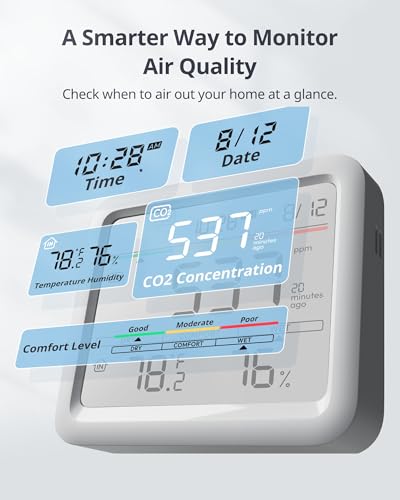
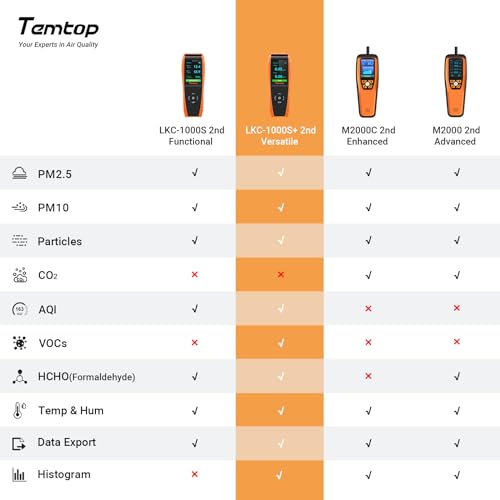
Start by matching the detector to the contaminant, not just the word “air quality.” For smoke, wildfire, cooking, dust, and pet dander, prioritize PM2.5 and PM10; for stuffy rooms and ventilation, look for true CO2 sensing; for cleaners, paint, new furnishings, and odors, look for TVOC and formaldehyde coverage; for mold risk and comfort, temperature and humidity are supporting measurements rather than proof of mold. Owner feedback strongly favored all-in-one monitors that covered PM2.5, PM10, CO2, TVOC, formaldehyde, temperature, humidity, and even clock functions, and buyers found multi-measurement devices helpful for noticing changes from cooking, cleaning, painting, and opening windows.
Reading Confidence
A good air quality detector should show believable changes when the air changes and settle back when the source is removed. Accuracy is not just a lab number; in home use it depends on sensor type, calibration behavior, humidity, airflow, and where the device is placed.
Choose a detector that reacts quickly to real events but does not overreact to conditions the sensor cannot separate well. Optical particle sensors can spike near humidifiers or mist because droplets can look like particles, so place PM monitors away from humidifiers and sanity-check unusual readings against room conditions, vents, windows, and recent activities. Owners trusted readings most when numbers changed visibly during cooking, cleaning spray, carpet cleaner use, pet dander, painting, or room-to-room comparisons; the main caveat reported was that PM2.5 readings can spike around humidifiers and may need a reality check in some setups.
Mold Screening
Mold concerns are different from routine air monitoring because the key question is often source identification, not just a live air reading. A useful mold test should make sampling, waiting, and interpreting results clear enough to reduce guesswork while still leaving room for professional confirmation when the stakes are high.
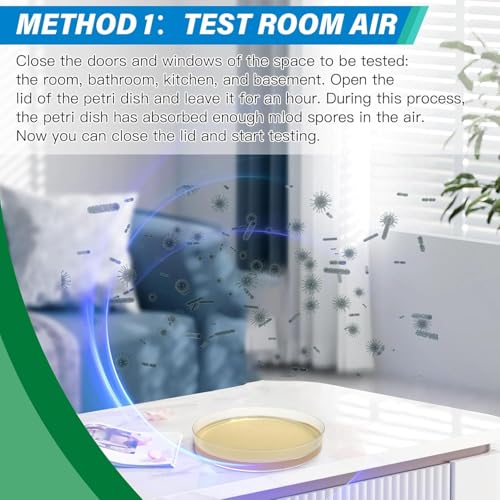
Do not treat a standard air monitor as a mold detector unless it includes a specific mold-testing method; particle, VOC, humidity, or odor clues can suggest conditions but cannot identify mold growth by themselves. For suspected mold, look for kits that support both surface swabs and air-exposure dishes, clear incubation and handling instructions, and identification help after growth appears; use them as screening tools before deciding whether professional inspection or remediation is needed. Owners found home mold tests straightforward for vents, ceilings, basements, HVAC areas, and musty rooms, and they valued guides, photo-based identification, and support when samples were hard to match visually.
Everyday Readability
Air quality information is most useful when people can understand it quickly enough to change behavior. If the display, app, or test instructions are confusing, the detector may be ignored or used incorrectly even if the underlying sensor is capable.
Prioritize a large, high-contrast screen, clear labels for each pollutant, color or status indicators that do not hide the actual numbers, and setup steps that a nontechnical household member can repeat. For mold kits, instructions matter as much as the test medium: unclear swab, exposure, sealing, or reading steps can contaminate samples or make results hard to interpret. Owner sentiment repeatedly praised monitors with bright, glanceable displays, intuitive interfaces, simple setup, and easy-to-understand readings, while mold-test buyers specifically valued clear steps and guides that made the process manageable at home.
Smart Actions
Connected features can turn air readings into timely action instead of passive information. They are most valuable when alerts and automations are tied to the right pollutant and when the app makes trends easy to review rather than merely duplicating the screen.
If you already use purifiers, fans, humidifiers, or smart-home routines, look for app access, readable history, threshold alerts, and automation triggers based on the specific measurement you care about. Avoid relying on smart features alone: the automation is only as good as the sensor placement and the pollutant being measured, so a purifier trigger based on particles will not directly solve high CO2 or every VOC concern. Owners especially liked smart monitors that showed dust events clearly in an app, let them check temperature and humidity from a phone, and could trigger compatible purifiers from the monitor’s readings.
Build & Placement
Placement can change the reading as much as the device itself, especially for particles, humidity, and localized pollution sources. A detector that is stable, readable, and easy to place in normal living areas is more likely to be used consistently and interpreted correctly.
Pick a detector that can sit stably where air is representative: away from direct cooking steam, humidifier mist, open windows, bathroom moisture, HVAC blasts, and corners with poor airflow unless you are intentionally testing that spot. Compact, sturdy units with readable screens are easier to move between nursery, bedroom, office, basement, or living space for room-to-room checks, but avoid judging the whole home from a single poorly chosen location. Owners responded well to sturdy builds, bright screens, compact designs, and finishes that fit naturally on counters, desks, nurseries, and living areas.
1,000,000+ shoppers use Buyer's Guide every week to find the best products and services online.

Helping millions of users make smarter purchases online.