









We also considered 10 others:


.png)


Our Top Choice
The order above is not editorial opinion, and it is not paid placement. It comes from what shoppers across our network actually do - which home air quality tests they compare, and which they ultimately buy. We re-rank as new data comes in, so the long-term favorites have to keep earning their spot against new entrants. The full method, including how we make money.
Home Air Quality Tests Buyer's Guide
Home air quality tests are most useful when they turn invisible indoor changes into actionable readings without pretending to be lab instruments. The key tradeoff is sensor coverage and real-time convenience versus accuracy limits, especially around moisture, dust bursts, combustion, VOC sources, and ventilation checks.
Sensor Coverage
Different indoor air problems require different sensors, so broad coverage matters more than a single score. Separate readings help shoppers tell whether the issue is particles, ventilation, volatile chemicals, or room comfort conditions.
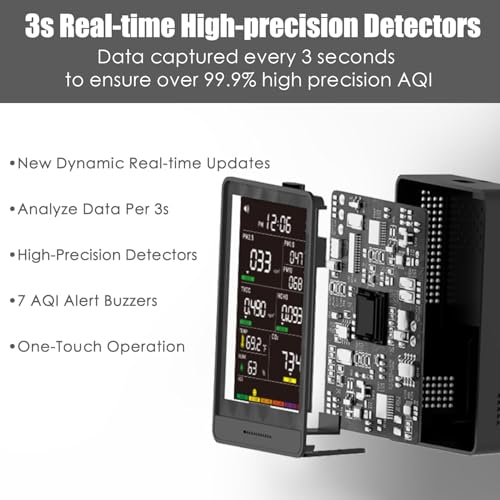
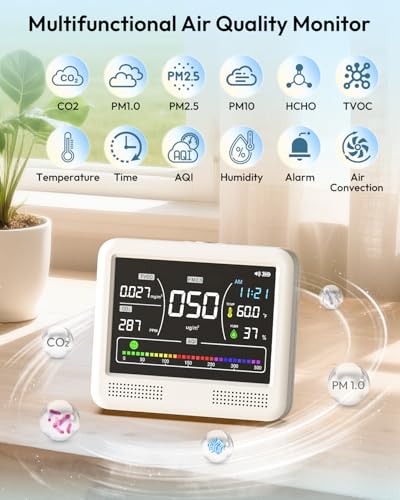
Look first at what the device actually measures: particulate matter for dust and smoke, CO2 for ventilation, TVOC/HCHO for off-gassing or hobby fumes, plus temperature and humidity to interpret the readings. For home use, an all-in-one monitor is most helpful when it can show trends before and after cooking, candles, 3D printing, purifier use, open windows, or HVAC changes; avoid models that give only a vague “air quality” score without separate pollutant values. Owners strongly value monitors that provide real-time readings across CO2, HCHO, TVOC, temperature, and humidity, and they report that these readings make indoor conditions at home or work easier to understand. Sentiment also supports monitors that clearly react to visible dust events and show improvement after conditions change.
Live Alerts
Indoor air can change quickly, so delayed readings can miss the moment when a source is active. Real-time feedback turns a monitor from a passive gadget into a tool for changing behavior and verifying ventilation or filtration.
Choose a monitor that updates quickly enough to catch short events, not just slow daily averages. For this category, useful failure modes include noticing pollutant spikes from cooking, candles, 3D printing, humidifier use, cleaning products, or poor ventilation, then showing whether opening a window or running a purifier helped. Owner feedback repeatedly highlights real-time readings and alerts as useful for seeing air quality changes from cooking, candles, 3D printing, and ventilation. Buyers also like when sensors respond to visible dust events and clearly show changes in the app or on the device.
Reading Reliability
Accuracy determines whether the readings are useful or just anxiety-producing numbers. In this category, consistency, calibration behavior, and awareness of false spikes are especially important because common household conditions can affect sensors.
Treat consumer air quality tests as trend and screening tools, and look for dependable relative changes rather than absolute lab-grade certainty. A careful shopper should favor models with stable baselines, consistent response to known events, and separate humidity readings, because particle readings can be distorted by steam or aerosolized moisture. Owner sentiment is positive on sensitivity and dependability for spotting indoor air-quality changes, with several monitors described as accurate real-time checkers. The main caveat is accuracy: many readings seem believable, but PM2.5 can spike around humidifiers and may need a sanity check in some setups.
Readability
A monitor that is hard to read is less likely to change daily habits. Clear displays and app views make it easier to connect readings with activities and decide when to ventilate, filter, or leave conditions alone.
Prioritize a screen that shows large numbers, pollutant labels, units, status colors, and alerts that can be understood from across a room. This matters because air quality monitors often sit in kitchens, offices, nurseries, hobby rooms, pet areas, or near printers, where a quick glance should tell you whether action is needed. Owners praise clear, informative screens, easy-to-read numbers, simple status indicators, and readable alerts. They also value app views that let them check temperature, humidity, and air quality from a phone instead of walking to the device.
Smart Integration
Connectivity matters when a monitor is expected to do more than report numbers. Good app and automation support can turn readings into actions, but poor setup or limited integrations can leave useful data stranded.
For smart homes, check whether the monitor can trigger purifiers, fans, HVAC routines, notifications, or other devices from specific readings rather than only showing data. The strongest setups let you automate responses to pollutant spikes while still keeping manual control, and they should make setup straightforward enough that alerts and thresholds actually get used. Owner sentiment is especially strong for smart-home automations that let an air monitor work with connected devices and trigger air purifiers from its readings. Buyers also report that app experiences can make configuration and daily checking easier.
Portability
Air quality varies by room and activity, so portability can reveal problems a fixed device misses. Size, weight, and handling affect whether the monitor gets placed where the air concern actually happens.
Decide whether the monitor will live in one room or move between bedrooms, office spaces, cars, plant areas, pet zones, and hobby stations. If it will travel, look for a compact lightweight body, readable standalone display, and simple controls; if it stays fixed, prioritize continuous power placement and consistent room positioning over pocketability. Owners like portable, lightweight designs for moving between rooms or taking along while traveling. They also describe compact units as fitting home, office, hobby, car, plant, and pet-area use cases well.
1,000,000+ shoppers use Buyer's Guide every week to find the best products and services online.

Helping millions of users make smarter purchases online.


