


- Ready In: 7 minutes
- Shape: Nugget
- Water Tank: 0.29 gallons
- Daily Output: 35 lbs
- Dimensions: 8.7" wide x 11.3" deep x 12.7" tall





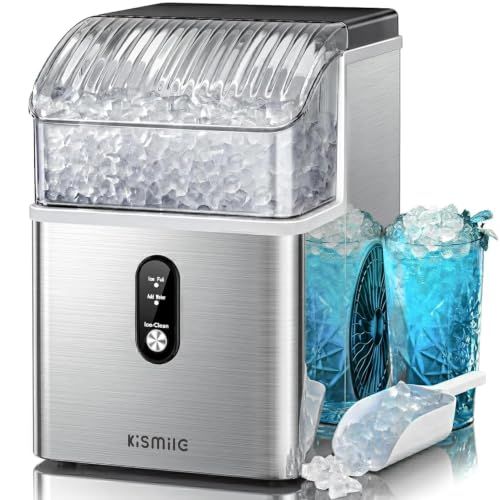
Kismile Countertop Nugget Ice Maker
Review and Performance

The Kismile Countertop Nugget Ice Maker is aimed at people who love the soft, chewable “nugget” or “pellet” style ice commonly associated with cafes and drive-thrus. In daily use, its biggest appeal is convenience: you can make nugget ice at home without plumbing, special filters, or dedicating freezer space to bags of store-bought ice. If you’re the kind of person who constantly tops off iced coffees, blended drinks, sodas, or even just water, this style of machine can feel like an upgrade you notice every day.
What stands out most about a nugget ice maker like this is the ice texture. Nugget ice is typically smaller, airy, and easier to crunch than hard cubes, and it tends to absorb flavors nicely. That makes it especially satisfying for cocktails and mocktails, and it’s gentler on teeth compared with dense, fully frozen cubes. If you’ve tried nugget ice before and found yourself seeking it out, the Kismile’s ability to keep a steady supply on the counter is the core reason to consider it.
Countertop ice makers are not “freezer replacements,” and the Kismile fits that general rule. The machine produces ice into a bin that is not a true freezer; as the ice sits, some melting is normal, and the unit typically recirculates meltwater to make more ice. In practice, this means you’ll get the best experience when you treat it as an on-demand appliance: let it produce, use the ice regularly, and transfer extra to your freezer if you want to stockpile. If you’re hosting or you’re making multiple drinks over an evening, that workflow feels natural. If you expect the bin to store ice for days like a freezer drawer, it will likely feel less ideal.
Noise and heat are also part of the countertop ice maker reality. The Kismile will produce compressor and fan sounds during operation, and it will vent warm air as it works. In a quiet kitchen, you’ll notice it, but many users find it comparable to other small appliances running in the background. Placement matters: giving it breathing room on the sides and around the vents will help performance and can reduce strain. On very hot days or in tighter spaces, production can slow and the ice can be a bit wetter, which is common across the category.
Day-to-day upkeep is straightforward but not optional. Nugget ice makers rely on water pathways and cold surfaces that can develop mineral scale over time, especially with hard tap water. If you keep up with periodic cleaning and descaling, the ice quality and output stay more consistent, and you reduce the chance of off-tastes. Many people find that using filtered water improves both taste and long-term cleanliness, even if the machine itself doesn’t require a dedicated filter. If you’re sensitive to taste and odor, this can be one of the simplest ways to elevate the overall experience.
What to Consider Before Buying
Before purchasing the Kismile Countertop Nugget Ice Maker, the most important factor is whether nugget ice is truly what you want and will use frequently. If you love crunchable ice and make iced drinks daily, the value proposition is strong. If your needs are occasional, a freezer tray or bagged ice may remain the more economical option. Nugget ice makers are a lifestyle appliance, and they shine most when you’re using them often enough to justify the counter space and routine maintenance.
Capacity and pace are the next big considerations. Think about how much ice you go through in a typical day and, more importantly, in your busiest hour. A household that fills a couple of tumblers during the afternoon will have very different expectations than someone who hosts friends, makes smoothies, or keeps a constant rotation of cold drinks for a family. When evaluating fit, consider whether you want continuous production for steady use, or whether you need quick recovery after someone empties the bin. If your usage is spiky, you may want to plan on transferring some ice to the freezer ahead of time for parties.
Counter space and placement can be surprisingly decisive. Measure where you intend to put the unit and make sure there’s room for airflow and for opening the lid comfortably. Also consider where it will live relative to a sink, since refilling and cleaning are easier when you’re not carrying water across the house. Weight and portability matter if you plan to move it between a kitchen and a bar area, or store it away when not in use. If it’s going to be a permanent fixture, aesthetics and footprint carry more weight than if it’s an occasional appliance.
Water quality and maintenance expectations are also critical. If you have hard water, plan for regular descaling and consider using filtered or softened water to reduce buildup. Maintenance isn’t difficult, but it does require consistency. The most important mindset shift is that countertop ice makers reward simple routines: emptying old ice when it’s been sitting, wiping the bin, running cleaning cycles as recommended, and keeping the exterior vents clear of dust. If you want a totally hands-off ice experience, a built-in ice maker connected to a filtration system may be a better long-term match, though that comes with a much higher cost and installation complexity.
Finally, consider sound tolerance and ambient temperature. If you’re placing the machine in a very quiet office, a bedroom-adjacent kitchenette, or a small apartment where the kitchen and living area blend together, compressor noise might be more noticeable. Similarly, if your kitchen runs warm or you plan to place the unit near an oven or in direct sun, performance can be affected. The best results typically come from a cool, well-ventilated spot where the machine can efficiently shed heat.
Common Questions
Does the Kismile Countertop Nugget Ice Maker keep ice frozen like a freezer? It generally does not function like a true freezer. The bin is insulated, but ice can melt over time, and the unit often reuses meltwater to make more ice. For long storage, move extra ice to your freezer.
How long does it take to get the first batch of nugget ice? Exact timing varies with room temperature and starting water temperature, but countertop nugget ice makers are designed to start producing within a relatively short period. Colder water and a cooler room typically help the machine reach consistent output faster.
Do I need filtered water? Filtered water is not always required, but it often improves taste and can reduce mineral scaling. If your tap water is hard or has a noticeable odor, filtered water can make a meaningful difference in both ice quality and cleaning frequency.
Is nugget ice better than cubes for drinks? “Better” depends on your preference. Nugget ice is softer, easier to chew, and tends to cool drinks quickly while providing a pleasant texture. Traditional cubes usually melt more slowly and can be better when you want minimal dilution over a long drink.
How often should I clean it? A light routine such as wiping down surfaces and emptying old ice as needed helps, while deeper cleaning and descaling frequency depends on usage and water hardness. If you notice slower production, unusual taste, or visible scale, it’s a good sign it’s time to clean.
Overall, the Kismile Countertop Nugget Ice Maker is a compelling choice for anyone who specifically wants nugget ice on demand and is willing to treat it like a small appliance that benefits from routine care. If nugget ice is a daily pleasure in your household, the combination of convenience, texture, and at-home availability can justify the footprint and upkeep, turning a simple glass of water or iced coffee into something you genuinely look forward to.