















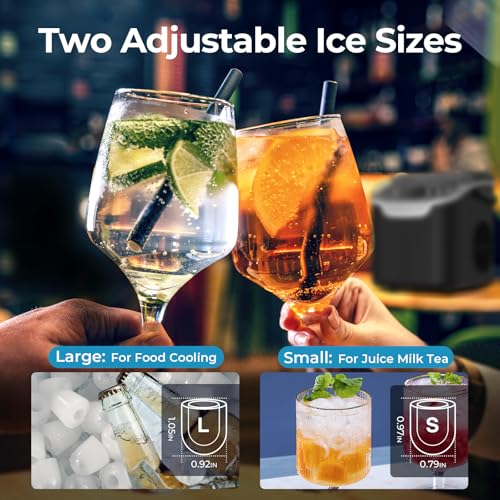


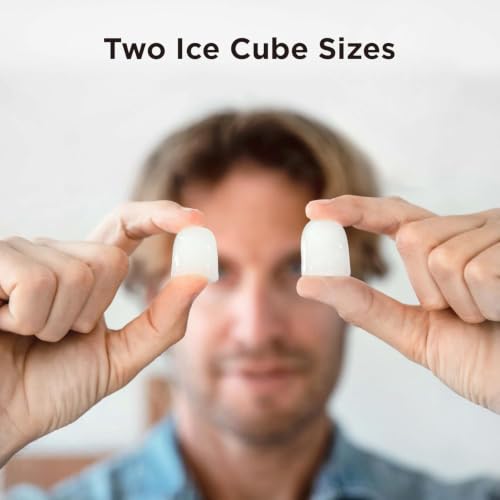


We also considered 10 others:


Our Top Choice
Compare Features


The order above is not editorial opinion, and it is not paid placement. It comes from what shoppers across our network actually do - which countertop ice machines they compare, and which they ultimately buy. We re-rank as new data comes in, so the long-term favorites have to keep earning their spot against new entrants. The full method, including how we make money.
Countertop Ice Machines Buyer's Guide
Countertop ice machines are best bought around the gap between “makes ice quickly” and “stores ice like a freezer”—most are production machines, not refrigerated ice bins, so unused ice can melt and recycle. The sharpest checks are whether the daily output, batch speed, ice style, reservoir/bin size, cleaning access, and noise profile match how you actually use ice: drinks all day, guests, coolers, small business, or chewable nugget ice.
Output
Output matters because it determines whether your ice maker can keep up with your daily drinks, entertaining, or cooler-filling needs without long waits or frequent empty cycles. Look for a unit with a production rate and storage capacity that match how you’ll use it, and pay attention to whether it makes ice consistently in real conditions rather than only under ideal settings. Also consider the type and size of ice it produces, since smaller or softer cubes may be made faster but can melt more quickly.
For output, do not shop only by the advertised pounds-per-day number; check the bin capacity, water reservoir size, refill frequency, and whether the machine can keep producing while you are actively emptying the basket. Countertop units often produce plenty over 24 hours but hold only a small amount at once, and the bin usually is not refrigerated, so high-output buyers should plan to transfer ice to a freezer or keep the reservoir full during parties, beverage service, or summer use. Owner feedback supports prioritizing sustained production: buyers repeatedly praise machines that keep a steady supply going with little effort, produce ice fast enough for home or small-business use, and keep up with households using ice throughout the day.
Speed
Ice production speed matters because it determines whether you’ll have enough ice ready when you need it, from daily drinks to entertaining guests. Look for how quickly the machine produces its first batch and how much ice it can make over time, but watch out for small storage bins or slow recovery after emptying, which can make a fast-rated unit feel less capable in real use.
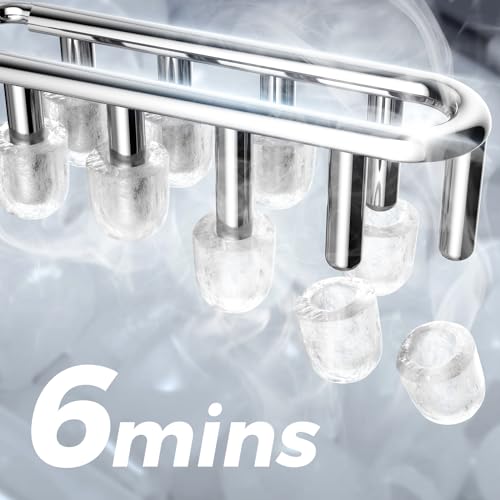
For speed, separate first-batch speed from usable-volume speed: a machine that drops a few cubes in minutes may still need several cycles before it can fill multiple cups, a cooler, or a party bucket. If you need ice on demand, look for short cycle times, clear refill indicators, and a design that restarts quickly after emptying the basket; for gatherings, the ability to keep cranking with a full reservoir matters more than the first handful of ice. Owner sentiment strongly backs speed as a meaningful differentiator, with many buyers reporting first ice within roughly the advertised 6-to-8-minute window and enough quick production for daily drinks, cookouts, guests, beverage sales, and extra summer supply.
Reliability
You want an ice maker that can handle frequent freezing cycles, water exposure, and regular cleaning without leaks, jams, or early part failures. Look for sturdy construction, well-sealed components, easy access for maintenance, and owner feedback that points to consistent performance over time. Be cautious of flimsy housings, vague warranty support, or recurring complaints about pumps, sensors, or ice production stopping unexpectedly.
For reliability, focus on the parts and maintenance points most likely to fail in this category: pump, fan, compressor, ice sensor, auger on nugget models, drain plugs, and areas prone to scale buildup or clogs. Choose a machine with accessible cleaning, clear descaling instructions, stable ventilation space around the unit, and simple controls; avoid relying on it as your only ice source if you cannot tolerate resets, cleaning downtime, or occasional sensor issues. Owner reports are broadly positive on everyday dependability, with many describing machines that work reliably, run with little fuss after adding water and pressing start, replace store-bought ice trips, and keep up with regular use, though the category still rewards shoppers who plan for cleaning and wear.
Ice
The ice a machine produces affects everything from how fast drinks chill to how easy the unit is to use day to day. Look for ice that matches your needs in size and shape, releases cleanly from the basket or bin, and stays consistent without clumping, melting too quickly, or coming out wet and fragile.
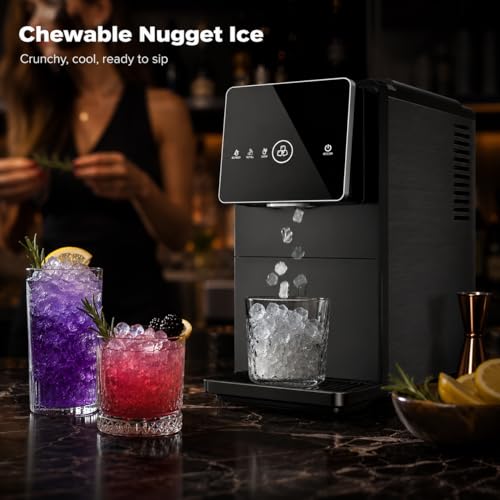
For ice type, decide before buying whether you want chewable nugget ice, bullet-shaped ice, or more standard small cubes, because the texture changes everything: nugget ice is soft and porous for chewing and fountain-style drinks but can melt faster, while bullet or cube-style ice is usually better for general chilling and freezer storage. Also check whether the ice comes out wet, whether cubes clump after transfer to a freezer, and whether the size fits water bottles, cocktail glasses, blender cups, or coolers. Owner feedback shows ice style is a major reason people buy these machines: nugget models are praised for small, soft, chewable “Sonic-like” pellets, while bullet-style cubes are liked for being easy to chew, pleasant in drinks, and useful for freezer storage.
Noise
Noise matters because an ice maker may run in a kitchen, office, RV, or bar area where repeated freezing cycles and ice-dumping sounds can become distracting. Look for a model with a low stated noise level and reviews that mention quiet operation during both ice production and bin release, not just when the compressor is idle. Be cautious if users report loud grinding, rattling, or sudden dumping sounds, especially if you plan to keep it near conversations, sleeping areas, or workspaces.
For noise, assume a countertop ice machine will be more noticeable than a passive appliance because it has a compressor or cooling system, fan, pump, water movement, and ice-drop sounds; nugget machines can also add auger noise. If it will sit in an open kitchen, office, RV, bedroom-adjacent space, or customer-facing counter, look for comments on hum, grinding, ice-drop volume, and whether noise increases over time, since loud grinding can signal clogging, wear, or failure rather than normal operation. Owner sentiment is mixed here: some buyers describe only a quiet refrigerator-like hum or generally quiet daily use, while others find machines louder than expected, mention noticeable operating noise, or report failed units shifting into loud grinding or horrible sounds.
Ease
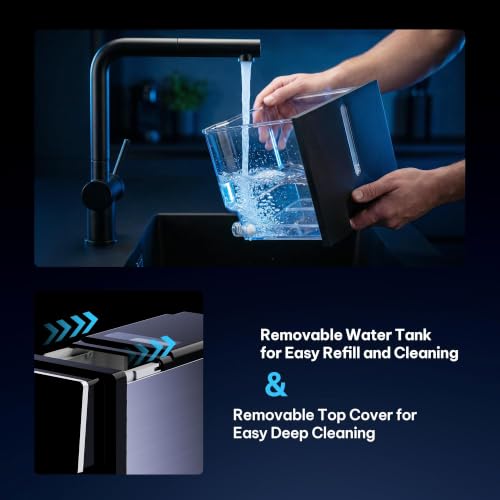
You’ll use an ice maker more often if it’s simple to fill, start, and monitor without constant checking or guesswork. Look for clear controls, easy-access water reservoirs and ice baskets, visible status indicators, and straightforward cleaning steps; watch out for designs with awkward drain plugs, cramped openings, or maintenance routines that make regular use feel like a chore.
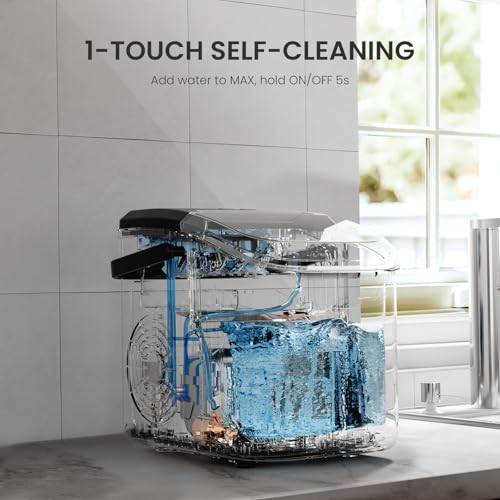
For ease of use, check the unglamorous daily workflow: how water is added, how the basket lifts out, whether melted ice recycles cleanly, how the drain empties, whether cleaning mode is truly simple, and whether descaling requires awkward tipping or disassembly. If you want set-and-forget convenience, consider clear status lights, self-cleaning cycles, smart scheduling only if you will actually use it, and a size that lets you refill and drain it without moving it from under cabinets. Owner feedback supports this as a strength of many countertop machines, with buyers often saying setup and operation are straightforward—mostly adding water, pressing a button, and waiting a few minutes—and that cleaning and day-to-day use feel simple enough for regular home use or small gatherings.
1,000,000+ shoppers use Buyer's Guide every week to find the best products and services online.

Helping millions of users make smarter purchases online.


