





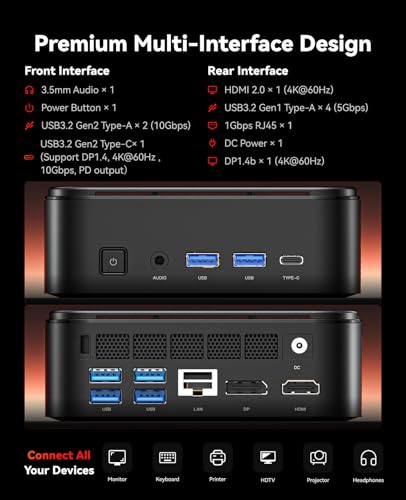
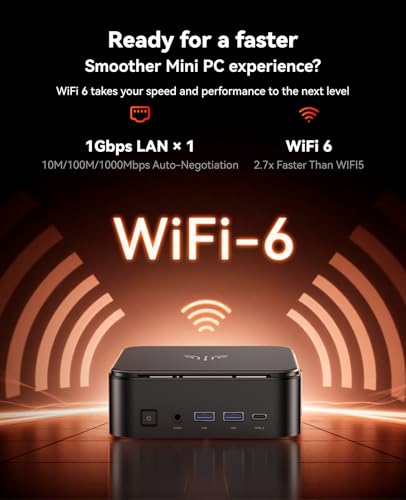

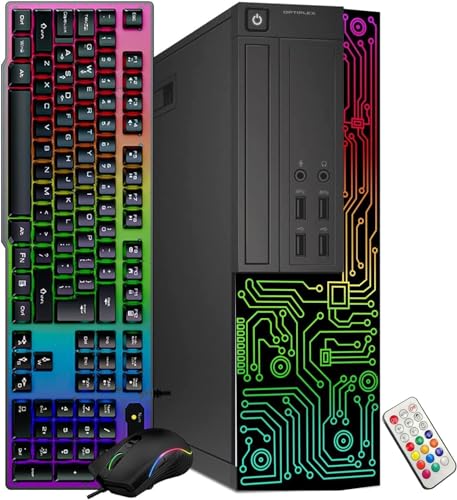


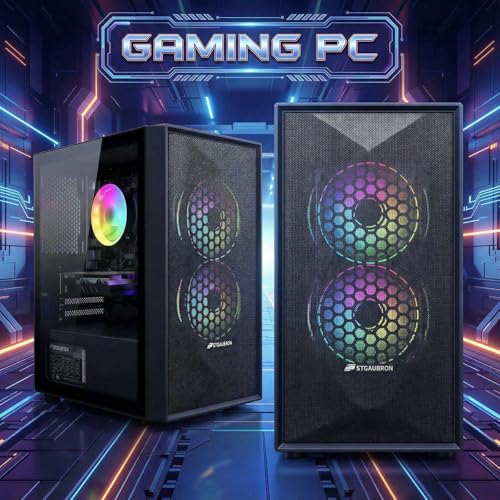








We also considered 10 others:






Our Top Choice
Compare Features


The order above is not editorial opinion, and it is not paid placement. It comes from what shoppers across our network actually do - which gaming pcs for beginners they compare, and which they ultimately buy. We re-rank as new data comes in, so the long-term favorites have to keep earning their spot against new entrants. The full method, including how we make money.
Gaming PCs for Beginners Buyer's Guide
A beginner gaming PC has to balance easy plug-and-play use with enough real graphics power to avoid disappointment in modern games. The sharpest traps are paying for “gaming” looks instead of GPU/RAM/SSD quality, and buying a low-cost prebuilt whose power supply, cooling, or upgrade path is unclear.
Performance
Performance determines how quickly your desktop feels in daily use and whether it has enough power for gaming, streaming, creative work, and multitasking without stutter or long waits. Look for a balanced CPU, graphics card, memory, and fast storage that match what you actually do, and watch for systems that emphasize one impressive part while cutting corners on cooling, RAM, or upgrade room.
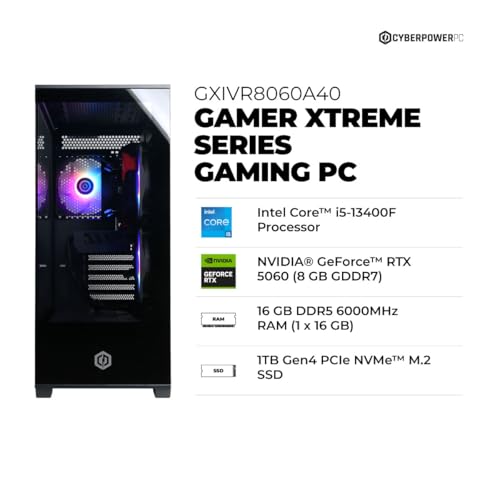
For a beginner gaming PC, start by matching the hardware to the games and screen you actually plan to use: for mainstream 1080p gaming, prioritize a real dedicated GPU, 16GB of RAM, and an SSD over vague “gaming” wording or flashy lighting. Be cautious with mini PCs or very old graphics cards if the goal is modern shooters or survival games; they may be fine for browsing, school, streaming, and light games, but newer titles may require lower settings. Owner feedback supports this split: buyers often report smooth everyday use and good multitasking, while budget desktops with older GPUs are praised when expectations are set correctly, with playable results in games like battle royales, military sims, and survival titles. Stronger starter desktops are also described as fast and smooth at 1080p without bogging down.
Value
You want a desktop that feels worth what you pay, not just one with impressive specs on paper. Look for a balanced mix of processor performance, memory, storage, upgrade options, build quality, and included essentials, and watch out for systems that cut corners in areas like cooling, expandability, or bundled peripherals to hit an attractive price.
The best value for a first gaming PC is usually the system that spends money on the GPU, CPU, RAM, SSD, power supply, and upgrade room—not the one with the most RGB or the most aggressive “gaming” styling. Look for a clear parts list, at least a practical starter storage capacity, memory that can be expanded, and a standard case/power supply layout if you may upgrade later; older parts can still be a good buy if you understand their limits. Owner sentiment backs this up: shoppers repeatedly describe starter desktops as good buys when they are affordable, easy to use, capable of light to mid-tier gaming, and built on older but still useful components. Value is especially well received when buyers treat the PC as an entry point rather than a top-tier machine.
Reliability
A reliable desktop PC should run consistently under your everyday workload without frequent crashes, overheating, or premature part failures. Look for solid build quality, good cooling, dependable power delivery, and components that are easy to service or upgrade, and be wary of systems that cut corners on case construction, airflow, or generic internal parts.
Reliability is a major beginner concern because many low-cost gaming prebuilts use inconsistent drives, power supplies, GPUs, Wi-Fi adapters, or assembly quality. Before buying, check for a stated warranty, easy returns, standard replaceable parts, adequate airflow, a power supply with enough wattage for the GPU, and reviews mentioning months of continued use—not just first-day impressions. Owner feedback is notably mixed here: many systems are described as quiet, stable, responsive, and polished at first, but some develop repeat problems after several months, including drive, GPU, PSU, crash, connectivity, or defect issues. For a first PC, dependable support and replaceable components matter as much as raw specs.
Setup
A desktop PC that’s easy to set up lets you get from the box to a usable workspace with less frustration, especially if you’re buying for a beginner or someone who doesn’t want to troubleshoot hardware and software right away. Look for clear instructions, well-labeled ports, included essentials when needed, and a simple first-run setup process; watch out for systems that require extra adapters, manual driver installs, or confusing account and security prompts before you can start using them comfortably.
A beginner-friendly gaming PC should be truly ready to use: Windows should be installed and activated, Wi-Fi/Bluetooth needs should be covered, the monitor ports must match your display, and the box should include clear startup guidance. Also check whether you need to update GPU drivers, connect antennas, plug the monitor into the graphics card instead of the motherboard, or supply your own keyboard, mouse, or display cable. Owner feedback is encouraging on setup overall, with many buyers saying systems are quick, straightforward, mostly preconfigured, and close to plug-and-play. Included Windows, protected shipping, accessible ports, and easy first startup are recurring positives.
Design
Because a desktop PC often sits in plain view, its appearance can affect how well it fits into your workspace, gaming setup, or home office. Look for a design that matches your taste and room layout while still supporting practical needs like good airflow, easy access to ports, and enough space for future upgrades. Be careful not to choose looks alone, since flashy lighting, unusual shapes, or compact cases can sometimes make the system louder, hotter, or harder to service.
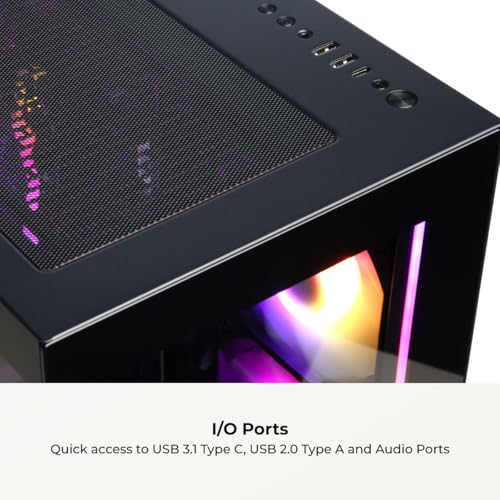
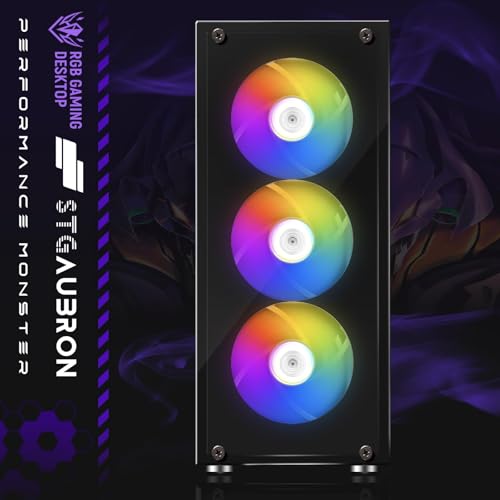
For beginner gaming, design should mean airflow, access, and fit—not just a glass panel and lighting. Look for a case with enough ventilation around the GPU, room to add storage or RAM, front USB/audio ports you will actually use, dust management, and a size that fits your desk or floor space; be skeptical of dramatic liquid-cooling looks if the cooling hardware and maintenance needs are unclear. Owner sentiment shows that appearance still matters: buyers often like polished cases, colorful lighting, quiet fans, manageable tower sizes, and flashy gaming styling. But the safest choice is the system that combines that look with practical cooling and upgrade access.
Noise
A desktop’s noise level affects how comfortable it is to use in a home office, bedroom, studio, or shared space, especially during long sessions. Look for quiet operation at idle and under load, with good airflow, larger or well-controlled fans, and a case design that does not amplify vibration. Be wary of compact or poorly cooled systems that may sound fine during light tasks but become distracting when gaming, rendering, or running intensive workloads.
If the PC will sit in a bedroom, dorm, family room, or homework area, check noise under gaming load—not just at idle. Larger, well-ventilated towers with sensible fan layouts often stay quieter than cramped systems that must spin small fans hard; also look for comments about fan noise during actual games, not only browsing or office work. Owner feedback is generally positive on this point, with many buyers appreciating quiet operation on desks, in home offices, and in compact setups. Quiet fans also contribute to the polished prebuilt feel that owners like, but beginners should still confirm that quiet operation does not come at the cost of poor cooling.
1,000,000+ shoppers use Buyer's Guide every week to find the best products and services online.

Helping millions of users make smarter purchases online.


