



- Memory: 32GB RAM
- Storage: 1TB SSD
- Processor: Intel Core Ultra 7-265 20-core
- Graphics Processor: Intel UHD Graphics
- Operating System: Windows 11 Home





Dell ECT1250 Tower Desktop PC Review
Overview and Everyday Experience

The Dell ECT1250 Tower Desktop PC is built around a simple promise: deliver a dependable, traditional desktop experience in a tower format that is easy to live with and easy to expand. For buyers who prefer the flexibility of a full-size desktop over an all-in-one or a small-form-factor mini PC, a tower like the ECT1250 can make a lot of sense, especially when you want straightforward access to ports, internal upgrade paths, and better airflow than ultra-compact designs typically allow.
In day-to-day use, the ECT1250’s strengths tend to show up in the basics. The tower design generally supports steadier sustained performance than tiny enclosures because heat has more room to dissipate. That matters for long work sessions, multitasking with many browser tabs, and routine productivity tasks like documents, email, video calls, and light content work. It also makes the machine easier to service over time; swapping storage, adding memory, or replacing a component is typically less daunting in a tower chassis than in more compact systems.
Ergonomically, a tower desktop setup can be tuned to your needs. You can choose the monitor size and panel type you want, position the PC where it stays quiet and out of the way, and add peripherals that match your workflow. If you already own a good display, keyboard, and mouse, a tower like the ECT1250 can also be a cost-efficient way to upgrade compute power without paying again for an integrated screen.
That said, the experience you get depends heavily on the exact configuration you buy. Many desktop models are sold under a single name with widely varying specifications, and the ECT1250 is best evaluated by matching the CPU class, memory capacity, storage type, and graphics option to what you actually do. A configuration aimed at office productivity will feel snappy in spreadsheets and web apps but may not satisfy someone expecting smooth modern gaming or heavy video editing unless it includes a stronger CPU and a discrete GPU.
Performance, Hardware, and Expandability
For most shoppers, the most important factor is the processor tier, because it influences everything from app launch speed to how well the system holds up under multitasking. If your workload is primarily web browsing, office apps, and streaming, a mainstream processor configuration can be plenty. If you frequently run many apps at once, handle large spreadsheets, or do creative work, prioritizing a higher-tier CPU will extend the system’s useful life and reduce the “slow creep” that can happen as software grows more demanding.
Memory is the next major consideration, and it’s one of the most impactful upgrades you can make. For light use, a modest amount of RAM can work, but if you keep dozens of browser tabs open, use collaboration tools, or run multiple productivity applications together, more memory prevents stutters and reduces reliance on slower disk-based paging. From a purchase-planning standpoint, the most important question is whether the ECT1250 configuration leaves room to expand RAM later. A tower often does, but it’s still wise to confirm available slots and maximum supported capacity before buying.
Storage type is equally critical. A solid-state drive makes the entire system feel faster: boot times shrink, applications open quickly, and general responsiveness improves. If the ECT1250 you’re considering includes an SSD as the primary drive, that’s a strong positive. If it includes only a mechanical hard drive in the base configuration, the machine may feel sluggish even if the CPU is capable. Capacity also matters. If you store a large photo library, work files, or games, you may want additional space or a secondary drive. Tower desktops are typically friendly to adding extra storage, so buyers who start with a fast SSD can often add a larger secondary drive later for bulk files.
Graphics is the biggest fork in the road for different types of users. Integrated graphics are usually fine for office work, 4K video playback, and casual or older games, but modern gaming, 3D modeling, and some creative apps benefit greatly from a discrete GPU. If you need a dedicated graphics card, it’s important to check power supply capacity, available PCIe slots, and physical clearance in the case. These practical constraints can determine which GPUs can be installed and whether a future upgrade will be simple or expensive.
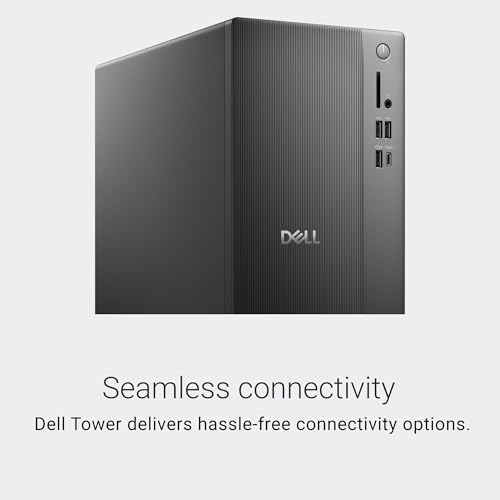
Connectivity and ports are easy to overlook but affect daily convenience. Pay attention to front-panel USB for quick access, the mix of USB-A and USB-C if you use modern peripherals, and display outputs that match your monitor setup. Networking is also worth checking. Wired Ethernet is still the most stable option for desktops, while Wi‑Fi and Bluetooth support matter for flexible placement and wireless accessories. If you rely on video meetings, consider whether you’ll be using a USB webcam and headset, and whether the port selection makes that tidy and easy.
Noise and thermals are subtle quality-of-life factors. Tower PCs can be quiet, but fan profiles and component choices influence acoustics. If the ECT1250 configuration uses efficient parts and has decent airflow, it should stay comfortable during long sessions. Buyers sensitive to noise should consider where the tower will sit, whether it has room to breathe, and whether the configuration is likely to run hot under load.
Before purchasing, the most important factors for most users are the CPU class, the presence of an SSD, and having enough RAM with an upgrade path. If you plan to game or do GPU-accelerated work, graphics capability becomes equally important, along with the power supply and internal space that determine upgrade options.
Value, Who It’s For, and Common Questions
The Dell ECT1250 Tower Desktop PC is best suited to buyers who want the classic advantages of a desktop tower: longevity, serviceability, and configuration flexibility. It’s a practical fit for home offices, students who want a stable workstation, and families sharing a computer for everyday tasks. It can also serve as a starter platform for someone who expects to upgrade over time, provided the configuration you choose doesn’t cut corners on essentials like a modern SSD or adequate memory.
Value depends on how balanced the configuration is. A strong CPU paired with too little RAM can feel constrained. Plenty of RAM paired with slow storage can feel unresponsive. A discrete GPU paired with a weak power supply can limit future upgrades. The best value usually comes from choosing a well-rounded configuration that meets your needs today and leaves room for sensible expansion tomorrow.
It’s also worth considering the total setup cost. A tower often requires a separate monitor and peripherals. If you already have them, the ECT1250 can be an efficient upgrade path. If you’re starting from scratch, compare the full bundle cost against alternatives like laptops or all-in-one desktops, especially if you need a webcam, speakers, or a quality display.
Common Questions
Q: Is the Dell ECT1250 good for gaming?
A: It can be, but it depends on the configuration. If the model you’re buying relies on integrated graphics, it’s better suited to casual games and older titles. For modern gaming, you’ll want a configuration with a dedicated graphics card, plus enough power supply headroom and case clearance to support it.
Q: Can I upgrade RAM and storage later?
A: Tower desktops are generally designed with upgrades in mind, and many configurations allow additional RAM and extra storage drives. Before purchasing, confirm how many memory slots are available, whether any are already occupied, and what drive bays or M.2 slots are accessible for expansion.
Q: Should I prioritize a bigger hard drive or a smaller SSD?
A: For most users, an SSD for the operating system and apps is the better first priority because it dramatically improves responsiveness. If you need more space, adding a secondary drive later is often straightforward in a tower, giving you both speed and capacity.
Q: Will it work well for working from home and video calls?
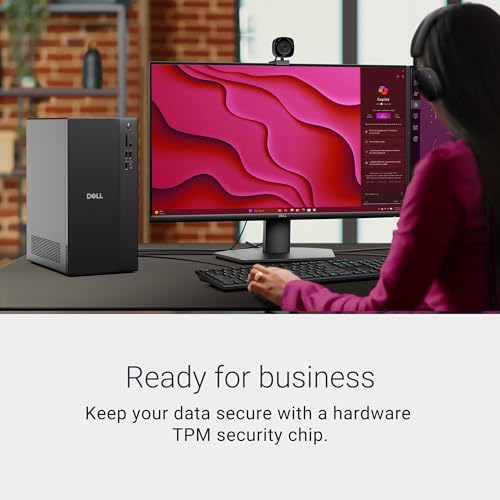
A: Yes, as long as you pair it with a solid internet connection and appropriate peripherals. Most work-from-home needs are met by a capable CPU, sufficient RAM for multitasking, and an SSD for responsiveness. You’ll likely want a good USB webcam and headset or speakers, since towers typically don’t include a built-in camera.
Conclusion
The Dell ECT1250 Tower Desktop PC is a sensible choice for buyers who value a traditional desktop setup with room to grow. The smartest purchase decisions come down to selecting the right configuration: prioritize a capable CPU, an SSD as the primary drive, and enough RAM with a clear upgrade path, then decide whether your use case demands discrete graphics. Get those fundamentals right, and the ECT1250 can be a reliable, comfortable PC that stays useful for years.