

- Program Types: Strength training, cardio, tai chi, military workouts, and more
- Features: Includes workouts, meal plans, activity trackers, mindset coaching
- Subscription: Monthly subscription
- Support: Tailored coaching based on your age, lifestyle, and goals
- Accessibility: App-based on iOS and Android
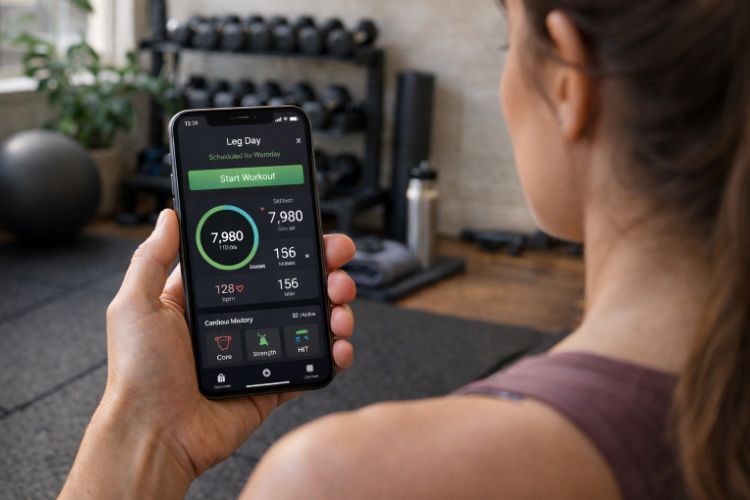
Choosing Fitness Apps That Fit Goals

Choosing the Right Fitness App

How Fitness Apps Can Transform Your Fitness Journey


Helping millions of users make smarter purchases online.



Muscle Charge Review

What Muscle Charge Is and Who It’s For
Muscle Charge positions itself as a fitness and weight-loss app built specifically for men over 40 who feel like the old playbook has stopped working. The messaging is direct: metabolism slows, energy dips, recovery changes, and generic “get shredded” plans made for twenty-somethings can feel unrealistic or even punishing in midlife. Muscle Charge’s core promise is to meet that reality with science-backed plans tailored to the physiology, goals, and lifestyle constraints that tend to show up after 40.
Instead of leaning on a single training style, the platform emphasizes a blend of modalities that are commonly easier to sustain and recover from when joints and stress levels matter more. On the site, Muscle Charge highlights a mix that includes Tai Chi, bodyweight work, chair workouts, and strength training, aiming for fast fat loss and muscle gain without assuming you’re living in a gym. The plans are described as beginner-friendly and designed to produce “real results from day one,” which is important for anyone who has started and stopped programs because the first two weeks felt miserable or confusing.
Beyond workouts, the app presents itself as an all-in-one system that combines training with nutrition guidance, tracking, and habit support. It frames the outcome as more than the scale: more energy, better mood, improved mobility, and a steadier sense of momentum that you can actually maintain. In practice, that combination matters because men over 40 often don’t just need a routine; they need a routine that survives work deadlines, family schedules, travel, and the occasional low-energy day without collapsing into guilt and restarts.
One strong element of the pitch is time efficiency. The site repeatedly underscores short daily habit-building and manageable workout windows, describing modules that fit into a busy life and can be paused and resumed as needed. If you’re the type of user who values consistency over perfection, that design choice is a meaningful advantage: it lowers the friction that keeps many people from exercising at all.
Factors to Consider Before You Buy, and What Matters Most
The first factor is fit: are you actually the intended user? Muscle Charge is unapologetically targeted at men 40+. If you’re younger, you might still enjoy the structure, but the value proposition is strongest if you’re dealing with the common midlife pattern of stubborn fat, slower recovery, changing energy, and a desire to build strength without feeling wrecked. When a product is narrowly focused, it can either feel refreshingly relevant or oddly limiting, depending on whether you match the audience it was built for.
The second factor is the training approach. Muscle Charge highlights a mix of strength work with lower-impact options like Tai Chi and joint-friendlier formats such as chair workouts. Before purchasing, a user should consider what they enjoy enough to repeat. If you prefer heavy barbell programs and already have a structured lifting routine, the app may feel more like a supplement than a replacement. If you want a plan that respects joint health and mobility while still prioritizing progressive strength and fat loss, the mix is likely to feel more aligned.
The third factor is time and scheduling realism. The site describes workouts that are designed to be manageable for busy schedules, with sessions around 15–20 minutes several times per week and an emphasis on habit-building in short daily windows. That matters because the best plan is the one you’ll do on your worst Tuesday, not the one you imagine doing on a perfect Monday. Before buying, it’s worth asking yourself whether you can protect those pockets of time and whether you want a program that can flex rather than demand rigid blocks.
The fourth factor is nutrition style and guidance. Muscle Charge markets protein-forward meal plans and meal guidance as part of the system, paired with tracking and habit coaching. For many men over 40, nutrition is the lever that determines whether workouts translate into fat loss. If you want strict macro math and detailed food logging, you should check whether the app’s guidance style matches your preference. If you want a simpler framework that pushes protein, consistency, and sustainable choices without extreme rules, the positioning may fit well.
The fifth factor is accountability and feedback loops. The platform emphasizes progress dashboards and habit tracking, which can be crucial when motivation dips. Some users thrive on visible metrics like weight, waist, and completed sessions; others find dashboards stressful. The right choice depends on whether tracking energizes you or makes you feel evaluated. If you’ve historically struggled to stay consistent, features like habit coaching and progress visibility can be a major reason to choose an app rather than a static PDF plan.
Pricing and purchase clarity is another consideration, and this is where expectations should be set early. The site states that pricing varies by location, language, and selected plan, and that you’ll see your personalized plan and pricing at the end of a short quiz. If you dislike variable pricing or prefer to know costs upfront before engaging with onboarding, that flow may feel inconvenient. If you like personalization and don’t mind a quiz-driven offer, it may feel like a fair exchange.
Safety and health context should be treated as non-negotiable. Muscle Charge describes workouts as low-impact and scalable, and it also advises consulting a doctor before starting if you have a health condition. If you have joint issues, cardiovascular concerns, or are returning after a long break, the most important “pre-purchase” factor isn’t the workout library; it’s whether you’ll start responsibly and choose progressions that match your current capacity.
Which factors are most important? For most buyers, the top three are adherence, recovery, and nutrition compatibility. Adherence comes first because consistency drives results more than novelty; the app’s time-efficient design and habit focus are only valuable if they match your real schedule. Recovery comes next because men over 40 often quit programs that leave them sore, stiff, or exhausted; the inclusion of mobility-friendly modalities is meaningful if it helps you keep showing up. Nutrition compatibility is third because fat loss is heavily influenced by food decisions; meal guidance that you can live with is more powerful than the “perfect” plan you abandon. If those three align, the rest of the features become multipliers instead of distractions.
Common Questions
Q: What exactly is Muscle Charge?
A: It’s a personalized weight-loss and strength app designed for men over 40, aiming to help users lose stubborn fat, rebuild muscle, and improve energy, mood, and overall health with a habit-based approach rather than quick fixes.
Q: How do I get started and what should I expect first?
A: The site describes a flow where you take a short quiz to assess your goals and routine, receive a custom plan that includes workouts and meal guidance, download the app, and then follow daily modules while tracking progress through dashboards.
Q: Will this work if I don’t have a gym or much equipment?
A: Muscle Charge emphasizes plans that fit real life with minimal equipment and no gym requirement, while also noting you can do workouts at home or at the gym depending on your preference.
Q: How long are the workouts, realistically?
A: The site highlights time-efficient training designed for busy schedules, describing workouts in the range of about 15–20 minutes several times per week, with flexibility to pause and resume as needed.
Q: How much does it cost?
A: Pricing is not presented as a single fixed number on the main page; instead, Muscle Charge says pricing varies by location, language, and selected plan, and that your personalized plan and pricing are revealed at the end of the quiz.
Q: Is it safe if I have a health condition?
A: The site frames the program as low-impact and adaptable, but it also advises consulting your doctor before starting if you have any health condition. That’s a good signal that the app is trying to be broadly accessible while still encouraging medical common sense.
Muscle Charge reads like an app built for the exact moment when motivation is willing but the old intensity-first approach stops making sense. Its strongest value is the combination of tailored programming, time-efficient workouts, and habit-focused structure that aims to help men over 40 stay consistent long enough to see meaningful change. If you value a plan that respects recovery, includes nutrition guidance, and is designed to fit around real life, it’s a compelling option to explore through the quiz and trial experience.