
















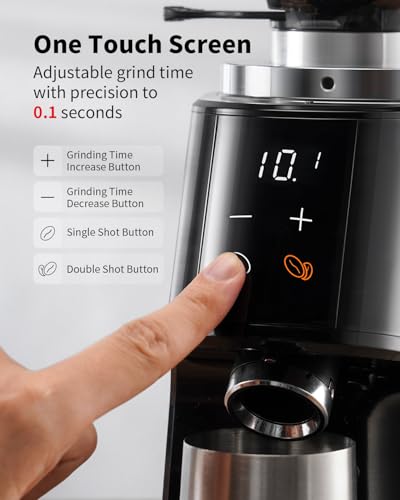


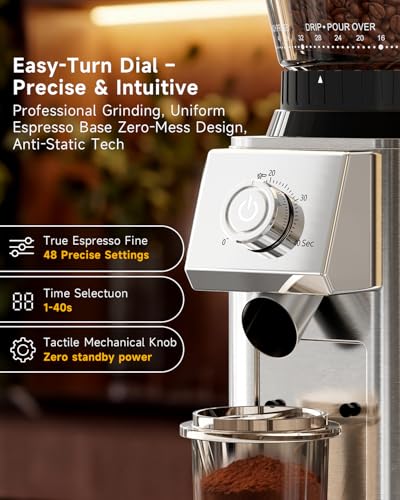
We also considered 10 others:


Our Top Choice
The order above is not editorial opinion, and it is not paid placement. It comes from what shoppers across our network actually do - which espresso grinders they compare, and which they ultimately buy. We re-rank as new data comes in, so the long-term favorites have to keep earning their spot against new entrants. The full method, including how we make money.
Espresso Grinders Buyer's Guide
Espresso grinders live in a tough tradeoff: they must grind very fine with repeatable precision, yet still be clean, fast, quiet, and durable enough for daily use. The sharpest concerns are whether the grinder can truly dial in espresso without channeling or choking, and whether its workflow and reliability hold up once the novelty wears off.
Grind Quality
Espresso is less forgiving than most brew methods because small particle-size changes can swing a shot from sour to bitter. A grinder that stays consistent at fine settings gives you repeatable pressure, flow, and flavor instead of forcing constant correction.
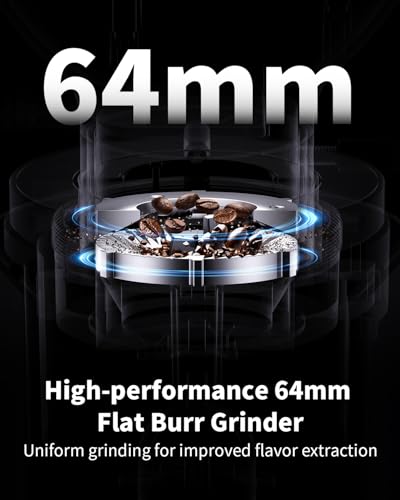
Prioritize a true burr grinder that can produce a fine, fluffy, repeatable espresso grind without obvious boulders, powdery excess, or clumps that choke the basket. For espresso, consistency at the fine end matters more than a long feature list: uneven grounds cause channeling, erratic shot times, and wasted beans while you chase the same recipe. Owner sentiment strongly supports this as a key separator, with buyers repeatedly praising consistent, controlled grounds and high-quality espresso results.
Dial-In Range
Espresso needs small grind changes because bean age, roast level, humidity, dose, and basket size all affect flow. A grinder with enough fine-range control lets you make meaningful micro-adjustments instead of jumping from too fast to too slow.
Look for a grinder with many usable settings concentrated around espresso-fine, or a fine-stepped/stepless adjustment system that makes tiny changes predictable. Avoid grinders whose finest range is barely fine enough, or whose adjustment steps are so wide that one click gushes and the next chokes. Owners specifically value having many grind settings and enough adjustment range to go very fine for espresso while still maintaining consistency, and they report that once dialed in, regular espresso use becomes easier to live with.
Daily Workflow
A grinder may perform well on paper but still be frustrating if dosing, cleanup, and repeat use are messy. Espresso routines involve frequent small doses, so portafilter fit, static control, retention, and easy access for cleaning have a real effect on daily satisfaction.
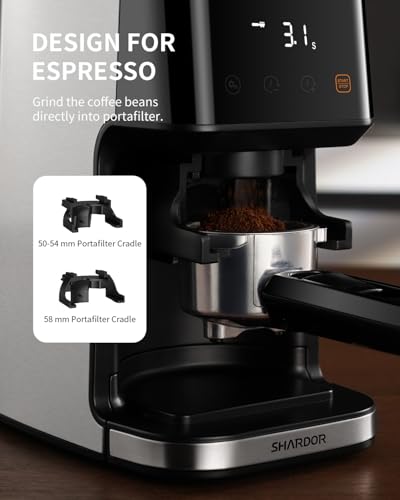
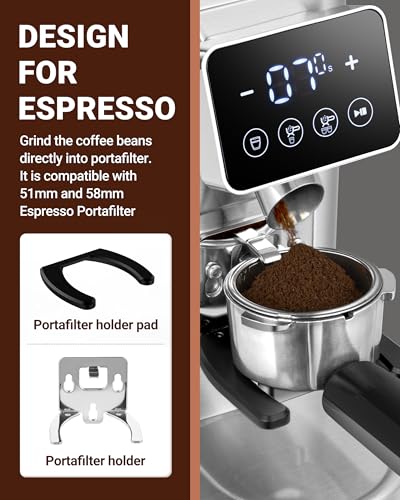
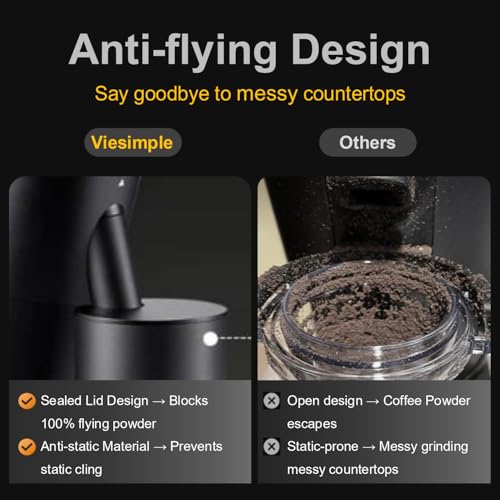
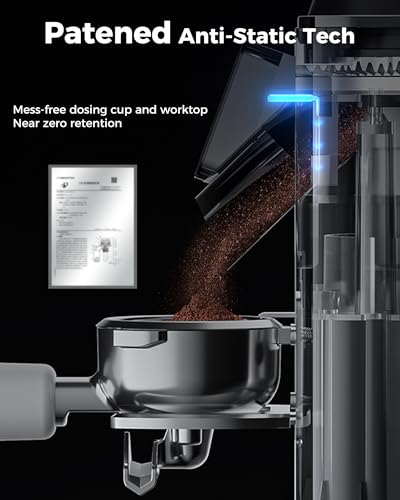
For espresso, favor direct portafilter grinding, a stable holder or dosing cup fit, simple start/stop controls, and parts that let you brush out the chute and burr area without a complicated teardown. Watch for high retention, static spray, awkward grounds transfer, or controls that make it hard to repeat the same dose, because those issues turn every shot into cleanup and recalibration. Owner feedback supports this dimension: buyers describe everyday use as clean and low-fuss, with direct portafilter grinding and simple operation making the grinder easier to use regularly.
Speed & Noise
Espresso grinding happens often and usually near people, so noise and speed affect whether the machine feels pleasant or intrusive. Fast grinding is useful, but it should not come with excessive heat, vibration, or harsh noise that makes daily use unpleasant.
Choose a grinder that finishes a typical espresso dose quickly without sounding strained, walking across the counter, or heating the grounds through prolonged grinding. Slower is not automatically worse if the burrs are stable and the dose is consistent, but a loud, vibrating grinder can become a daily annoyance in kitchens, apartments, or early-morning routines. Owners in the provided feedback describe grinding as fast and relatively quiet, and connect that smoother workflow with easier day-to-day espresso use.
Reliability
Espresso grinding is demanding because fine settings put more load on the motor and burr carrier than coarser brewing. A reliable grinder should maintain alignment, adjustment stability, and motor performance through frequent use, not just work well out of the box.
Check for a sturdy burr carrier, stable adjustment mechanism, accessible cleaning path, and reasonable protection against jams from oily beans or foreign debris. Be cautious with grinders that feel loose, drift settings, stall at fine settings, or have unclear support options, because early failure or alignment problems can make espresso dialing impossible. Sentiment here is mixed: many owners report steady performance for months or longer, but a minority of the broader review base reports early failures, making reliability the main area to scrutinize.
Entry Value
For many home espresso buyers, the grinder is the limiting piece of the setup, but spending more only helps if it buys finer control, consistency, and durability. A strong value pick should still meet espresso’s core requirements rather than simply being inexpensive.
If you are buying at the entry level, do not judge value by features alone; make sure the grinder can actually dial in espresso, repeat settings, and produce consistent fine grounds with a workflow you will use every day. Avoid saving on the grinder if it forces pressurized baskets, inconsistent shots, or constant bean waste, because those costs show up in frustration and poor extraction. Owner sentiment strongly frames this category around value, with buyers seeing respectable entry-level espresso performance and results that feel stronger than expected for a budget-conscious purchase.
1,000,000+ shoppers use Buyer's Guide every week to find the best products and services online.

Helping millions of users make smarter purchases online.


