
















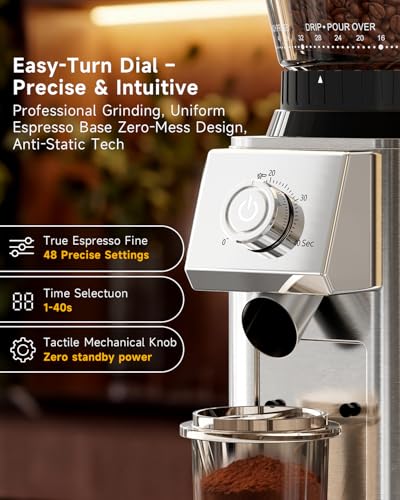
We also considered 10 others:


Our Top Choice
The order above is not editorial opinion, and it is not paid placement. It comes from what shoppers across our network actually do - which budget espresso grinders they compare, and which they ultimately buy. We re-rank as new data comes in, so the long-term favorites have to keep earning their spot against new entrants. The full method, including how we make money.
Budget Espresso Grinders Buyer's Guide
Budget espresso grinders live or die on a narrow tradeoff: they must grind fine and evenly enough for espresso while keeping adjustment, mess, and reliability manageable for daily use. The sharpest concerns are whether the grinder can actually dial in a non-pressurized basket and whether its low-cost build will stay aligned and consistent over time.
Espresso Grind
Espresso is far less forgiving than drip or French press because small changes in particle size can change pressure, flow, and taste dramatically. In this category, consistency matters more than flashy features because uneven grounds cause sour, bitter, or channeling-prone shots even when the machine is capable.
Prioritize a true burr grinder that can produce fine, uniform grounds without excessive fines, boulders, or visible clumping; avoid blade-style grinders or coffee grinders marketed mainly for coarse brew methods if you plan to use a non-pressurized portafilter. For espresso, the grinder should hold burr alignment well enough that repeat shots flow similarly after small dose and grind changes. Owner sentiment strongly supports this as a decisive separator: buyers praise consistent, high-quality grinds that work especially well for espresso, with repeatable grounds called out as a standout strength. Positive feedback also ties everyday grinding performance and overall quality directly to the ability to make respectable espresso.
Dial-In Range
A grinder can be consistent and still frustrate espresso users if the adjustment steps are too large. Espresso dialing often happens in tiny increments, especially when beans age or roast level changes, so usable fine-range control is essential.
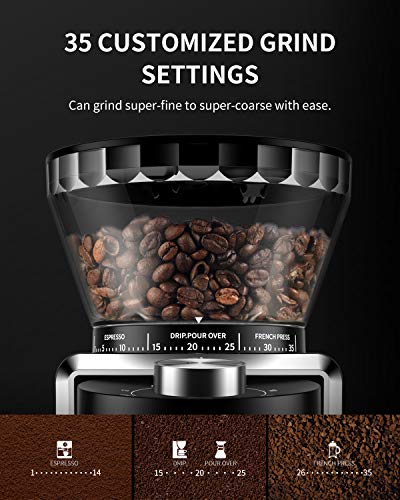
Look for many closely spaced settings in the espresso range, or a micro-adjustment system, rather than a grinder that simply advertises a large total number of settings across all brew styles. The key test is whether one click or mark changes shot flow subtly; if each step jumps from choking the machine to running too fast, the grinder will be hard to live with. Owners specifically value grinders with many settings that make it easy to move from fine espresso to coarser brewing, and they report that a broad adjustment range gives enough room to go very fine while maintaining consistency. Sentiment also shows that once the grind is dialed in, simple controls make regular espresso use easier.
Daily Workflow
A budget grinder is often used every morning, so workflow problems become more important than they seem in a spec sheet. Retention, static, awkward controls, and messy portafilter transfer can waste coffee and make dialing in feel harder than it needs to be.
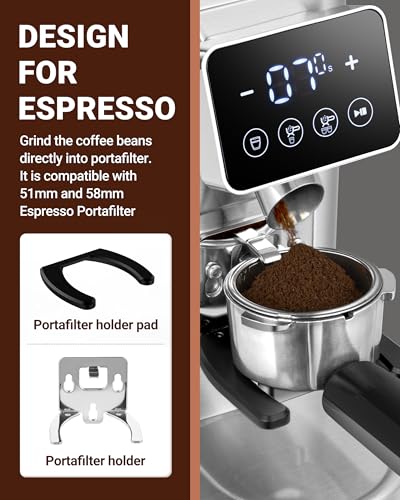
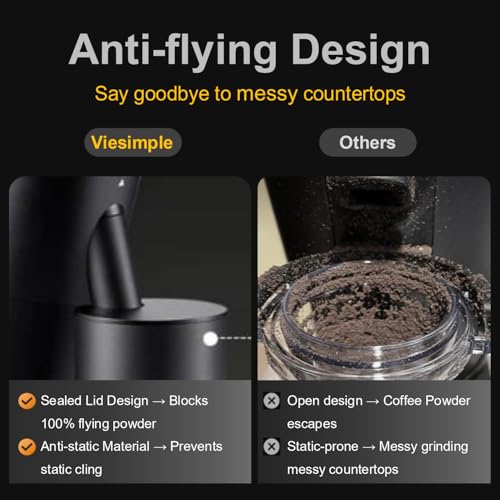
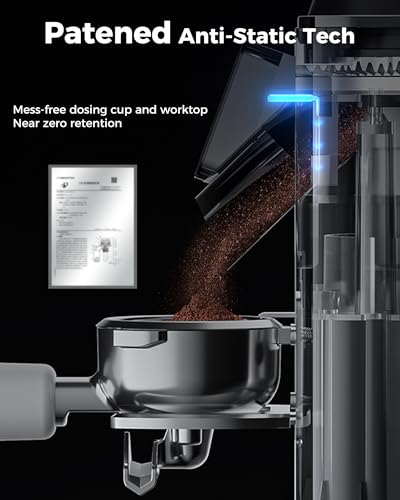
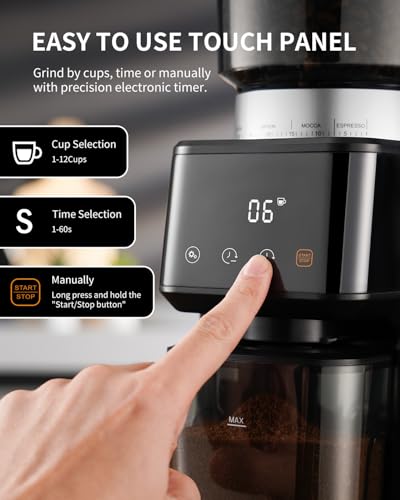
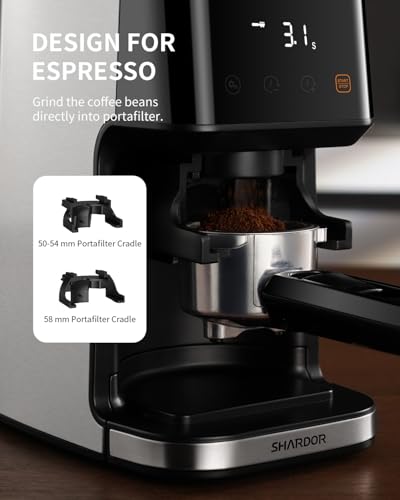
For espresso, check whether the grinder can dose cleanly into your setup: a stable portafilter fork, dosing cup, or chute that fits common basket sizes is more useful than decorative extras. Favor simple timed or manual controls, removable parts for brushing out the chute, and a design that limits static and grounds spray; avoid grinders that force you to scoop from a deep bin every shot unless you are comfortable with extra mess and retention. Owner feedback supports this priority: everyday use is described as clean and low-fuss when direct portafilter grinding and simple operation are present. Buyers also report fast, relatively quiet grinding, clear instructions, and approachable daily operation as reasons the grinder is easy to live with.
Build Reliability
Budget espresso grinders work harder than ordinary brew grinders because fine grinding puts more load on the motor and burr carrier. Weak alignment, heat buildup, or fragile adjustment parts can turn a good first week into inconsistent shots later.
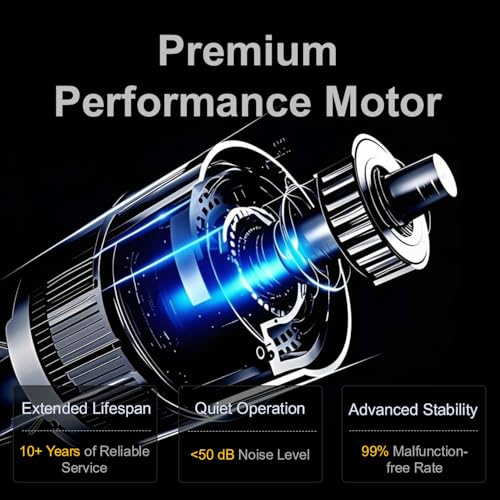
Inspect for a rigid burr carrier, secure hopper and adjustment collar, accessible cleaning path, and overheating protection; fine espresso grinding should not make the grinder smell hot, stall, or drift settings during a session. Replaceable burrs, obtainable parts, and a clear support path matter because a failed grinder can stop your espresso setup entirely. Owner sentiment is mixed here: many users report steady performance for months or longer, but a minority report early failures, including some grinders that failed very quickly. That split makes reliability checks more important in this niche than in categories where a short failure only means switching brew methods.
Value Fit
The best budget espresso grinder is not simply the cheapest grinder that turns on. It is the one that spends its limited design budget on burr quality, fine adjustment, and usable workflow rather than features that do not improve extraction.
Spend your attention on espresso-critical features first: burr grinding, fine-range adjustment, consistency, and a clean dosing path. Be cautious with all-in-one bundles or grinders sold as general-purpose coffee accessories unless the grinder itself can meet your basket type; pressurized baskets are more forgiving, but non-pressurized espresso needs a more capable grinder. Owner sentiment repeatedly frames strong budget picks as unusually good value, especially when they deliver entry-level espresso results without requiring a high-end setup. Buyers also connect value to replacing café drinks and getting regular daily use, not just to the initial purchase.
1,000,000+ shoppers use Buyer's Guide every week to find the best products and services online.

Helping millions of users make smarter purchases online.


