



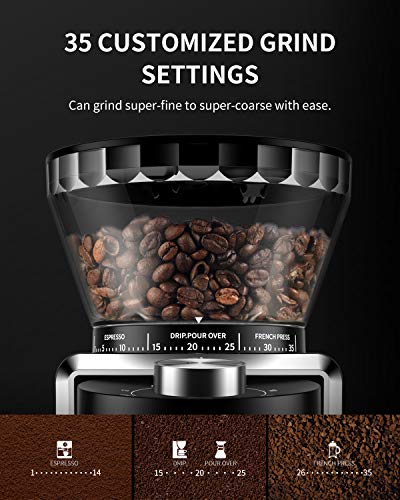


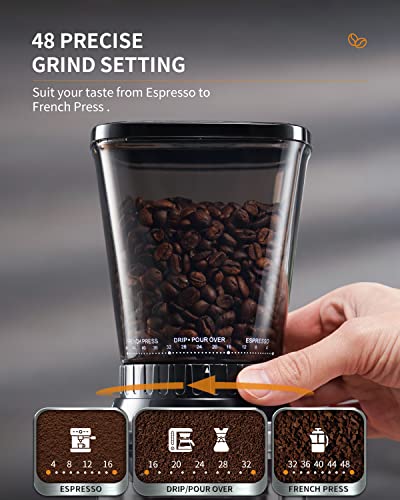

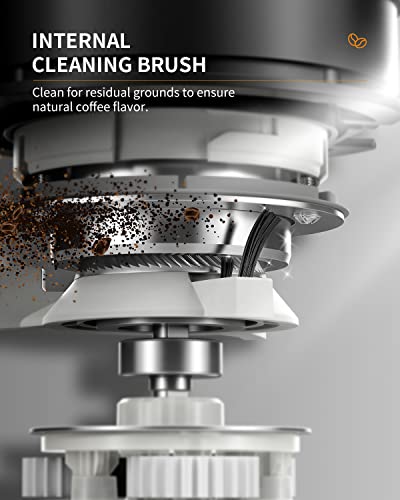


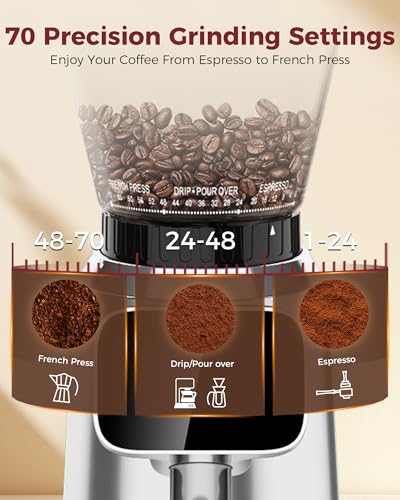


















We also considered 10 others:


Our Top Choice
The order above is not editorial opinion, and it is not paid placement. It comes from what shoppers across our network actually do - which conical burr grinders they compare, and which they ultimately buy. We re-rank as new data comes in, so the long-term favorites have to keep earning their spot against new entrants. The full method, including how we make money.
Conical Burr Grinders Buyer's Guide
Conical burr grinders are bought for one hard tradeoff: they need to crush beans consistently enough for espresso while staying practical for daily dosing, adjustment, and cleanup. The sharpest concerns are whether the grinder can make repeatable fine grounds without choking or spraying, and whether its adjustment system is precise enough to dial in shots without becoming a chore.
Grind Uniformity
A conical burr grinder’s main job is to create particles that are close enough in size to brew evenly. For espresso, inconsistent grinds can cause fast gushers, bitter choking shots, or channeling even when the coffee and machine are good. Uniformity also matters for pour-over, drip, and French press because excess fines can muddy the cup while large boulders under-extract.
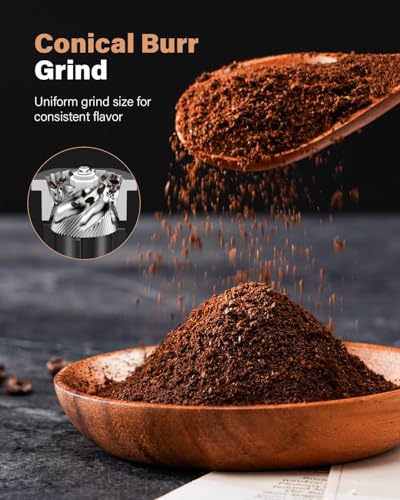
Prioritize a grinder that stays uniform at the fine end, not just one that looks consistent at medium drip settings. Look for true burr grinding, a rigid burr carrier, minimal wobble in the shaft, and reviews that specifically mention repeatable espresso results; avoid grinders that advertise fine settings but produce dusty fines mixed with coarse chunks. Owners repeatedly highlight grind consistency as a standout strength, connecting controlled, uniform grounds with better-tasting coffee, reliable espresso dialing, and dependable everyday brewing.
Dial-In Control
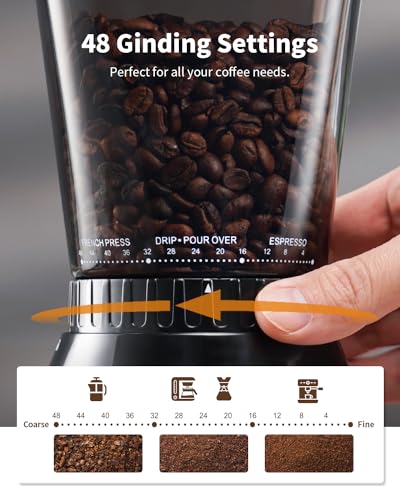
Espresso is especially sensitive to tiny grind changes, so the adjustment system matters as much as the burrs. A grinder with enough fine-side resolution lets you correct shot time and flavor without jumping from too coarse to too fine. Wider range is useful if the same grinder must also serve moka pot, drip, pour-over, or French press.
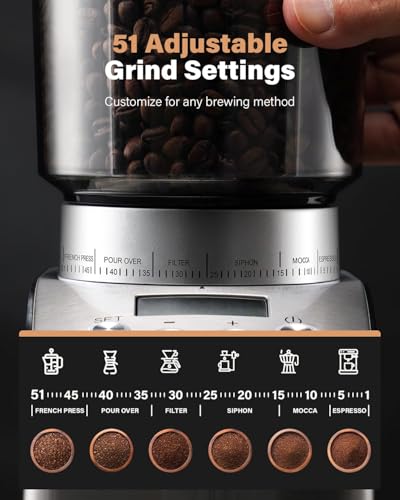
For espresso, choose fine, closely spaced steps or stepless-style adjustment; for mixed brew methods, make sure the grinder can move from espresso-fine to genuinely coarse without losing calibration. Clear markings, repeatable clicks, and an adjustment collar that does not drift during grinding are important because you will return to settings often as beans age. Owner sentiment strongly supports this dimension: buyers value many grind settings, simple adjustment, and enough range to dial in espresso while still handling coarser brew methods.
Daily Workflow
A grinder can make good grounds and still be frustrating if dosing, timing, or handling is awkward. Daily coffee routines reward repeatable controls, stable containers, readable markings, and a workflow that fits either portafilter use or brew-basket dosing. Noise and speed also affect whether the grinder feels realistic for early mornings and repeated use.
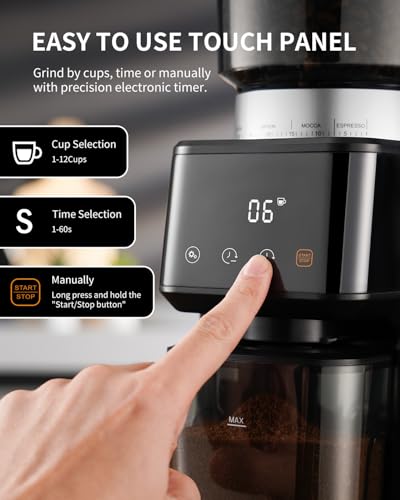
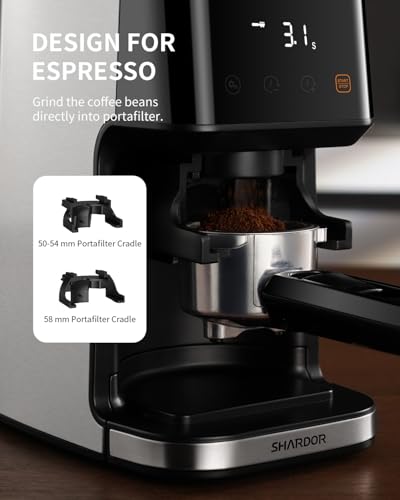
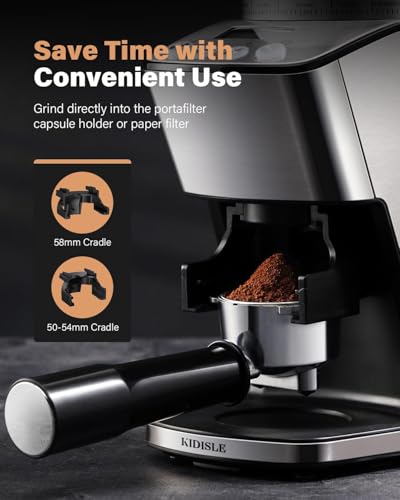
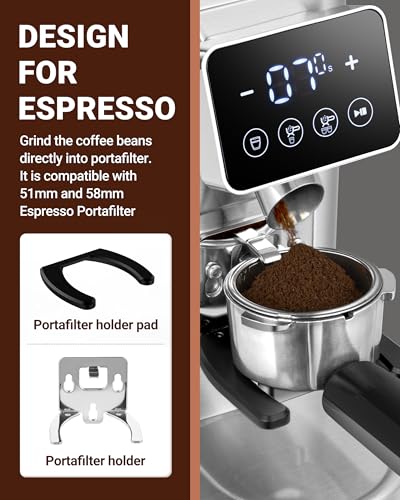
Match the workflow to how you actually brew: espresso users should look for direct portafilter grinding, a stable cradle, timed or dose-consistent operation, and a chute that does not spray grounds; manual-grinder buyers should check handle comfort, grip, and whether a normal espresso dose can be ground without excessive effort. Electric grinders should have simple start/stop controls and timers that are accurate enough to repeat a dose, while hand grinders should feel smooth rather than crunchy or binding at fine settings. Owners describe straightforward setup, easy controls, readable instructions, timer options, quick manual grinding for normal espresso doses, and generally reasonable noise as reasons certain grinders are easy to live with.
Cleaning Retention
Ground coffee left in the burr chamber and chute can go stale, contaminate the next dose, and make dialing in less predictable. Easy cleaning also prevents buildup that can slow the grinder or create clumping. This is especially important for espresso, where small retained amounts can noticeably change shot behavior.
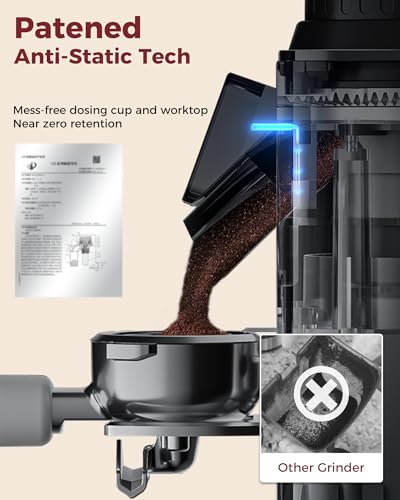
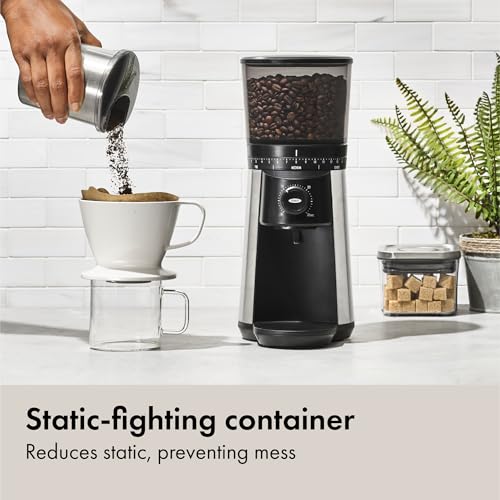
Look for a removable upper burr, included brush access, a short chute, low-static grounds path, and parts that separate without disturbing the grind setting. Avoid designs with hidden cavities that trap grounds, flimsy bins that leak, or chutes that require frequent poking to clear; oily beans will make any grinder need more maintenance, so easy access matters. Owner feedback supports the importance of low-fuss upkeep, with buyers appreciating parts that come apart for cleaning, clean everyday use, and direct portafilter grinding that reduces mess.
Build Life
Conical burr grinders work under load, especially at espresso-fine settings, so build quality affects both grind consistency and lifespan. A stiff body, stable burr mount, durable adjustment mechanism, and serviceable parts help the grinder keep its calibration over time. Reliability matters because early motor, gearbox, or alignment failures can turn a good first impression into a poor long-term buy.
Check for a solid burr mount, minimal shaft play, durable adjustment threads, a stable base, and burrs that can be cleaned or replaced rather than treated as disposable. For electric models, avoid underpowered motors that stall on light roasts or espresso settings; for manual models, prefer precise metal machining, smooth bearings, and a handle that does not flex. Owner sentiment is mostly favorable on quality, with buyers praising sturdy compact machines, solid metal manual builds, and performance that feels better than expected for the category, but reliability is the clearest caution because a minority report early failures while many others get steady use.
1,000,000+ shoppers use Buyer's Guide every week to find the best products and services online.

Helping millions of users make smarter purchases online.


