




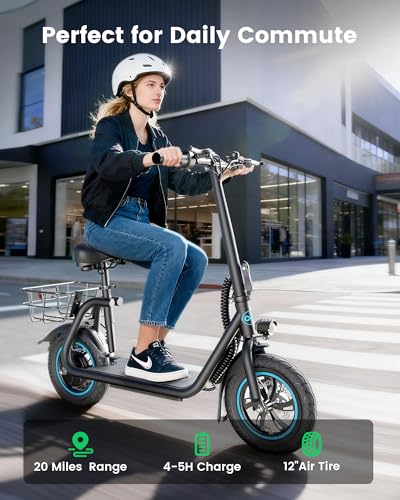


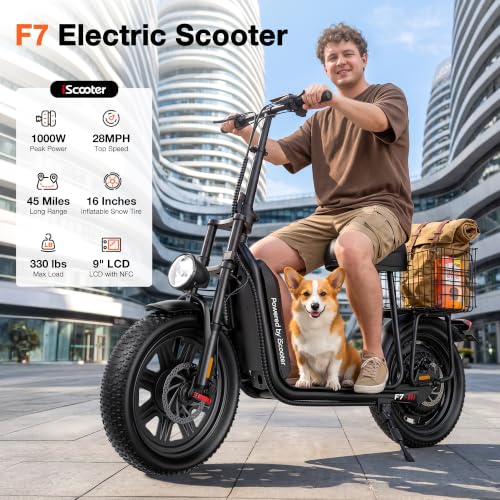


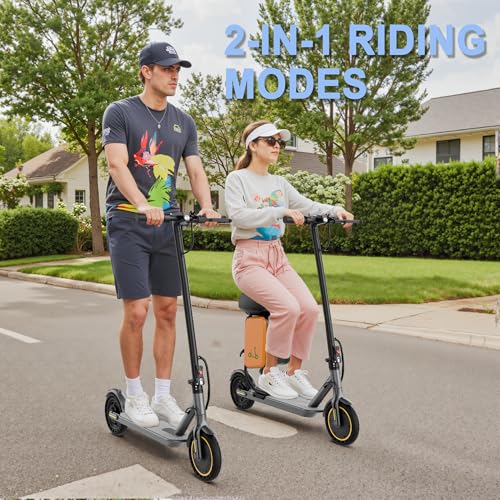


We also considered 10 others:




Our Top Choice
Compare Features


The order above is not editorial opinion, and it is not paid placement. It comes from what shoppers across our network actually do - which electric scooters with seat they compare, and which they ultimately buy. We re-rank as new data comes in, so the long-term favorites have to keep earning their spot against new entrants. The full method, including how we make money.
Electric Scooters with Seat Buyer's Guide
Electric scooters with seats trade stand-up agility for comfort, cargo practicality, and easier short commutes—but the seat changes how the scooter handles, folds, brakes, and carries weight. The sharpest checks are seated stability, seatpost/frame strength, real-world range under rider-plus-cargo load, and whether the scooter is still portable once the seat and basket are installed.
Ride
Ride quality determines how comfortable and confident you feel on an electric scooter, especially over uneven pavement, turns, and longer trips. Look for stable handling, predictable controls, tires or wheels suited to your surfaces, and suspension or deck design that reduces vibration; watch out for scooters that feel twitchy, harsh, or cramped. If the scooter has a seat, make sure it supports your posture without making steering or balance feel awkward.
For a seated electric scooter, prioritize seated stability over raw compactness: look for a rigid seatpost with height adjustment, a wide deck or footrests that let both feet sit naturally, pneumatic or larger tires, rear suspension or dual shocks, and brakes that feel controllable while your weight is farther back on the seat. Avoid models where the seat looks like an afterthought, the foot area is cramped, or the wheels are very small if you expect driveways, speed bumps, brick paths, grass edges, or rough neighborhood pavement. Owner feedback supports this: riders most often praise seated models that feel sturdy, smooth, and comfortable, especially when padded seats, wide footrests, pneumatic tires, rear suspension, shocks, and bigger tires help them handle everyday bumps and short errand trips.
Build
Build quality matters because your scooter needs to handle repeated folding, road vibration, bumps, and weather exposure without feeling loose or fragile. Look for a sturdy frame, solid stem and deck, clean welds or joints, secure latches, and materials that feel rigid rather than flimsy. Watch out for rattles, excessive flex, weak folding mechanisms, or cheap-feeling controls, since those can affect both durability and your confidence while riding.
Check the parts that carry seated loads: the seat mount, seatpost clamp, folding hinge, handlebar stem, rear rack or basket mounts, and brake hardware should look reinforced and not flex when you sit, start, stop, or hit small bumps. Because seated riding puts more leverage into the frame than standing riding, avoid vague weight ratings, thin-looking seat brackets, wobbly stems, and designs where the battery or wiring is exposed to road spray. Owner sentiment lines up with this concern: the best-received scooters are described as sturdy, well-built, durable, stable over uneven pavement, and confidence-inspiring for regular commuting, hills, and daily use.
Usability
Usability affects how quickly you can get riding and how comfortable the scooter feels in daily use, from initial assembly to folding, carrying, charging, and adjusting the fit. Look for intuitive controls, a clear display, secure folding mechanisms, practical lights or signals, and handlebar or ride settings that match your needs. Watch out for scooters that are awkward to fold, difficult to carry, confusing to operate, or limited in adjustability, especially if you plan to use them often or share them with other riders.
Before buying, verify how the scooter actually fits into your routine with the seat installed: whether it still folds, whether the seat must be removed for storage, how heavy it is to lift, how easy it is to roll folded, and whether the basket or accessories interfere with carrying it through doors, elevators, dorms, or car trunks. Also check startup behavior, throttle style, display readability while seated, lighting, and whether assembly includes tightening the seat, brake alignment, and stem hardware rather than just unfolding the frame. Owners frequently report quick assembly and easy basic operation, and they value seated comfort, foldable frames, baskets, lights, phone holders, and other practical features; a few notes also show that understanding push-start behavior can matter before the throttle engages.
Battery
Battery life and range determine whether your scooter can handle your typical trips without leaving you looking for an outlet. Look for a realistic per-charge range that comfortably exceeds your commute or errands, and remember that rider weight, hills, speed, temperature, and tire pressure can reduce the distance you actually get. If you plan longer rides, prioritize a larger battery and factor in charging time so the scooter is ready when you need it.
Shop by realistic seated-rider range, not the headline range: rider weight, seated wind resistance, stop-and-go errands, hills, cold weather, tire pressure, cargo in a basket, and higher speed modes can cut range sharply. For commuting, choose a battery capacity that leaves a reserve after your round trip, confirm charger time and replacement-battery availability, and be cautious if the claimed range assumes ideal conditions far lighter or slower than your use. Owner feedback is mostly positive, with many riders saying battery life covers daily commuting, errands, campus or neighborhood use, and does not require constant charging, but the key warning is that some buyers find real-world range falls well short of advertised claims.
Speed
Speed affects how confidently you can keep up with traffic, merge through bike lanes, and handle stop-and-go riding, while acceleration and motor power matter just as much as the listed top speed. Look for performance that fits your commute, rider weight, and local speed limits, and pay close attention to hill climbing ability if your route includes inclines. Be wary of headline top-speed claims that may depend on ideal conditions, since real-world performance can drop with low battery, heavier loads, rough pavement, or steep hills.
For seated scooters, the safer target is controlled acceleration and hill torque, not just top speed: while seated, you cannot shift body weight as easily as on a standing scooter, so smooth throttle response, multiple speed modes, reliable brakes, and stable steering at your intended speed matter more than a high maximum number. Check local rules for seated scooter speed and road/path access, and avoid overpowering a small-wheel or lightly built model if you will ride around pedestrians, driveways, or broken pavement. Owners generally like models that feel quick enough for town trips, hills, heavier adults, and fun riding, while still being manageable for everyday neighborhood, campus, and city use.
Value
Value matters because an electric scooter can look affordable upfront but cost more over time if the range, build quality, battery life, or parts availability do not match your needs. Look for a fair balance of price, performance, durability, and warranty support, and be cautious of very cheap options that cut corners on braking, tires, or water resistance.
Judge value by whether the scooter already includes the seated-commuter hardware you would otherwise add: a comfortable removable or adjustable seat, sturdy basket or rack, lights, fenders, phone mount, spare tube, suspension, pneumatic tires, and a folding design that still works with the seat setup. Do not treat included extras as value if they compromise balance, make folding impractical, or attach with flimsy brackets; replacement tires, tubes, brakes, chargers, and seat hardware availability are also part of the real cost of ownership. Owners tend to see strong value when a seated scooter combines sturdy build, comfort, folding convenience, errand-friendly storage, practical accessories, and capable speed in a package that feels useful for short trips and daily tasks.
1,000,000+ shoppers use Buyer's Guide every week to find the best products and services online.

Helping millions of users make smarter purchases online.


