

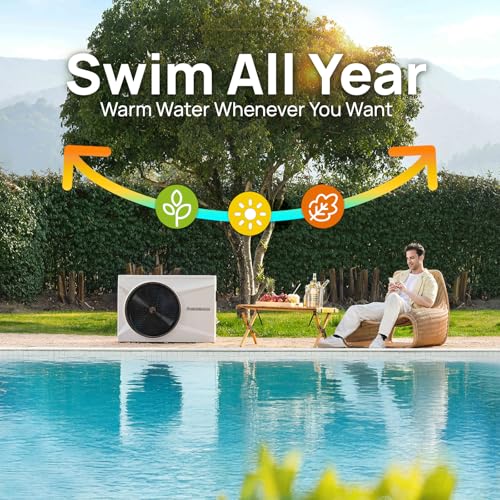


- Pool Type: Above & in-ground
- Max Pool Size: 16,000 gallons
- Max Output: 55,000 BTU
- Power: 220V electric
- Wi-Fi: Yes





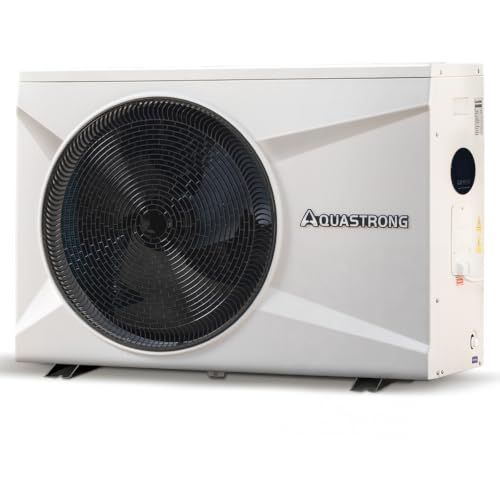
Aquastrong Inverter Pool Heat Pump
Review: Performance, comfort, and day-to-day experience

The Aquastrong Inverter Pool Heat Pump is designed for pool owners who want steadier water temperatures without the high operating costs often associated with traditional electric resistance heaters. The headline feature is the inverter-driven compressor, which can ramp output up or down rather than running in a constant on/off cycle. In real-world use, that typically translates to more stable water temperature, less noticeable swings, and quieter operation because the system doesn’t need to “slam” on at full power as often. If you enjoy using your pool in shoulder seasons or you simply want water that stays comfortable from morning to evening, the inverter approach is one of the biggest practical upgrades over entry-level, fixed-speed heat pumps.
Heating performance depends heavily on ambient air temperature, humidity, and wind, and this is where many buyers either feel pleasantly surprised or disappointed. In mild conditions, an inverter heat pump can feel impressively efficient: it warms the pool steadily and then “cruises” to maintain set temperature, which is usually the least expensive mode of operation. In colder or windy conditions, any heat pump has to work harder, and the warm-up time from a low starting temperature can be longer than some users expect. The Aquastrong’s value proposition is strongest when you plan ahead and maintain temperature rather than trying to raise the pool many degrees overnight in marginal weather. With that mindset, it tends to deliver consistent comfort and a more predictable energy profile.
Noise is another area where inverter models usually shine. While exact sound levels vary by installation and load, a variable-speed unit often operates at lower fan and compressor speeds for long stretches, which can make it noticeably less intrusive in a backyard setting. If your equipment pad is near a seating area or property line, this matters. The experience is also influenced by placement: mounting it with adequate airflow clearance and avoiding resonant surfaces can make the difference between “barely noticeable” and “I can hear it every time it cycles.”
From a usability perspective, buyers typically care about how easy it is to control temperature and how reliably the unit holds setpoints. An inverter heat pump’s strengths show up in maintenance mode, where the unit can run at a lower, efficient output to offset ongoing heat losses. If you pair that with a solar cover or a high-quality thermal blanket at night, the overall system feels more capable: less runtime is required, and your desired temperature becomes easier to maintain through cool nights.
What to consider before buying and what matters most
The most important factor before purchasing any pool heat pump, including the Aquastrong Inverter Pool Heat Pump, is sizing. Proper sizing is not just about pool volume; it’s about your climate, desired temperature, the length of your swim season, wind exposure, and whether you use a cover. A unit that is too small can still work, but it may run constantly, struggle during cool stretches, and take a long time to recover temperature after weather changes. A unit that is appropriately sized is more likely to spend time in efficient, lower-speed operation, which is where inverter technology delivers the best mix of comfort and cost control.
Closely tied to sizing is your target use case: do you want to extend the season into spring and fall, or are you mainly maintaining a summer setpoint? Season extension is more demanding, especially in areas with cool nights or frequent breezes. If you want reliable heat in borderline conditions, you’ll generally prioritize a higher-capacity unit and you’ll treat a pool cover as essential equipment rather than an optional accessory. For many owners, the cover is the single most cost-effective “upgrade” because evaporation is a major source of heat loss. When you reduce that loss, any heat pump becomes more effective.
Another major purchase consideration is efficiency, usually described in terms of COP, which indicates how much heat energy you get relative to electrical energy consumed under specific test conditions. Inverter heat pumps can deliver strong real-world efficiency because they spend more time operating at partial load where they can be very effective. The key is remembering that COP is not a constant; it changes with air temperature and humidity. If you live in a warm, humid region, you’ll likely see better performance than in a cool, dry climate. This is why climate fit is more important than comparing a single COP number from a brochure.
Electrical requirements and site readiness also matter. Heat pumps typically need a dedicated circuit, correct breaker sizing, and proper wire gauge. If your equipment pad is far from the panel, installation costs can increase due to longer wire runs or conduit work. Physical placement matters as well: the unit needs unobstructed airflow to operate efficiently, and poor placement can lead to recirculating cold exhaust air, reduced performance, and longer runtimes. Planning the location with clearance in mind is often the difference between “it works” and “it works well.”
Plumbing compatibility and flow requirements are another practical consideration. The heat pump needs sufficient water flow to transfer heat effectively but not so much that it triggers high-pressure conditions. If your pool system includes a variable-speed pump, you’ll want to confirm you can maintain a stable flow rate that satisfies both filtration and heating. Many owners find that dialing in pump RPM for heating mode can reduce energy use while keeping the heater operating smoothly. If you have water features, spa spillovers, or complex valve arrangements, it’s worth thinking through how water will route through the heater and whether you’ll need a bypass.
Finally, consider warranty terms, parts availability, and local service support. Any heat pump is a significant outdoor appliance exposed to weather, chemistry fluctuations, and long run hours. A strong warranty is reassuring, but the practical side is whether you have accessible service if something goes wrong. If you’re in a region where pool heat pumps are common, service tends to be easier to find. If you’re in a remote area, the ability to get parts and qualified help can become a deciding factor. In short, the most important factors are proper sizing for your climate and goals, heat-loss control with a cover, and a realistic plan for installation and service.
Common Questions
Will an inverter pool heat pump actually save money compared to a standard heat pump?
Often, yes, especially when you maintain temperature for long periods. Inverter models can run at lower speeds once the pool reaches the set temperature, which tends to improve efficiency and reduce noisy cycling. Savings depend on your electricity rates, climate, and how consistently you use a cover.
How long will it take to heat my pool with the Aquastrong Inverter Pool Heat Pump?
Warm-up time varies widely. Pool size, starting water temperature, air temperature, wind, and whether the pool is covered are the biggest variables. As a general approach, plan for gradual heating and better results when maintaining temperature rather than trying to make big jumps quickly in cool weather.
Do I need a pool cover if I’m buying a heat pump?
You don’t strictly need one, but it is one of the most impactful ways to improve heating performance and reduce operating cost. A cover cuts evaporation and overnight heat loss, helping the heat pump maintain temperature with less runtime.
Can I run it with a variable-speed pool pump?
Yes, and it’s often a good pairing. You’ll want to ensure the flow rate stays within the heater’s required range during heating. Many owners set a dedicated “heat” speed on the pump to keep flow stable and efficient.
Is it loud?
Inverter units are typically quieter in everyday operation because they spend more time at lower speeds. Placement and mounting also matter; providing good airflow clearance and avoiding echo-prone corners helps keep perceived noise low.
Conclusion: The Aquastrong Inverter Pool Heat Pump is a strong option for pool owners who want steady comfort, quieter operation, and better efficiency during temperature maintenance. The smartest purchase decisions hinge on correct sizing for your climate and season goals, reducing heat loss with a quality cover, and ensuring your electrical and plumbing setup supports a clean installation and reliable long-term service.