













We also considered 10 others:


Our Top Choice
Compare Features


The order above is not editorial opinion, and it is not paid placement. It comes from what shoppers across our network actually do - which electric mowers they compare, and which they ultimately buy. We re-rank as new data comes in, so the long-term favorites have to keep earning their spot against new entrants. The full method, including how we make money.
Electric Mowers Buyer's Guide
Electric mowers trade gas-engine maintenance, fumes, and noise for stricter limits around battery runtime, cord management, and grass conditions. The sharpest buying questions are whether the mower can finish your actual yard on a tough mowing day and whether its deck, battery system, and handling match your lawn’s size, slopes, gates, and storage space.
Ease
A mower that’s easy to assemble, start, and operate saves you frustration every time you need to cut the grass. Look for clear setup instructions, intuitive controls, manageable weight, and simple height or bagging adjustments. Watch out for awkward handles, fussy start mechanisms, or features that sound useful but make day-to-day functionality more complicated.
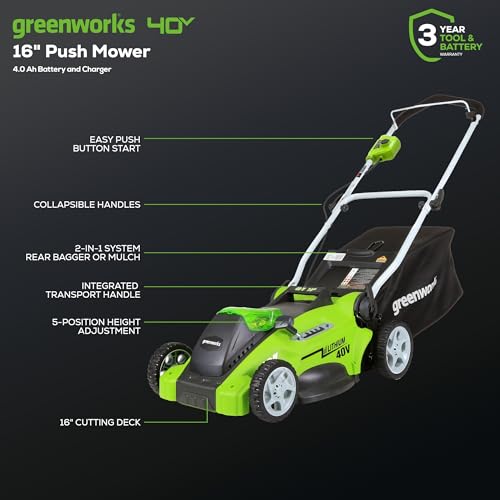
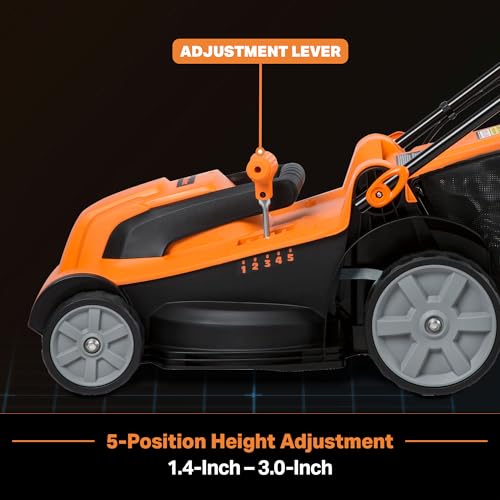
Prioritize electric-specific convenience features that reduce the chores gas mowers add: push-button start with a clear safety key, tool-light handle assembly, single-lever deck-height adjustment, an easy-latching bag, and folding handles that do not pinch battery cables or control wires. If switching from gas, also check that blade removal, underside cleaning, and battery insertion are straightforward, because electric mowers still need blade maintenance even without oil, spark plugs, or pull-starting. Owner feedback supports this: buyers repeatedly describe electric models as easy to assemble, start, push, and store, with simple daily operation and no fuel or oil hassle.
Cutting
You want a mower that leaves an even, clean finish without repeatedly bogging down, missing blades of grass, or forcing you to make extra passes. Look for strong cutting performance across different grass heights and conditions, enough cutting capacity for your lawn size, and effective mulching if you prefer to return clippings to the yard rather than bag them.
Match cutting system to your grass, not just the stated voltage: look for a sharp steel blade, a deck wide enough for your lawn, multiple cut-height positions, and the discharge mode you actually use—mulch, bag, and/or side discharge. For thick, fast-growing, damp, or occasionally overgrown lawns, favor higher-voltage cordless models with a brushless motor, torque-sensing boost, and enough battery capacity; for fine weekly cuts on small lawns, a lighter lower-power mower can be enough. Owner reports generally back strong cutting performance for small to mid-size yards, with many saying electric mowers leave clean, even results and some cordless models handle tall, thick, or even damp grass better than expected.
Handling
Handling matters because the easier a mower is to push, steer, and control, the less tiring it will be to cover your yard—especially around trees, beds, slopes, or tight corners. Look for a weight and wheel design that match your terrain, and consider self-propelled drive if you have hills or a larger lawn, but watch that the mower still feels easy to slow, turn, and maneuver in confined spaces.
Check real maneuverability under mowing conditions: mower weight with battery installed, wheel size, handle adjustability, turning radius, and whether the deck shape can trim close to fences, beds, and trees. On slopes or larger lawns, self-propelled drive can prevent fatigue, but it adds weight and drains battery faster; on small flat yards, a lighter push model may be easier and simpler. Owner sentiment strongly favors lightweight electric mowers for pushing, lifting, controlling around corners, and storing, while self-propelled versions are praised when low-effort movement is the priority.
Battery
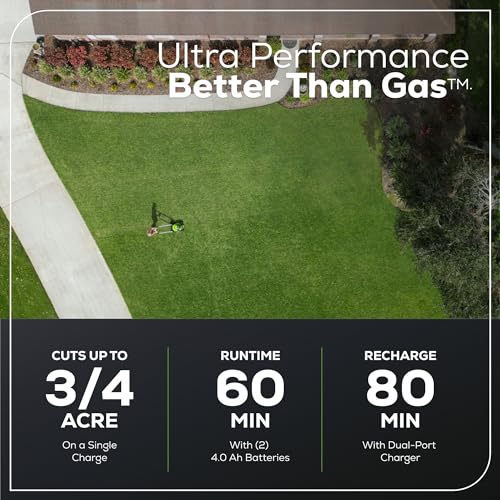
Battery life matters because it determines whether a cordless mower can finish your lawn on a single charge without forcing you to stop and wait. Look for a runtime that matches your yard size and grass conditions, and remember that thick, wet, or tall grass can drain batteries faster than ideal-condition estimates. Also check charging time and whether the battery is removable or compatible with other tools, since that affects how easy it is to keep mowing when power runs low.
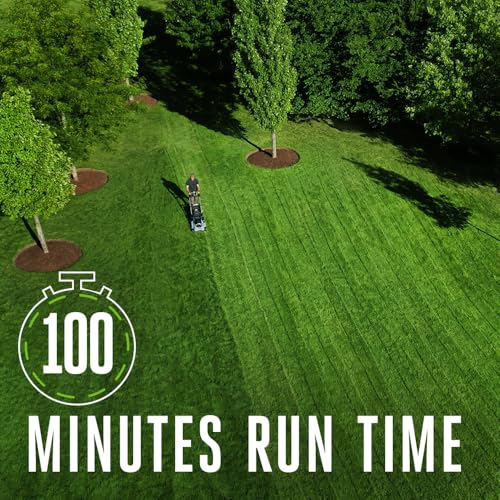
Treat runtime claims cautiously and size the battery to your worst mowing day: tall grass, heat, wet turf, mulching, self-propel drive, and high-lift bagging all shorten runtime. Compare watt-hours, not just amp-hours; confirm whether the mower uses one or two packs, whether both are included, charger speed, replacement-pack availability, and compatibility with tools you already own. For any yard near the upper limit, plan on a second set of batteries or a rapid charger. Owner feedback is most mixed here: many small- and average-yard users finish on one charge, sometimes with charge left, but others report short sessions, charging downtime, or needing extra batteries for larger or tougher lawns.
Size
The mower’s size affects where you can store it, how easily you can move it through gates or around obstacles, and how comfortable it is to use in tight areas. If you have limited garage or shed space, look for a compact size, folding handle, or vertical storage option, but make sure the cutting deck is still wide enough to suit your lawn. Watch the overall dimensions and handle height, not just the deck size, so you do not end up with a mower that is awkward to maneuver or store.
Choose deck width and storage footprint around your property layout: compact 14- to 17-inch decks suit small yards, gates, tight landscaping, and sheds, while 18- to 21-inch decks reduce passes on mid-size lawns but are heavier and harder to store. Also check folded dimensions, vertical-storage approval, handle-lock security, and whether the bagger sticks out in storage. Owner sentiment aligns with this fit: compact electric mowers are especially liked for small yards, tight spaces, and easy storage, while many buyers find them capable for small to mid-size lawns.
Noise
A mower’s noise level affects your comfort, your neighbors, and when you can reasonably mow without being disruptive. If you want a quieter experience, look for lower decibel ratings and consider electric models, while remembering that cutting thick grass or using high blade speeds can make any mower sound louder in real use.
Electric mowers are quieter than gas, but blade noise still matters near neighbors, shared walls, pets, and early-morning mowing restrictions, so look for published decibel ratings, low-vibration design, and a well-balanced blade. Cordless models also avoid generator-like engine noise, while corded models remove battery whine but add cord-management concerns. Owners consistently cite quieter operation as a major advantage over gas, often describing mowing as less disruptive, less harsh, and cleaner-feeling without fuel or oil storage.
1,000,000+ shoppers use Buyer's Guide every week to find the best products and services online.

Helping millions of users make smarter purchases online.


