





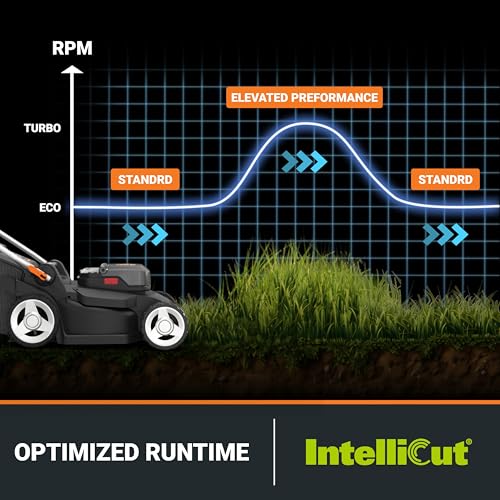

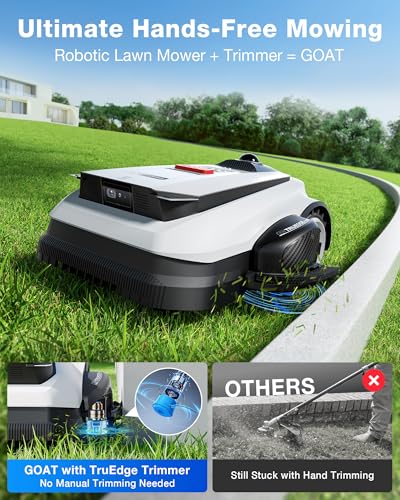

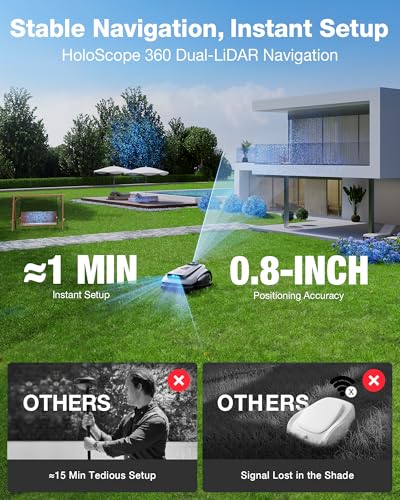


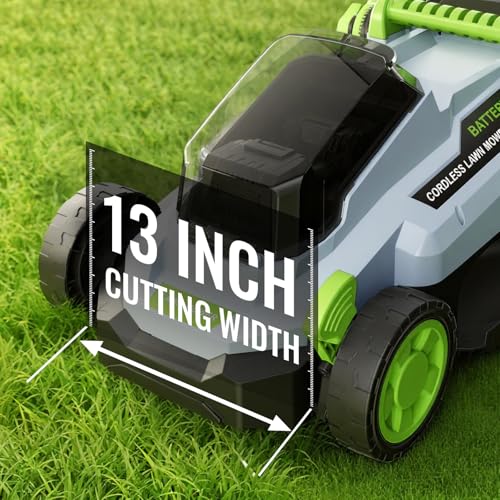



We also considered 10 others:


Our Top Choice
Compare Features


The order above is not editorial opinion, and it is not paid placement. It comes from what shoppers across our network actually do - which lawn mowers they compare, and which they ultimately buy. We re-rank as new data comes in, so the long-term favorites have to keep earning their spot against new entrants. The full method, including how we make money.
Lawn Mowers Buyer's Guide
For lawn mowers, the key tradeoff is matching deck size, power source, and weight to your actual yard—not just buying the mower that looks easiest on paper. The sharpest checks are whether it can finish your lawn on one session, handle your grass when it is tall or damp, and still maneuver through gates, slopes, beds, and storage spaces.
Ease
A mower that’s easy to assemble, start, and operate saves you frustration every time you need to cut the grass. Look for clear setup instructions, intuitive controls, manageable weight, and simple height or bagging adjustments. Watch out for awkward handles, fussy start mechanisms, or features that sound useful but make day-to-day functionality more complicated.
Prioritize a mower that reduces the repeated chores of mowing: push-button or reliable starting, tool-light handle setup, a grass catcher that lifts on and off cleanly, and a height adjustment system you can change quickly before conditions change. For electric models, avoiding gas, oil, pull-starting, and heavy maintenance is a real ease advantage, but still check whether the controls, handle folding, bag attachment, and cutting-height levers feel intuitive enough for weekly use. Owners commonly praise lighter electric mowers for being easy to assemble, start, push, adjust, and store, and many say the low-hassle setup makes them easier to work into a regular mowing routine.
Cutting
You want a mower that leaves an even, clean finish without repeatedly bogging down, missing blades of grass, or forcing you to make extra passes. Look for strong cutting performance across different grass heights and conditions, enough cutting capacity for your lawn size, and effective mulching if you prefer to return clippings to the yard rather than bag them.
Buy for your worst mowing day, not your best one: look for enough torque to avoid bogging in taller grass, a deck that clears clippings without clogging, and height settings high enough to avoid scalping thick lawns. If you mulch, bag, or side-discharge depending on season, choose a mower that supports those modes cleanly rather than forcing one compromise; if you often mow damp grass, cutting power and discharge flow matter more than advertised convenience. Owner feedback supports this: many electric and cordless mowers are praised for clean, even cuts, with some handling tall, damp, or wet grass better than expected, and quieter operation is often noted as a major advantage over gas mowing.
Handling
Handling matters because the easier a mower is to push, steer, and control, the less tiring it will be to cover your yard—especially around trees, beds, slopes, or tight corners. Look for a weight and wheel design that match your terrain, and consider self-propelled drive if you have hills or a larger lawn, but watch that the mower still feels easy to slow, turn, and maneuver in confined spaces.
Match handling to your terrain: a light push mower is ideal for small, flat yards with beds and tight corners, while slopes, uneven ground, or larger lawns may justify self-propulsion even if it adds weight. Check wheel size, handle comfort, turn radius, deck width, and whether you can lift the front slightly around roots, edging, and sheds; also make sure the mower fits through gates and can be carried or rolled to storage. Owners repeatedly value lightweight builds because they make mowers easier to push, pull, lift, control, and maneuver around corners, tight spots, slopes, and storage areas, while self-propelled drive earns praise when reduced effort matters.
Battery
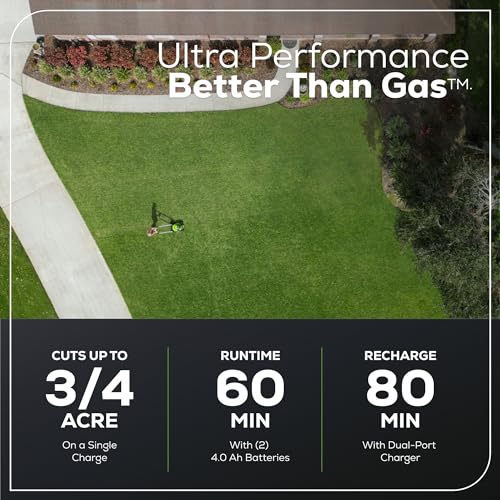
Battery life matters because it determines whether a cordless mower can finish your lawn on a single charge without forcing you to stop and wait. Look for a runtime that matches your yard size and grass conditions, and remember that thick, wet, or tall grass can drain batteries faster than ideal-condition estimates. Also check charging time and whether the battery is removable or compatible with other tools, since that affects how easy it is to keep mowing when power runs low.
For cordless mowers, calculate runtime against your yard size, grass density, and mowing habits, then leave margin for tall, wet, or overdue grass because those conditions drain packs faster. Look for swappable batteries, included backup packs if your lawn is more than small, charger speed, battery availability, and whether the platform will be easy to support later; avoid models where finishing the yard depends on ideal conditions. Owner sentiment is clearly split here: many small-yard owners finish with charge left and like quick charging or two-battery setups, but others report short sessions, needing extra batteries, mid-yard stops, long charging waits, or difficulty finding replacements.
Build
A mower’s build quality affects how well it handles repeated cutting, bumps, vibration, and storage over the years. Look for a sturdy deck, solid wheels and height-adjustment hardware, secure handles, and controls that don’t feel flimsy or loose. Watch out for lightweight parts that flex, rattle, or seem hard to repair, since they can make the mower less durable and more frustrating to use.
Inspect the parts that take abuse: deck rigidity, wheel mounts, handle hinges, height-adjust hardware, bag frame, discharge doors, and battery/cord connection points. A mower can cut well but still frustrate you if the handle flexes, the wheels wobble, the bag leaks clippings, or replacement blades and batteries are hard to source; for electric mowers, low maintenance is a plus, but durability of plastic components and folding mechanisms still matters. Owners often describe compact electric mowers as low-maintenance, capable, and good-quality for small-lawn work, with praise for clean cutting and useful included features, but the strongest long-term buy is still the one whose wear parts look sturdy and serviceable.
Size
The mower’s size affects where you can store it, how easily you can move it through gates or around obstacles, and how comfortable it is to use in tight areas. If you have limited garage or shed space, look for a compact size, folding handle, or vertical storage option, but make sure the cutting deck is still wide enough to suit your lawn. Watch the overall dimensions and handle height, not just the deck size, so you do not end up with a mower that is awkward to maneuver or store.
Choose deck size and mower footprint around your actual property: narrower decks are easier around small yards, trees, gates, and raised beds, while wider decks reduce passes on open lawns but become harder to store and maneuver. Measure storage space, gate width, shed clearance, and whether the handle folds flat or upright; also remember that very compact mowers may be best for small to medium lawns rather than large properties. Owners consistently appreciate compact, lightweight mowers for small yards, tight spaces, and simple storage, and many say these smaller models still cut evenly when matched to the right yard size.
1,000,000+ shoppers use Buyer's Guide every week to find the best products and services online.

Helping millions of users make smarter purchases online.


