











We also considered 10 others:


Our Top Choice
Compare Features


The order above is not editorial opinion, and it is not paid placement. It comes from what shoppers across our network actually do - which battery powered lawn mowers they compare, and which they ultimately buy. We re-rank as new data comes in, so the long-term favorites have to keep earning their spot against new entrants. The full method, including how we make money.
Battery Powered Lawn Mowers Buyer's Guide
Battery powered lawn mowers trade gas-engine upkeep for runtime management: they are quiet, easy to start, and low-maintenance, but battery capacity and cutting load determine whether you finish comfortably or stop mid-yard. The sharpest buying concerns are matching the battery system to your grass and lot size, and making sure the mower has enough torque, deck design, and durability for your real mowing conditions—not just ideal short, dry grass.
Battery
Battery life matters because it determines whether a cordless mower can finish your lawn on a single charge without forcing you to stop and wait. Look for a runtime that matches your yard size and grass conditions, and remember that thick, wet, or tall grass can drain batteries faster than ideal-condition estimates. Also check charging time and whether the battery is removable or compatible with other tools, since that affects how easy it is to keep mowing when power runs low.
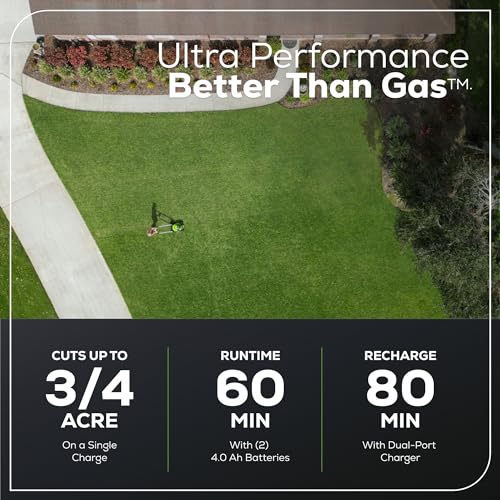
Match the battery system to your actual mowing pattern, not just the advertised runtime: check the deck width, battery voltage/amp-hour rating, whether one or two packs can run together, charger speed, and the cost/availability of spare packs in the same platform. For battery mowers, the failure mode is usually not “won’t mow” but “runs out halfway when grass is tall, damp, or overdue,” so larger lots, thick turf, slopes, mulching, and high blade-speed modes should push you toward higher-capacity packs or a two-battery setup. Owner feedback supports this: many small- and medium-yard users finish on one charge, sometimes with charge left, but runtime is the most variable complaint, with some seeing around 30 minutes or less and needing extra batteries or recharge downtime.
Power
You want enough power for the mower to keep cutting cleanly when grass is tall, damp, dense, or uneven, without bogging down, stalling, or leaving ragged patches behind. Look for signs of strong motor performance such as consistent blade speed under load and the ability to handle your yard’s toughest areas, but don’t overbuy if you only maintain a small, flat lawn with light weekly cuts.
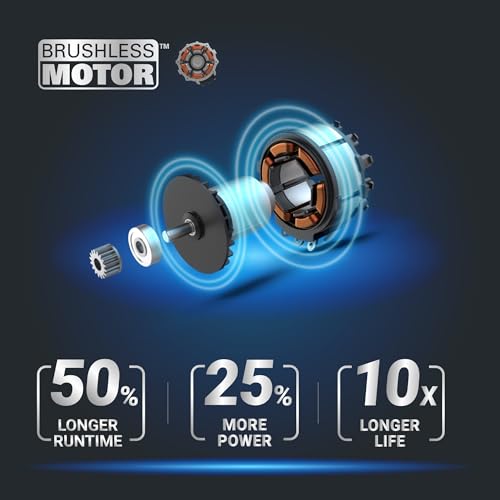
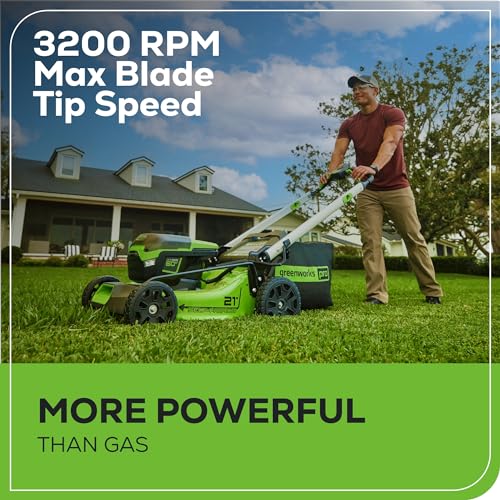
Choose power based on grass density and maintenance habits: look for higher-voltage systems, brushless motors, automatic torque boost, and a deck/blade design rated for tall grass if you often mow late, mulch leaves, or cut thick warm-season turf. Avoid assuming any cordless mower is a full gas substitute for heavy, wet, or knee-high growth unless it specifically has enough torque and battery capacity to sustain that load, because bogging down drains packs fast and can leave uneven cuts. Owners generally find battery mowers strong enough for regular lawns and even some tall grass, but they also describe power as more qualified than a strong gas mower in heavier jobs.
Ease
A mower that’s easy to assemble, start, and operate saves you frustration every time you need to cut the grass. Look for clear setup instructions, intuitive controls, manageable weight, and simple height or bagging adjustments. Watch out for awkward handles, fussy start mechanisms, or features that sound useful but make day-to-day functionality more complicated.
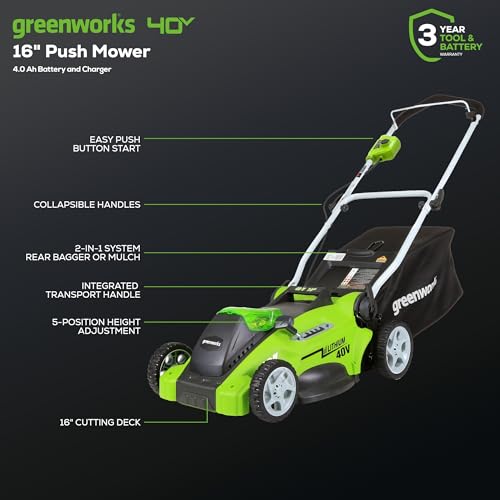
Prioritize controls and setup that reduce friction every time you mow: one-button start with a safety bail, tool-light handle setup, easy battery insertion/removal, a single-lever height adjustment, and a catcher or mulch plug that seats cleanly. This matters more in battery mowers because the appeal is low-maintenance convenience—if the handle is awkward to fold, the bag is fiddly, or height changes require multiple wheel adjustments, you lose much of the cordless advantage. Owner sentiment is strongly positive here, with buyers often praising easy assembly, push-button starting, simple operation, easy grass-catcher use, and the lack of gas, oil, and pull-starting.
Cutting
You want a mower that leaves an even, clean finish without repeatedly bogging down, missing blades of grass, or forcing you to make extra passes. Look for strong cutting performance across different grass heights and conditions, enough cutting capacity for your lawn size, and effective mulching if you prefer to return clippings to the yard rather than bag them.
Evaluate the cutting system, not just the motor: check cutting width, height range, blade quality, mulching/bagging/side-discharge options, and whether the mower maintains blade speed in taller or damp grass. For battery mowers, an underbuilt deck or weak blade lift can leave stragglers, clumps, or poor bag pickup even when the mower feels easy to push, so shoppers who want a polished lawn should favor models with strong airflow and multiple discharge modes. Owners often report clean, even results and are pleasantly surprised by how well cordless mowers handle typical yards, tall grass, and quiet mowing, with many saying the lawn looks neatly cut.
Handling
Handling matters because the easier a mower is to push, steer, and control, the less tiring it will be to cover your yard—especially around trees, beds, slopes, or tight corners. Look for a weight and wheel design that match your terrain, and consider self-propelled drive if you have hills or a larger lawn, but watch that the mower still feels easy to slow, turn, and maneuver in confined spaces.
Match handling to your terrain: for flat, small yards a lightweight push mower may be easier than self-propelled, while slopes, large lots, thick grass, or users with limited strength may justify self-propulsion despite added weight and battery draw. Check folded size, lift points, wheel size, turning ease around beds and fences, and whether the mower feels balanced with the battery installed. Owner feedback backs the importance of this dimension, with many describing battery mowers as light, easy to push, lift, store, and maneuver around tight spots, while self-propelled versions make movement easier with less effort.
Build
A mower’s build quality affects how well it handles repeated cutting, bumps, vibration, and storage over the years. Look for a sturdy deck, solid wheels and height-adjustment hardware, secure handles, and controls that don’t feel flimsy or loose. Watch out for lightweight parts that flex, rattle, or seem hard to repair, since they can make the mower less durable and more frustrating to use.
Inspect build details that affect long-term ownership: deck material, handle hinge rigidity, wheel mounts, height-adjustment mechanism, battery-door sealing, bag frame, replacement blade availability, and warranty coverage for both mower and batteries. Battery mowers can feel excellent on day one but fail at stress points such as plastic height adjusters, folding handles, battery latches, or electronics exposed to moisture, so durability and parts support should weigh heavily if you mow frequently or store the mower in a shed. Owners often describe overall quality as solid, appreciate simple low-hassle setup, metal decks, and practical mowing features, but durability is the main caution area, with long-term reliability drawing more concern than everyday usability.
1,000,000+ shoppers use Buyer's Guide every week to find the best products and services online.

Helping millions of users make smarter purchases online.


