





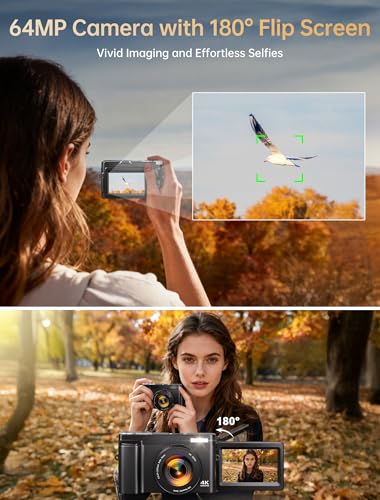

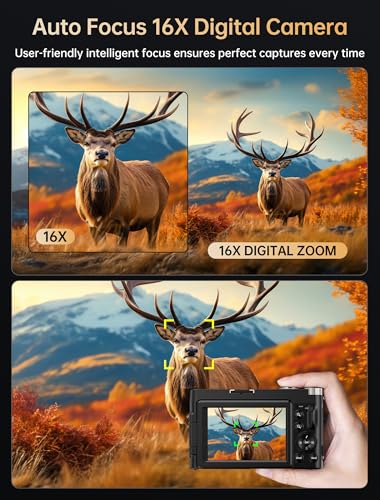






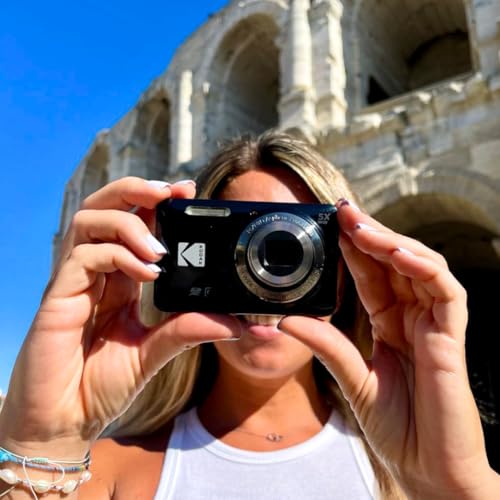


We also considered 10 others:





Our Top Choice
Compare Features


Why These Features Matter:
Digital cameras don’t fail in big, dramatic ways. They fail in the small ways that make a person stop bringing them places: the battery that dies halfway through dinner, the lens cap that disappears into the couch, the menu system that turns a quick kid-photo into a minor tax audit, the “cute” retro body that’s somehow too slippery to hold with one hand while carrying iced coffee.
The best digital camera is the one that survives real life: low light in restaurants, harsh noon sun on vacation, a cramped apartment where backing up isn’t an option, and the chaos of trying to capture something spontaneous before it becomes a memory you swear you’ll recreate later (you won’t). This guide focuses on the features that actually change the day-to-day experience—not the ones that only matter on message boards at 2 a.m.
Image Quality That Looks Like Life (Not Like a Filter)
Most people don’t need forensic sharpness; they need photos that feel accurate. Skin tones that don’t turn everyone into a peach-colored mannequin. Indoor shots that don’t look like they were lit by a gas station. Highlights that don’t blow out into a white void the moment a window shows up.
- Look for: good dynamic range (handles bright windows + shadowy corners), pleasing color out of the box, and reliable autofocus that doesn’t “hunt” like it’s auditioning for a nature documentary.
- Real-life payoff: birthday candles don’t become a glowing smear; dim bars look moody instead of muddy; snowy vacations don’t turn into overexposed glare-fests.

Low-Light Performance: The Dinner Table Test
Low light is where phones have gotten weirdly aggressive—brightening everything into a crisp, slightly haunted approximation of the moment. A good digital camera can keep the atmosphere: warm lamps stay warm, shadows stay soft, and faces don’t get the crunchy “night mode” treatment.
- Look for: strong performance at higher ISO settings (less grainy mess), and a lens with a wider aperture if interchangeable lenses are on the table.
- Real-life payoff: photos in restaurants look like the restaurant, not a staged reenactment.
Autofocus That Doesn’t Make You Work for It
Autofocus is the silent deal-breaker. It’s also the feature nobody thinks about until the camera locks onto a plant behind the subject—again—and the moment is gone. The good stuff feels almost psychic: it grabs eyes quickly and holds on, even when the subject moves unpredictably (kids, pets, friends who talk with their hands).
- Look for: face/eye detection that works in mixed light, tracking that doesn’t drift to the background, and minimal shutter lag.
- Real-life payoff: fewer “why is the ear sharp but not the face” mysteries.
Size, Weight, and the Myth of “Everyday Carry”
A camera can be brilliant and still spend its life in a drawer because it’s annoying to bring. Big bodies and big lenses signal “serious photography,” but they also signal “neck strain” and “one more thing to babysit at brunch.” Small cameras come with their own compromises—tiny buttons, cramped grips—but the best ones feel like they belong in a bag without starting a negotiation.
- Look for: a grip that feels secure (especially one-handed), controls that don’t require fingernails, and a strap situation that doesn’t feel like an afterthought.
- Real-life payoff: the camera actually leaves the house. That’s the whole game.

Menus and Controls: The “Can This Be Done in 10 Seconds?” Factor
Some cameras have menus that feel like they were designed by someone who hates people. The good ones let basic tasks happen quickly: changing focus mode, adjusting exposure, switching to silent shooting, setting a self-timer that doesn’t take a pilgrimage through six tabs.
- Look for: customizable buttons, a quick menu, a mode dial that makes sense, and touch controls that don’t lag.
- Real-life payoff: less time squinting, more time actually taking the photo.
Stabilization: Because Nobody Holds Still Anymore
Stabilization is the feature that quietly upgrades everything: street shots while walking, handheld video, indoor photos without cranking brightness into “grainy documentary.” Some cameras stabilize in the body, some rely on stabilized lenses, and some basically shrug and suggest a tripod.
- Look for: effective stabilization that works in both photo and video, and doesn’t create jittery “floaty” footage that screams “technology.”
- Real-life payoff: sharper photos at night and smoother clips without carrying extra gear like a wedding videographer.
Video That’s Pleasant, Not a Second Job
Lots of cameras technically shoot great video. Fewer make it easy. The difference shows up in small frustrations: overheating during longer clips, confusing settings, rolling shutter that makes vertical lines bend when panning, and microphones that pick up every little handling noise like it’s personal gossip.
- Look for: reliable continuous autofocus in video, decent internal audio (or an easy mic option), and simple stabilization choices.
- Real-life payoff: travel videos that don’t look like they were filmed during an earthquake or edited during a meltdown.
The Screen and Viewfinder: Sunlight Is a Bully
A bright, responsive screen matters more than expected—until it’s noon and the screen becomes a mirror of your own confused face. A viewfinder can feel old-school until it suddenly becomes the only way to frame a shot on a blinding day. Flip-out screens are great for awkward angles and self-timers, but they can also add bulk and feel fiddly.
- Look for: a screen that’s bright enough outdoors, a viewfinder that’s comfortable (not tunnel-like), and hinges that don’t feel like they’ll snap during a quick bag shove.
- Real-life payoff: fewer “guess-and-hope” compositions in harsh light.
Battery Life and Charging: The Petty Stuff That Ruins the Day
Battery specs sound boring until the camera dies mid-walk and the spare battery is, naturally, on the kitchen counter next to the keys. USB-C charging is the modern sanity check; proprietary chargers are how drawers become graveyards of forgotten cords.
- Look for: honest battery stamina (especially with lots of screen use), USB charging, and a battery that doesn’t require a delicate ritual to remove.
- Real-life payoff: the camera survives a full day out without turning into a paperweight.
Storage and File Handling: Where Joy Goes to Die
Nothing says “hobby abandoned” like a camera that makes transferring photos feel like a corporate onboarding process. Big files are great until the memory card fills up faster than expected, or the phone transfer app fails for the third time and demands a firmware update.
- Look for: straightforward Wi‑Fi/Bluetooth transfer that actually works, common SD card support, and file sizes that won’t annihilate phone storage.
- Real-life payoff: photos get shared and backed up instead of marinating on a card for six months.
Lenses (If Interchangeable): The Budget Black Hole
Interchangeable-lens cameras are wonderful—until the lens wishlist quietly becomes a second rent payment. The sensible approach is planning around one or two lenses that cover real life: a versatile zoom for travel and daily use, or a small prime lens for low light and nicer portraits.
- Look for: a system with affordable, compact lens options; one genuinely good “everyday” lens; and a roadmap that won’t force expensive upgrades immediately.
- Real-life payoff: better photos without turning the camera bag into a rolling suitcase.
Weather Resistance and Build: Real Durability, Not “Tough Vibes”
“Weather-sealed” can mean anything from “fine in mist” to “still panics in a light drizzle.” What matters is a camera that doesn’t feel precious—one that can handle a sandy beach day, a cold walk, a jostly bag, and the occasional bump against a doorway.
- Look for: solid dials and doors, good grip texture, and at least some sealing if outdoor use is frequent.
- Real-life payoff: less babying, more shooting.
Things to Know Before Choosing
- Smartphones have raised expectations. Cameras need to win on feel, speed, and reliability—not just “better pixels.”
- Editing is optional, but workflow isn’t. The best camera is the one that gets photos off it without a fight.
- Bigger isn’t always better. A slightly smaller camera that’s always around will beat a “serious” setup that stays home.
- Flash is still useful. Not for nightclub drama—more for backlit faces, indoor snapshots, and actual life.
Honest Caveats (Because Cameras Are Fussy Little Machines)
- Great low-light performance can tempt overconfidence. Some scenes still need steadier hands or a little patience.
- Wireless transfer apps are… temperamental. Even good ones occasionally forget how to connect at the worst possible time.
- Small bodies can mean small controls. If hands are larger or dexterity is a concern, ergonomics matter more than aesthetics.
- Interchangeable lenses multiply clutter. More gear means more caps, more dust, more “where did that pouch go?”
How to Pick the Right “Best Digital Camera” for Actual Daily Life
- For travel and daily carry: prioritize compact size, fast startup, stabilization, and an intuitive interface. A camera that’s easy to grab beats a camera that’s theoretically superior.
- For kids, pets, and motion: autofocus quality matters more than almost anything. If it can’t lock onto a moving subject quickly, it will test patience fast.
- For food, interiors, and cozy lighting: low-light performance and color accuracy win. Also: a screen that tilts helps with awkward table angles.
- For video and content creation: look for reliable autofocus in video, decent stabilization, and simple audio options. Overheating and fussy menus will sour the relationship.
- For “nice photos” without fuss: favor strong JPEG color, easy sharing, and controls that don’t require a manual. Life is complicated enough.
The Bottom Line
The best digital camera isn’t defined by specs; it’s defined by compliance. It cooperates with the way life actually happens—fast, messy, and poorly lit. Aim for the camera that feels easy to bring, quick to operate, and forgiving when conditions aren’t perfect. The photos will follow.
1,000,000+ shoppers use Buyer's Guide every week to find the best products and services online.

Helping millions of users make smarter purchases online.

