





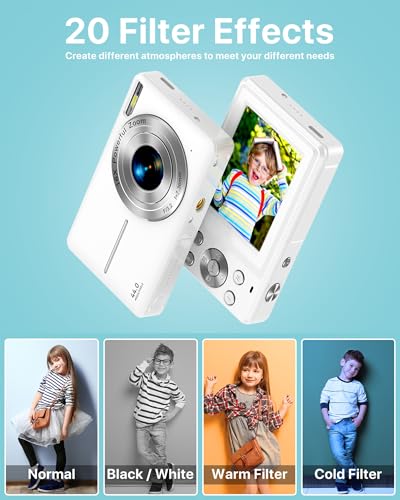







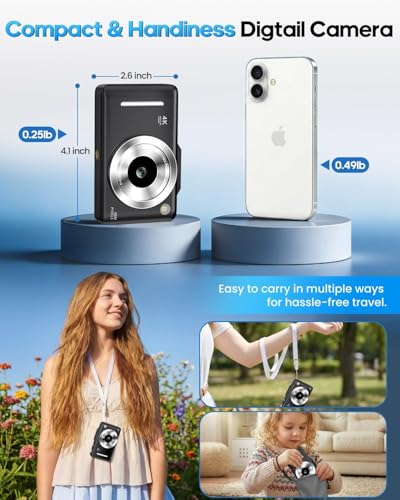


We also considered 10 others:


Our Top Choice
Compare Features


The order above is not editorial opinion, and it is not paid placement. It comes from what shoppers across our network actually do - which digital cameras under $100 they compare, and which they ultimately buy. We re-rank as new data comes in, so the long-term favorites have to keep earning their spot against new entrants. The full method, including how we make money.
Digital Cameras under $100 Buyer's Guide
In this budget camera niche, the key tradeoff is convenience and kid/beginner-friendly simplicity versus real limits in optics, low-light quality, autofocus, and durability. Shop carefully for cameras that are genuinely easy to use and ready to shoot, but be skeptical of inflated resolution or video claims unless the camera also has practical features like a usable screen, reliable storage support, and spare power.
Usability
You’ll get more out of a digital camera if it feels easy to pick up, set up, and adjust without constantly digging through confusing menus. Look for clear controls, helpful automatic modes, and simple playback or sharing steps, especially if the camera is for a beginner or kid. Watch out for models with tiny buttons, cluttered interfaces, or too many advanced settings if you want photography to feel fun rather than frustrating.
Look for a camera that can be used without menu-diving: dedicated buttons for photo/video/playback, a clear auto mode, simple file transfer, date/time setup that stays saved, and preferably a flip or front-facing screen if it will be used for selfies, vlogging, or teen content creation. Avoid models that hide basic functions behind confusing touchscreen-only menus, require an app just to retrieve photos, or lack a clear way to switch between stills and video. Owner feedback supports prioritizing simplicity: buyers repeatedly describe these cameras as starter-friendly, lightweight, easy to set up, and approachable for kids, teens, beginners, vloggers, and casual photographers.
Image
Image quality determines how sharp, detailed, and natural your photos look, especially when you crop, print, or shoot in challenging light. Look for a camera that delivers accurate color, clean detail, and consistent results across different scenes, not just impressive-looking sample shots in ideal conditions. Also watch for overprocessed images that appear too smooth, too contrasty, or unnaturally saturated.
Do not buy on megapixel or “4K” labels alone; in this tier, check for sample photos in daylight, indoor lighting, and close-up shots, and confirm whether zoom is optical or only digital because digital zoom can quickly degrade detail. Prioritize natural color, readable faces, usable autofocus, and acceptable video smoothness for casual memories rather than expecting phone-flagship or professional-camera results. Owner sentiment is strongest when expectations are casual: buyers praise clear, sharp, colorful everyday photos and solid video, especially in good lighting, with some noting crisp high-resolution-looking photos and sharp video for family moments, travel, vlogging, and content creation.
Value
Value for money matters because a digital camera should justify its cost with the features, image quality, handling, and reliability you’ll actually use. Look beyond the body price and consider what’s included or required, such as lenses, batteries, storage, and accessories, while watching out for cameras that add flashy specs but compromise on core performance or usability.
The best value is not just the camera body; check whether the box includes a compatible memory card, charging cable, case or strap, and ideally a second battery, because buying these separately can erase the advantage of a low-cost camera. Also verify that included accessories are actually usable—memory card capacity/speed, battery model, and charger type matter more than a long bundle list. Owner feedback aligns with this: shoppers often call these cameras strong starter buys and good values when they deliver better-than-expected casual image quality and arrive with useful extras such as memory cards and extra batteries.
Quality
A digital camera’s quality and reliability matter because you’re trusting it to perform consistently when a shot can’t be repeated. Look for solid build, dependable autofocus and exposure, durable controls, good battery and card performance, and a reputation for stable operation over long-term use. Watch out for cameras that feel flimsy, overheat easily, freeze or lag, or have user reports of recurring mechanical or software issues.
Inspect build details that affect real-world survival: a secure battery/card door, lens cover or recessed lens, firm buttons, tripod thread, wrist strap point, and a body that can tolerate being carried by kids or tossed into a bag. Avoid assuming “toy-like” is fine if the camera will be used for trips, school events, or daily vlogging; loose ports, flimsy doors, and weak screens are common failure points in this category. Owner comments support choosing solid-feeling, beginner-focused models: buyers tend to be satisfied when cameras feel dependable for vacations, family events, casual content, and everyday use while still recognizing they are not professional-grade devices.
Battery
Battery life matters because it determines how long you can shoot without stopping to recharge or swap batteries, especially during travel, events, or long days outdoors. Look for a camera that matches your shooting style, and remember that video recording, continuous autofocus, bright screens, wireless features, and cold weather can drain power faster than casual still photography. Also consider how it charges, including USB charging support and recharge speed, so you know whether you can top it up easily between sessions.
Prioritize models with a removable rechargeable battery and a spare included battery, especially for travel, kids’ events, or video recording, which drains power faster than still photos. Check whether the camera can charge by common USB, whether it can be used while charging, and whether replacement batteries are identifiable by model number; avoid obscure batteries that are hard to replace. Owner sentiment backs this concern: buyers repeatedly value packages that are ready to use out of the box with included batteries, memory, and accessories, and they especially appreciate an extra battery for travel, longer shooting days, selfies, and vlogging.
Portability
Portability affects whether you’ll actually bring your camera with you, especially for travel, street shooting, hiking, or everyday use. Look at the camera’s body size and weight with a typical lens attached, not just the body alone, and consider whether it fits comfortably in your bag or can be carried all day without fatigue. Be careful not to trade away too much grip comfort, battery life, or control layout for the smallest possible compact size.
Choose a camera that is genuinely pocketable or small-bag friendly only if that matches the intended use: travel, parties, kids carrying it, or having a separate camera when you do not want to rely on a phone. Check weight with battery installed, grip shape, strap attachment, and whether the lens protrudes enough to snag in a purse or pocket. Owner feedback consistently supports portability as a major reason to buy in this niche, with buyers appreciating slim, lightweight bodies that are easy to carry for vacations, bars, events, walks, family moments, everyday outings, and casual vlogging.
1,000,000+ shoppers use Buyer's Guide every week to find the best products and services online.

Helping millions of users make smarter purchases online.


