



The Betta skimmer is widely loved for keeping the pool surface clean with very little effort, especially for owners dealing with trees, leaves, bugs, and pollen.
Despite the premium price, buyers often frame it as a high-value pool investment that saves time and reduces manual skimming.
The solar charging and battery life support true around-the-clock use, with many leaving it in the pool to run day and night without needing frequent plug-in charging.
The Betta skimmer is widely loved for keeping the pool surface clean with very little effort, especially for owners dealing with trees, leaves, bugs, and pollen.
Despite the premium price, buyers often frame it as a high-value pool investment that saves time and reduces manual skimming.
The solar charging and battery life support true around-the-clock use, with many leaving it in the pool to run day and night without needing frequent plug-in charging.
The Betta skimmer is widely loved for keeping the pool surface clean with very little effort, especially for owners dealing with trees, leaves, bugs, and pollen.
Despite the premium price, buyers often frame it as a high-value pool investment that saves time and reduces manual skimming.
The solar charging and battery life support true around-the-clock use, with many leaving it in the pool to run day and night without needing frequent plug-in charging.


The AIPER pool cleaner is widely liked for keeping pools clean with little effort, especially for routine maintenance through leaves, grass, dirt, and sand.
Setup and day-to-day use feel convenient, with the cordless design and removable debris basket saving time compared with hose-based pool vacuums.
Battery life is helpful for many pools but not universally satisfying, since some get a full clean on one charge while others object to runtimes falling short of the advertised claim.
The AIPER pool cleaner is widely liked for keeping pools clean with little effort, especially for routine maintenance through leaves, grass, dirt, and sand.
Setup and day-to-day use feel convenient, with the cordless design and removable debris basket saving time compared with hose-based pool vacuums.
Battery life is helpful for many pools but not universally satisfying, since some get a full clean on one charge while others object to runtimes falling short of the advertised claim.


The AIPER pool cleaner is widely liked for keeping pools clean with little effort, especially for routine maintenance through leaves, grass, dirt, and sand.
Setup and day-to-day use feel convenient, with the cordless design and removable debris basket saving time compared with hose-based pool vacuums.
Battery life is helpful for many pools but not universally satisfying, since some get a full clean on one charge while others object to runtimes falling short of the advertised claim.
The WYBOT robotic pool vacuum delivers strong, thorough cleaning on leaves, dirt, sand, and fine debris with little need for manual follow-up.
The cordless design makes pool cleaning feel easy and low-hassle compared with hose-based or corded cleaners.
Its navigation and traction come across as smarter and more controlled than random-pattern cleaners, including when moving along walls.
The WYBOT robotic pool vacuum delivers strong, thorough cleaning on leaves, dirt, sand, and fine debris with little need for manual follow-up.
The cordless design makes pool cleaning feel easy and low-hassle compared with hose-based or corded cleaners.
Its navigation and traction come across as smarter and more controlled than random-pattern cleaners, including when moving along walls.


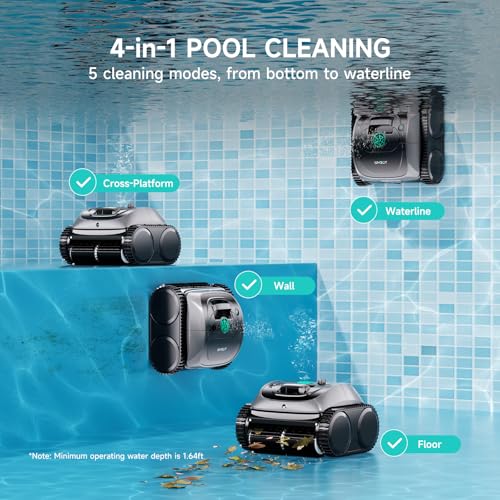


The WYBOT robotic pool vacuum delivers strong, thorough cleaning on leaves, dirt, sand, and fine debris with little need for manual follow-up.
The cordless design makes pool cleaning feel easy and low-hassle compared with hose-based or corded cleaners.
Its navigation and traction come across as smarter and more controlled than random-pattern cleaners, including when moving along walls.


The WYBOT C1 cleans very well for routine pool maintenance, handling fine debris, larger leaves, dirt, sand, bugs, and grit with strong suction.
The cordless design makes setup easy and keeps pool cleaning free of tangled cables or hoses.
Wall climbing and smart navigation are a major strength, giving the cleaner solid coverage instead of aimless wandering.
The WYBOT C1 cleans very well for routine pool maintenance, handling fine debris, larger leaves, dirt, sand, bugs, and grit with strong suction.
The cordless design makes setup easy and keeps pool cleaning free of tangled cables or hoses.
Wall climbing and smart navigation are a major strength, giving the cleaner solid coverage instead of aimless wandering.
The WYBOT C1 cleans very well for routine pool maintenance, handling fine debris, larger leaves, dirt, sand, bugs, and grit with strong suction.
The cordless design makes setup easy and keeps pool cleaning free of tangled cables or hoses.
Wall climbing and smart navigation are a major strength, giving the cleaner solid coverage instead of aimless wandering.

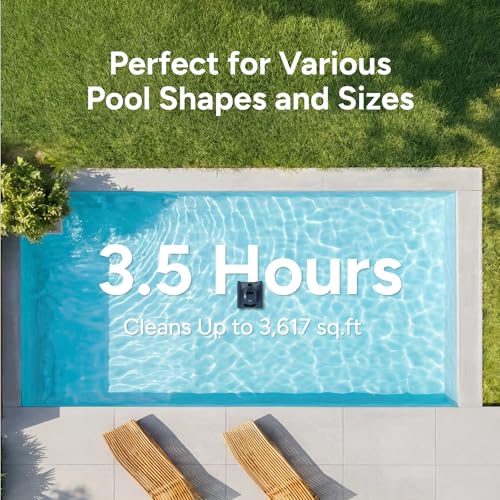


The iGarden pool vacuum is widely liked for strong overall cleaning, including fine silt and larger debris that it traps in the basket.
Battery life is generally considered sufficient for typical pools, with cleaning sessions lasting around two hours or more.
Value is split: many see it as a strong buy for the lower price, while disappointed owners feel the performance does not justify the cost.
The iGarden pool vacuum is widely liked for strong overall cleaning, including fine silt and larger debris that it traps in the basket.
Battery life is generally considered sufficient for typical pools, with cleaning sessions lasting around two hours or more.
Value is split: many see it as a strong buy for the lower price, while disappointed owners feel the performance does not justify the cost.
The iGarden pool vacuum is widely liked for strong overall cleaning, including fine silt and larger debris that it traps in the basket.
Battery life is generally considered sufficient for typical pools, with cleaning sessions lasting around two hours or more.
Value is split: many see it as a strong buy for the lower price, while disappointed owners feel the performance does not justify the cost.
The Beatbot pool robot is widely liked for strong overall cleaning, especially across pool floors, walls, and waterline areas with very little setup fuss.
Battery life is a standout, with owners describing long runs that can handle large pools and multi-hour cleaning modes without needing a recharge.
Navigation and stability can be excellent in some pools, but the mixed feedback suggests shapes, steps, corners, or water behavior may affect how reliably it stays planted and finishes every area.
The Beatbot pool robot is widely liked for strong overall cleaning, especially across pool floors, walls, and waterline areas with very little setup fuss.
Battery life is a standout, with owners describing long runs that can handle large pools and multi-hour cleaning modes without needing a recharge.
Navigation and stability can be excellent in some pools, but the mixed feedback suggests shapes, steps, corners, or water behavior may affect how reliably it stays planted and finishes every area.


The Beatbot pool robot is widely liked for strong overall cleaning, especially across pool floors, walls, and waterline areas with very little setup fuss.
Battery life is a standout, with owners describing long runs that can handle large pools and multi-hour cleaning modes without needing a recharge.
Navigation and stability can be excellent in some pools, but the mixed feedback suggests shapes, steps, corners, or water behavior may affect how reliably it stays planted and finishes every area.
Debris pickup is a standout, with owners praising it for collecting leaves, dirt, fine debris, sand, and even small pebbles.
Setup and operation feel simple, especially because the cordless design and app controls make scheduling, monitoring, and directing cleanings convenient.
Debris pickup is a standout, with owners praising it for collecting leaves, dirt, fine debris, sand, and even small pebbles.
Setup and operation feel simple, especially because the cordless design and app controls make scheduling, monitoring, and directing cleanings convenient.


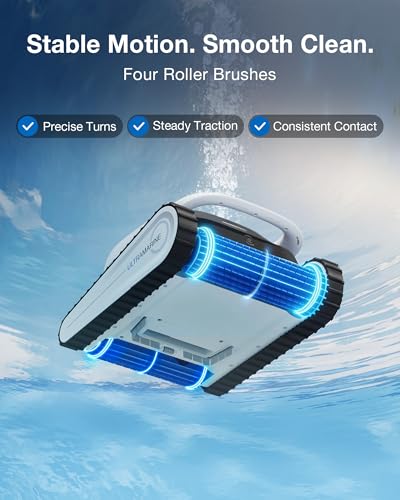


Debris pickup is a standout, with owners praising it for collecting leaves, dirt, fine debris, sand, and even small pebbles.
Setup and operation feel simple, especially because the cordless design and app controls make scheduling, monitoring, and directing cleanings convenient.
The WYBOT robot vacuum is strongly liked for cleaning pools thoroughly with little effort, including debris pickup and scrubbing that can outperform manual vacuuming.
The cordless setup makes routine pool maintenance feel simple, since it can be placed in the water without dealing with plugs or cords.
Battery life is more divided: many get around a full cleaning cycle, but it often needs recharging after each vacuum and some wish it lasted longer.
The WYBOT robot vacuum is strongly liked for cleaning pools thoroughly with little effort, including debris pickup and scrubbing that can outperform manual vacuuming.
The cordless setup makes routine pool maintenance feel simple, since it can be placed in the water without dealing with plugs or cords.
Battery life is more divided: many get around a full cleaning cycle, but it often needs recharging after each vacuum and some wish it lasted longer.


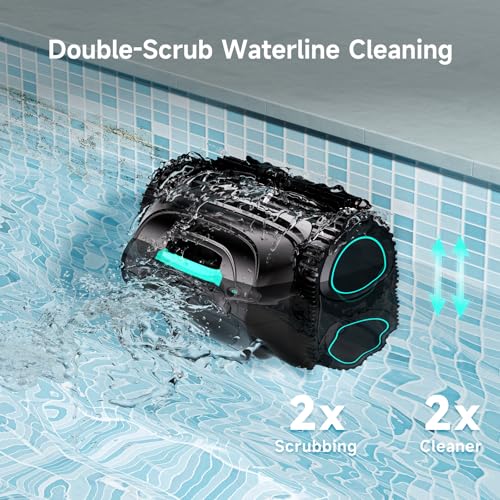

The WYBOT robot vacuum is strongly liked for cleaning pools thoroughly with little effort, including debris pickup and scrubbing that can outperform manual vacuuming.
The cordless setup makes routine pool maintenance feel simple, since it can be placed in the water without dealing with plugs or cords.
Battery life is more divided: many get around a full cleaning cycle, but it often needs recharging after each vacuum and some wish it lasted longer.
The WYBOT C2 is strongly liked for autonomous whole-pool cleaning that handles floors, walls, and debris without constant manual brushing.
Setup and everyday operation feel easy, especially for buyers who use the app to connect, choose programs, and let the robot run on its own.
The WYBOT C2 is strongly liked for autonomous whole-pool cleaning that handles floors, walls, and debris without constant manual brushing.
Setup and everyday operation feel easy, especially for buyers who use the app to connect, choose programs, and let the robot run on its own.


The WYBOT C2 is strongly liked for autonomous whole-pool cleaning that handles floors, walls, and debris without constant manual brushing.
Setup and everyday operation feel easy, especially for buyers who use the app to connect, choose programs, and let the robot run on its own.
We also considered 10 others:


Our Top Choice
The Betta skimmer is widely loved for keeping the pool surface clean with very little effort, especially for owners dealing with trees, leaves, bugs, and pollen.
Despite the premium price, buyers often frame it as a high-value pool investment that saves time and reduces manual skimming.
The solar charging and battery life support true around-the-clock use, with many leaving it in the pool to run day and night without needing frequent plug-in charging.
The Betta skimmer is widely loved for keeping the pool surface clean with very little effort, especially for owners dealing with trees, leaves, bugs, and pollen.
Despite the premium price, buyers often frame it as a high-value pool investment that saves time and reduces manual skimming.
The solar charging and battery life support true around-the-clock use, with many leaving it in the pool to run day and night without needing frequent plug-in charging.
The Betta skimmer is widely loved for keeping the pool surface clean with very little effort, especially for owners dealing with trees, leaves, bugs, and pollen.
Despite the premium price, buyers often frame it as a high-value pool investment that saves time and reduces manual skimming.
The solar charging and battery life support true around-the-clock use, with many leaving it in the pool to run day and night without needing frequent plug-in charging.
Compare Features


The order above is not editorial opinion, and it is not paid placement. It comes from what shoppers across our network actually do - which cordless robotic pool cleaners they compare, and which they ultimately buy. We re-rank as new data comes in, so the long-term favorites have to keep earning their spot against new entrants. The full method, including how we make money.
Cordless Robotic Pool Cleaners Buyer's Guide
Cordless robotic pool cleaners trade hoses and deck cords for batteries, onboard debris storage, and navigation that must work inside your specific pool shape. The sharpest buying questions are whether you need surface skimming or floor/wall vacuuming, and whether the robot can finish your pool’s debris load, slopes, steps, and corners before the battery or basket becomes the limiting factor.
Cleaning
You want a pool cleaner that consistently removes the debris your pool actually gets—leaves, sand, dirt, algae-prone buildup, or fine dust—so the water looks clearer and requires less manual brushing or skimming. Look for strong cleaning performance across the floor, walls, waterline, and tight corners if those areas matter for your pool shape, and watch out for models that only pick up large debris while leaving fine sediment behind or stirring it back into the water.
Choose based on the zone you actually need cleaned: a floating skimmer is best for leaves, pollen, bugs, and petals before they sink, while a floor/wall robot is the better fit for settled dirt, sand, silt, and pebble-like debris. For this category, check whether the cleaner covers floor-only, floor-and-wall, or surface-only cleaning, and do not expect one cordless unit to replace brushing for algae film, tight steps, benches, or stubborn waterline scale. Owner feedback supports this split: buyers praise hands-off daily cleaning, clear water with little effort, strong pickup of leaves, dirt, fine debris, sand, pollen, bugs, and even small pebbles, especially when the cleaner matches the debris location.
Ease
A pool cleaner should save you effort, not create another chore, so look for one that’s straightforward to set up, start, empty, and rinse after each cycle. Pay attention to how easily you can access the debris basket or bag, whether controls are intuitive, and whether routine maintenance requires tools or awkward disassembly. If a cleaner is cumbersome to lift, untangle, or clean out, its time-saving benefits can disappear quickly.
Prioritize retrieval, basket access, and charging workflow, not just “cordless” convenience: a good cordless pool cleaner should be easy to lift from the water, open without dumping debris back into the pool, rinse quickly, and restart without complex programming. Look for a large, removable basket, simple mode controls, a clear full-bin routine, and a design that does not require wrestling with hoses, booster pumps, or a power cord near the deck. Owners commonly describe these cleaners as easy to live with because they can be charged, turned on, dropped in, left to run, and emptied with minimal effort; quiet operation and easy-to-rinse baskets are repeated positives.
Battery
If you choose a cordless or solar-powered pool cleaner, battery life determines whether it can finish a full cleaning cycle without stopping short. Look for a runtime that matches your pool’s size, shape, and debris load, and consider recharge time as well as whether the cleaner maintains suction and navigation as power drops. For solar-powered options, watch how dependent performance is on steady sunlight, especially if your pool is shaded or you need predictable cleaning on cloudy days.
Match battery capacity to pool size, cleaning mode, and debris load: wall-climbing, high-suction, and multi-hour cycles drain faster than light surface skimming, and a cleaner that barely finishes one cycle may leave the deep end or walls unfinished. For solar skimmers, check whether your pool gets enough direct sun and whether shade, screen enclosures, or overhanging trees will reduce charging; for plug-in rechargeable robots, confirm realistic runtime, recharge time, and whether it parks itself for retrieval when low. Owner sentiment is strongly positive on battery overall, with many reporting multi-hour floor-cleaning sessions, full-cycle cleaning in larger pools, and solar skimmers that can run for long stretches or near continuously without frequent plug-in charging.
Debris
Debris pickup matters because it determines whether your pool cleaner can handle the actual mess in your pool, from fine sand and dirt to leaves, twigs, and heavier debris. Look for strong, consistent suction and a debris system that matches your pool’s needs, since some cleaners do well with large leaves but struggle with fine particles, while others can lose effectiveness when the basket or filter starts to fill.
Inspect the filter basket and mesh/fine-filter capability before buying: large leaf baskets are not automatically good at trapping fine silt, pollen, sand, or dead algae, and very fine debris can pass through weak filtration or clog small baskets quickly. If your pool sits under trees, prioritize intake opening size and basket volume; if you fight dust, grit, pollen, or screened-enclosure silt, prioritize fine filtration and easy rinsing. Owners give strong support here, frequently praising cordless cleaners for collecting leaves, bugs, dirt, sand, grit, pollen, fine silt, tiny particles, and larger debris into easy-to-empty baskets with less manual follow-up.
Value
A pool cleaner should justify its cost by saving you time and keeping your pool consistently clean without constant fixes or supervision. Look for the right balance of cleaning coverage, reliability, ease of maintenance, and included features for your pool type, and be wary of paying extra for capabilities you won’t use or a low upfront price that leads to frequent repairs, replacement parts, or poor performance.
Judge value by what chore it truly removes in your pool: a surface skimmer can dramatically cut daily netting under trees, while a floor/wall robot can reduce vacuuming, but neither is automatically a full replacement for brushing steps, treating algae, cleaning filters, or balancing water. Also weigh durability risk carefully because cordless robots combine batteries, motors, seals, tracks, sensors, and charging systems in a wet environment; warranty coverage, parts availability, and expected service life matter as much as cleaning claims. Owners often frame these as worthwhile pool-maintenance investments because they save time and replace frustrating manual or hose-based cleaning, but sentiment is not uniformly positive: durability failures and performance that does not meet expectations are the main reasons some buyers question the cost.
Mobility
A pool cleaner’s mobility determines whether it can reliably cover the floor, walls, steps, and waterline areas you expect it to clean without getting stuck or missing sections. Look for a cleaner that matches your pool shape, surface, slope, and obstacles, with enough stability and traction to climb where needed while staying oriented instead of tipping, floating, or spinning in place.
Verify mobility against your exact pool shape and surface: freeform pools, steep slopes, drains, vinyl liners, tile transitions, tanning ledges, steps, benches, and sharp corners are common failure points for cordless robots. If wall cleaning matters, look for confirmed wall-climbing ability on your pool surface, waterline behavior, anti-stuck navigation, and whether it can stay planted in the deep end rather than floating, tipping, or repeating the same path. Owners report that smart navigation and traction can give much better coverage than random wandering, including along walls, but feedback is mixed for shaped pools, steps, liners, corners, deep ends, and route consistency, so floor cleaning tends to be more reliable than perfect wall or stair coverage.
1,000,000+ shoppers use Buyer's Guide every week to find the best products and services online.

Helping millions of users make smarter purchases online.


