













We also considered 10 others:


Our Top Choice
Compare Features


The order above is not editorial opinion, and it is not paid placement. It comes from what shoppers across our network actually do - which robot pool cleaners they compare, and which they ultimately buy. We re-rank as new data comes in, so the long-term favorites have to keep earning their spot against new entrants. The full method, including how we make money.
Robot Pool Cleaners Buyer's Guide
Robot pool cleaners trade hose-and-cord hassle for automation, but the right choice depends heavily on your pool’s shape, surface, and debris load. The biggest mistakes are buying a floor robot when your real problem is floating leaves and pollen, or assuming “wall climbing” means it will handle steps, benches, liners, and the waterline without help.
Cleaning
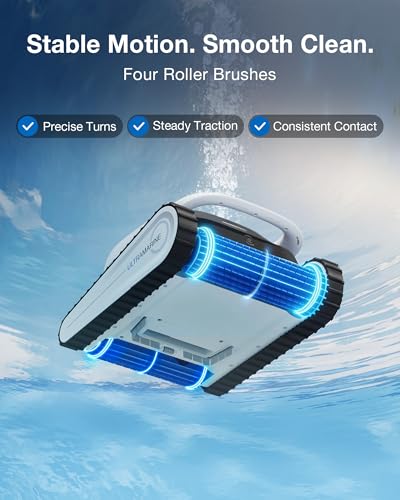
You want a pool cleaner that consistently removes the debris your pool actually gets—leaves, sand, dirt, algae-prone buildup, or fine dust—so the water looks clearer and requires less manual brushing or skimming. Look for strong cleaning performance across the floor, walls, waterline, and tight corners if those areas matter for your pool shape, and watch out for models that only pick up large debris while leaving fine sediment behind or stirring it back into the water.
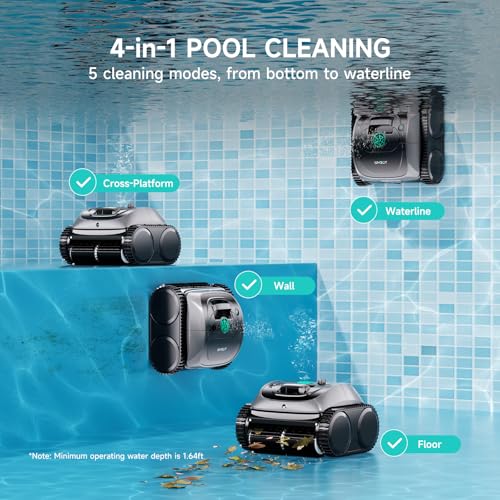
Choose a cleaner based on where your pool actually gets dirty: floor-only robots are fine for settled sand and silt, but pools with scum lines, algae-prone walls, or heavy tree cover need verified wall/waterline cleaning or a separate surface skimmer. Check that the robot’s filter grade matches your mess—fine cartridges or bags for pollen, dust, and sand; larger baskets and wider intakes for leaves, petals, acorns, or small pebbles—and avoid models that advertise “whole pool” cleaning without specifying floor, wall, and waterline coverage. Owner feedback supports this split: buyers often praise robotic vacuums for hands-off clear water and strong pickup of leaves, dirt, fine debris, sand, petals, and even small pebbles, while surface skimmers are especially loved for keeping leaves, bugs, pollen, and floating debris from becoming a bigger cleanup job.
Ease
A pool cleaner should save you effort, not create another chore, so look for one that’s straightforward to set up, start, empty, and rinse after each cycle. Pay attention to how easily you can access the debris basket or bag, whether controls are intuitive, and whether routine maintenance requires tools or awkward disassembly. If a cleaner is cumbersome to lift, untangle, or clean out, its time-saving benefits can disappear quickly.
For day-to-day use, look beyond “automatic” and check the full handling routine: how heavy it is when full of water, whether it has top-access filters, whether the basket can be rinsed without touching muck, and whether retrieval requires pulling a cord, hook, or floating handle. Cordless units reduce hose and cable hassle, but you still need a place to charge and dry them; corded units need safe cable routing and enough cord length without tangling around ladders, drains, or steps. Owners consistently value cleaners that can be charged or turned on, dropped in, left to run, and emptied easily, with simple baskets and low-effort maintenance frequently cited as reasons these machines fit into routine pool care.
Battery
If you choose a cordless or solar-powered pool cleaner, battery life determines whether it can finish a full cleaning cycle without stopping short. Look for a runtime that matches your pool’s size, shape, and debris load, and consider recharge time as well as whether the cleaner maintains suction and navigation as power drops. For solar-powered options, watch how dependent performance is on steady sunlight, especially if your pool is shaded or you need predictable cleaning on cloudy days.
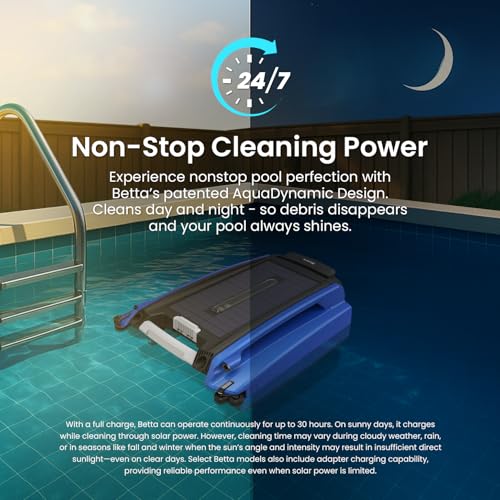
Match battery type to cleaning pattern: a floor/wall robot should have enough runtime to complete your pool size plus extra margin for deep ends, slopes, and heavy debris, while a solar surface skimmer is better judged by whether it can keep working through shade, cloudy periods, and overnight leaf drop. Check charge time, replaceable battery availability, storage requirements, and whether performance drops as the battery drains; for cordless vacuums, a unit that dies mid-cycle may leave debris resettled on the floor. Owner sentiment is strongest where battery life enables real autonomy: many report long multi-hour runs, large-pool cycles completed on one charge, and solar skimmers staying active for long stretches without frequent plug-in charging.
Debris
Debris pickup matters because it determines whether your pool cleaner can handle the actual mess in your pool, from fine sand and dirt to leaves, twigs, and heavier debris. Look for strong, consistent suction and a debris system that matches your pool’s needs, since some cleaners do well with large leaves but struggle with fine particles, while others can lose effectiveness when the basket or filter starts to fill.
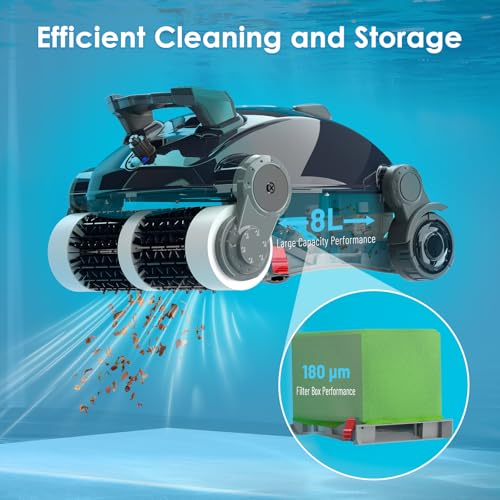
Buy for your dominant debris, not just suction claims: fine silt, pollen, and dust require fine filtration that will not blow particles back into the water, while leaves and seed pods need a large basket, anti-clog intake, and enough capacity to avoid stopping after one windy afternoon. If you have trees, bugs, or floating pollen, consider a surface skimmer in addition to a floor robot because once debris sinks, it becomes harder to remove and can stain or feed algae. Owners back this priority heavily, praising robots and skimmers that collect leaves, bugs, pollen, sand, silt, dirt, slime, and bottom debris, though some report that small leaf bits or missed spots can remain after a cycle.
Value
A pool cleaner should justify its cost by saving you time and keeping your pool consistently clean without constant fixes or supervision. Look for the right balance of cleaning coverage, reliability, ease of maintenance, and included features for your pool type, and be wary of paying extra for capabilities you won’t use or a low upfront price that leads to frequent repairs, replacement parts, or poor performance.
Judge value by what manual work or service it actually replaces in your pool: a cheaper floor-only robot may be a good buy for routine vacuuming, but it may not save much if you still brush walls, skim the surface, and clear steps by hand. Factor in consumables and ownership risks—replacement filters, tracks, brushes, batteries, power supplies, cords, and repair access—because pool robots live in a harsh mix of chlorine, sun, water, and grit. Owners often describe these cleaners as worthwhile when they reduce paid service, manual skimming, brushing, and vacuuming, with both affordable cordless models and premium units seen as valuable when they reliably cut maintenance time.
Mobility
A pool cleaner’s mobility determines whether it can reliably cover the floor, walls, steps, and waterline areas you expect it to clean without getting stuck or missing sections. Look for a cleaner that matches your pool shape, surface, slope, and obstacles, with enough stability and traction to climb where needed while staying oriented instead of tipping, floating, or spinning in place.
Mobility is where pool shape matters most: verify compatibility with your surface type, slope, deep end, drains, ladders, benches, tanning ledges, stairs, coves, and vinyl liners before assuming a robot will cover everything. For wall and waterline cleaning, look for strong traction, active brushes, navigation mapping or systematic coverage, anti-tangle design, and a reliable parking/retrieval feature; avoid expecting any robot to perfectly handle complex steps or shelves without some manual brushing. Owner feedback is mixed in exactly these areas: cordless movement and edge parking are praised, and some cleaners cover floors, walls, and waterlines well, but shaped pools, steps, liners, corners, deep ends, and certain stuck points can still limit coverage or require extra attention.
1,000,000+ shoppers use Buyer's Guide every week to find the best products and services online.

Helping millions of users make smarter purchases online.


