Sound Machines for Better Sleep
Posted on Thursday, March 12, 2026
To keep this site free for consumers, we receive compensation for customer referrals.
Sound Machines for Better Sleep
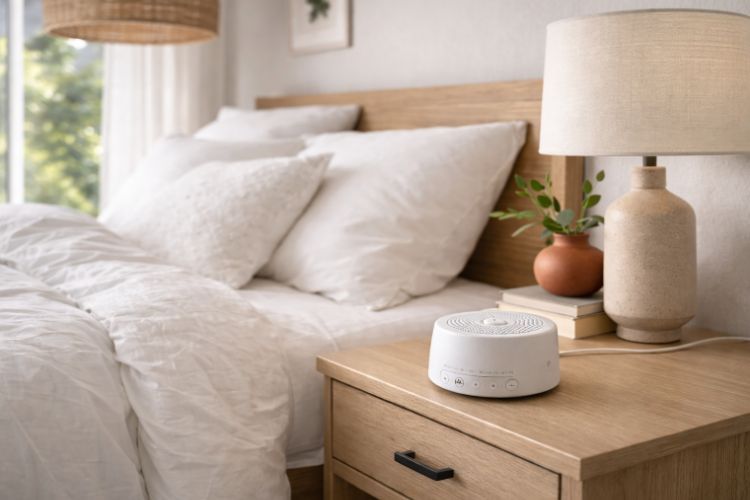
Sound machines are designed to create consistent background audio that can help shape a more stable sleep environment. Often used in bedrooms, nurseries, shared living spaces, and urban settings, these devices aim to mask disruptive noises and reduce sudden sound changes that may interrupt rest. For individuals seeking better sleep through environmental adjustments, understanding how sound machines function is an important first step.
Rather than altering sleep directly, sound machines influence the acoustic conditions around you. By producing steady ambient sound, they can soften the contrast between silence and unexpected noise. This makes them a practical tool for those evaluating non-invasive ways to support more consistent nighttime routines.
How Sound Machines Influence the Sleep Environment
Sound machines work by generating continuous audio that blends into the background. This steady output can reduce the perceived sharpness of intermittent sounds such as traffic, hallway movement, or household activity. The goal is not to eliminate noise entirely, but to make environmental sound less disruptive.
Many devices offer multiple sound profiles, including white noise, pink noise, brown noise, and nature-inspired audio. Each type distributes sound frequencies differently, which can influence how sharp or deep the sound feels. Personal sensitivity to certain frequencies plays a significant role in determining which option feels most comfortable.
Common Types of Sound Machines
While all sound machines aim to create ambient background audio, they vary in format and functionality. Understanding these distinctions can make comparing options more straightforward.
- Basic White Noise Units: Produce steady, static-like sound with minimal customization. Designed for simple, continuous playback.
- Multi-Sound Machines: Include a range of sound profiles such as rainfall, ocean waves, fan sounds, or tonal noise variations.
- Portable Sound Machines: Compact and battery-powered, suited for travel or temporary setups.
- Smart-Enabled Devices: Allow app-based control, scheduling, or integration with broader sleep routines.
- Nursery-Focused Models: Often include night lights or timers tailored to infant sleep environments.
The right configuration depends largely on where and how the device will be used. Bedroom size, power access, and personal sensitivity to looping sounds all influence suitability.
Key Features to Evaluate
Feature sets vary across sound machines, and not all functions are necessary for every user. When reviewing options, consider how each feature contributes to practical, nightly use.
- Sound Quality and Looping: Seamless audio playback without noticeable breaks can create a more consistent listening experience.
- Volume Range: Adjustable output allows the sound level to match room size and background noise conditions.
- Timer and Continuous Play Options: Some users prefer all-night sound, while others want automatic shutoff.
- Power Source: Plug-in units provide steady output, while rechargeable or battery-powered models offer flexibility.
- Portability: Compact size may matter for travel or shared spaces.
- Ease of Controls: Physical buttons versus app-based settings can influence convenience during nighttime adjustments.
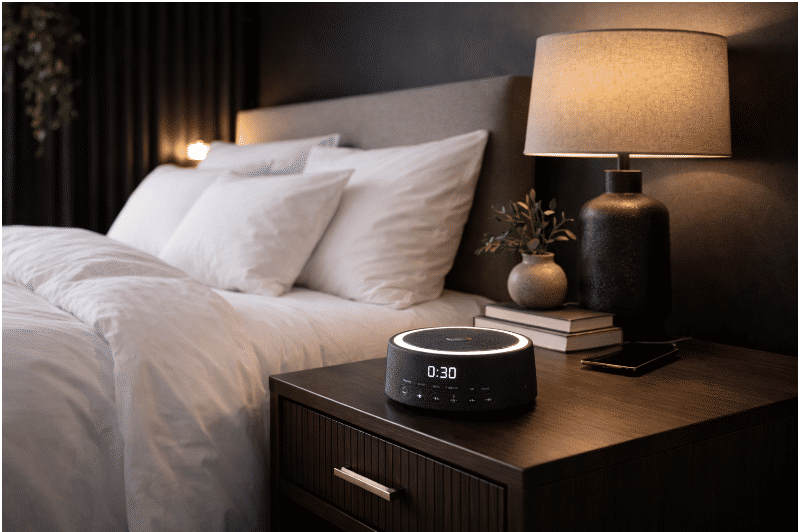
- Night Light Integration: A soft light feature may be useful in certain environments but unnecessary in others.
Evaluating which of these features aligns with your sleep environment can simplify the selection process.
Performance and Usability Considerations
Room acoustics play a significant role in how a sound machine performs. Hard surfaces reflect sound differently than carpeted or furnished spaces, which can affect perceived volume and tone. Larger rooms may require greater output capacity to maintain consistent coverage.
Speaker placement also matters. Positioning the device between the sleeper and the primary noise source can improve masking effectiveness. However, placing it too close may create a sound level that feels intrusive rather than calming.
Consistency is another important factor. Many users incorporate sound machines into nightly routines, so intuitive controls and predictable operation support long-term usability. Devices that are complicated to adjust in low light may interrupt the very rest they are meant to support.
Trade-Offs to Consider
While sound machines can shape a more stable acoustic environment, they are not a universal solution. The presence of continuous background audio may not appeal to individuals who prefer complete silence. Sensitivity to certain frequencies can also affect comfort levels.
Devices with more features may introduce complexity that is unnecessary for basic needs. Conversely, simpler units may lack flexibility for households with varying schedules or noise patterns. Understanding these trade-offs helps align expectations with real-world use.
Another consideration is long-term reliance. Some individuals prefer occasional use during temporary disruptions, while others integrate sound machines into daily sleep routines. Clarifying your intended frequency of use can guide feature prioritization.
Where Sound Machines Make the Most Impact
Sound machines are commonly used in urban apartments, shared living arrangements, and homes with fluctuating nighttime noise. They may also be incorporated into bedtime routines for children or individuals adjusting to new sleep schedules.
Travelers sometimes use portable sound machines to recreate familiar audio conditions in new environments. In these cases, size, battery life, and durability become central considerations.
Ultimately, the effectiveness of a sound machine depends on how well it complements the existing sleep environment. Identifying the specific type of noise you want to soften can make choosing among different sound profiles more manageable.
Building a Sleep Environment That Works for You
Sound machines are one of several tools used to shape a consistent nighttime setting. When combined with lighting control, comfortable bedding, and regular routines, ambient sound can contribute to a more predictable atmosphere.
Understanding how sound machines operate, what features influence usability, and where trade-offs exist allows you to evaluate options with clarity. With a clear sense of your sleep environment and preferences, narrowing down suitable configurations becomes more straightforward.
For more category-focused insights and structured product guidance, visit our site for additional research-based resources that help you evaluate your options with confidence.

Related Blog Posts