















We also considered 10 others:


Our Top Choice
The order above is not editorial opinion, and it is not paid placement. It comes from what shoppers across our network actually do - which white noise machines they compare, and which they ultimately buy. We re-rank as new data comes in, so the long-term favorites have to keep earning their spot against new entrants. The full method, including how we make money.
White Noise Machines Buyer's Guide
A white noise machine has to do two opposite jobs at once: stay soothing enough for sleep while being strong enough to cover real-world noise from rooms, neighbors, travel, or shared living spaces. The sharpest buying concerns are the character of the sound itself—tinny loops, harsh static, or annoying tracks can ruin the purpose—and whether the volume, power setup, and controls fit nightly use without becoming a new disturbance.
Sound Quality
White noise machines are used for long, quiet stretches, so small flaws in tone or looping become more noticeable than they would in casual listening. A sound that is clear, even, and natural is more likely to fade into the background instead of drawing attention to itself.
Start by checking the actual sound character, not just the number of tracks. For sleep, look for full-bodied white, pink, or brown noise, smooth fan-style sounds, and tracks that are either genuinely non-looping or loop so subtly that the repeat is hard to notice; avoid machines where samples sound thin, metallic, hissy, or obviously recycled every few seconds. If you are sensitive to high frequencies, tinnitus, or sudden pattern changes, deeper brown-noise options and steady fan/static profiles are often safer picks than busy nature tracks with birds, waves, or melody shifts. Owner feedback strongly supports this: the most-praised machines are described as clear, strong, and full-bodied, while cheaper-feeling sound is disliked when it becomes tinny or obviously looped. Buyers also repeatedly value natural-feeling, non-looping tracks and deeper brown noise as effective sleep aids, though some note that sound quality is subjective and certain updated sounds can feel less soothing or even annoying.
Masking Power
The machine must be able to cover the specific noise environment without creating harshness of its own. A broad, precise volume range matters because the right level changes between nurseries, shared homes, hotels, and noisy apartments.
Choose masking power based on the noise you actually need to cover. For a quiet bedroom, a gentle low setting may be enough, but apartments, hotel rooms, roommates, street noise, privacy conversations, or tinnitus often require a wider volume range and a speaker that stays clean at higher output. For babies and kids, prioritize adjustable volume and place the machine away from the sleeper’s head; loud enough to mask disruption does not mean it should be run at maximum all night. Owner sentiment shows masking ability is one of the biggest reasons people like these machines: many buyers report strong, room-filling output that helps cover household, hotel, roommate, neighbor, apartment, and privacy-related noise. At the same time, feedback is mixed when unwanted sound issues appear, including static interference or sounds that are loud but not pleasant, so volume alone is not enough without clean output.
Sound Choices
Different sleepers respond to different sound colors and patterns, so a flexible library reduces the chance that the machine only works for one person or one room. The best selection is not the largest list, but the set with enough steady, sleep-safe options to avoid fatigue over time.
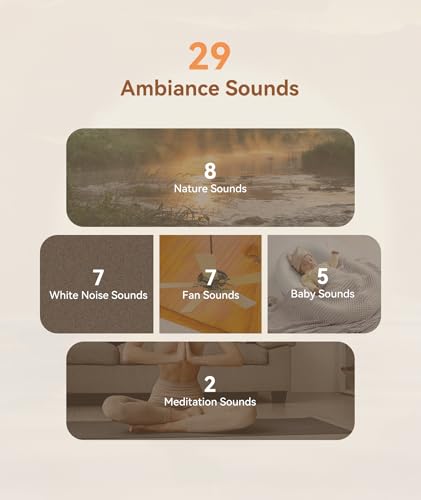
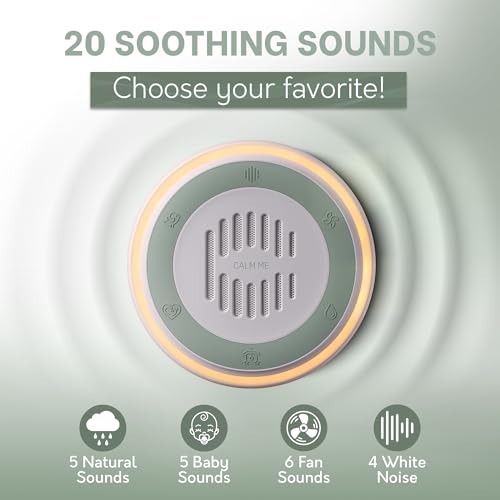
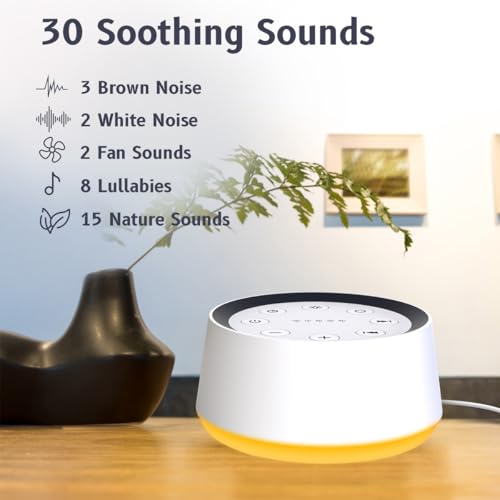
Look for a sound library that matches real sleep routines rather than one that simply advertises a big count. Core options should include white noise, brown noise, fan sounds, rain or ocean, and a few calmer nature tracks; music and relaxation sounds are useful only if they are steady enough not to wake light sleepers. If several people will use the same machine—adults, babies, kids, pets, guests, or shared-room sleepers—preset memory or easy switching between favorite sounds can matter more than dozens of novelty tracks. Owners consistently praise machines with varied usable choices, including fans, static, laundry, rain, ocean, nature tracks, music, and relaxing sounds. Sentiment also shows that adjustable volume plus many sound choices helps different users find something calming for babies, kids, pets, shared spaces, and different sleep preferences.
Bedside Ease
A white noise machine is often adjusted in the dark, while sleepy, or while caring for a child. Simple controls, dim lighting, and predictable timers keep the machine from interrupting the routine it is meant to support.
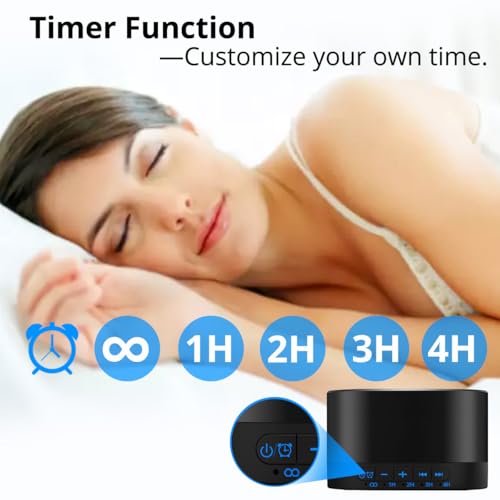
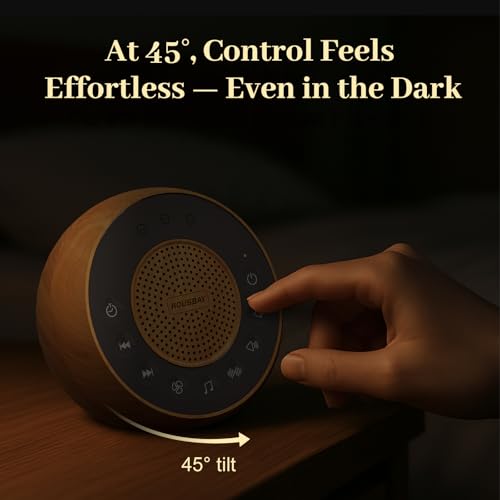
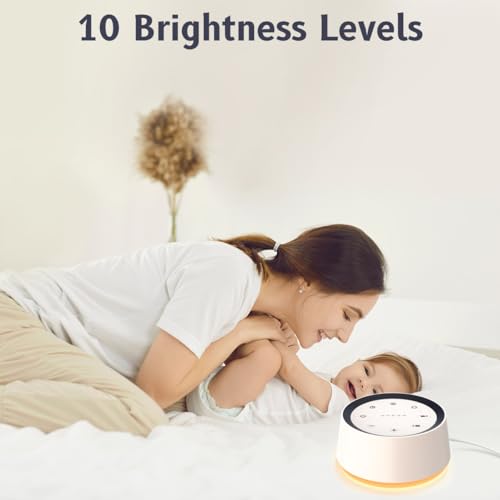
For bedside use, prioritize controls you can operate half-asleep: separate buttons for volume and sound, a timer that is easy to set, and no bright display that floods a dark room. In nurseries, a soft nightlight can help with nighttime checks, but it should be dimmable or easy to turn off; for adults, clocks, gradual alarms, and display dimming are useful only if they do not add glare or extra button complexity. Avoid designs that bury basic sleep functions behind confusing multi-press controls if the machine will be used nightly. Owner feedback supports these routine-focused features: buyers value straightforward controls, timer options, dimmable displays, gradual alarms, built-in clocks, and nightlights when they make the machine useful beyond basic noise. A soft nightlight with color options is liked for bedrooms and nighttime routines, while simple operation is repeatedly tied to successful sleep or quiet-time use.
Travel Power
Many buyers rely on white noise as part of a consistent sleep cue, so portability can be as important as bedside performance. Size, battery life, cord requirements, and travel volume determine whether the machine remains useful away from home.
If the machine will leave the bedroom, check both size and power style before buying. A travel-friendly unit should fit easily in a bag, have buttons that will not turn on accidentally, and provide enough volume for hotel rooms or busy environments; rechargeable models need enough runtime for at least a full night, while plug-in models need a cord and adapter setup that suits where you sleep. For families, portability matters most when the same sound routine needs to follow a baby or child between home, trips, naps, and overnight stays. Owners strongly appreciate truly compact and pocket-size machines, especially for travel and families using white noise away from home. Battery life is also a major positive in the feedback, with many owners reporting long use between charges and some getting multiple nights or shifts, while small-footprint units are praised for nightstands and travel bags.
Reliability
A white noise machine often becomes part of a nightly dependency, so failures are more disruptive than they may seem at purchase. Long-term durability depends not only on the speaker, but also on controls, power connections, charging behavior, and shutoff consistency.
Because these machines may run every night for years, inspect the failure points: volume knobs, buttons, charging ports, cords, speakers, and auto-shutoff behavior. Physical rotary controls can wear, cords can fail, rechargeable models can develop charging issues, and weak electronics may cut out; if uninterrupted sleep is critical, favor sturdy controls, replaceable or standard power cables, and clear warranty or support terms. Also consider whether you are comfortable replacing a small unit after long service or whether you need a more durable setup for continuous nightly use. Owner sentiment makes reliability the main watch-out across otherwise well-liked machines. Some buyers report years of nightly use and repeat purchases, but others describe units that eventually stop working, cut out, develop worn knobs, have cord failures, or show charging and shutoff issues after months or years.
1,000,000+ shoppers use Buyer's Guide every week to find the best products and services online.

Helping millions of users make smarter purchases online.


