Pasta Makers for Fresh Homemade Pasta
Posted on Sunday, February 15, 2026
To keep this site free for consumers, we receive compensation for customer referrals.
Pasta Makers: How to Choose the Right One for Your Kitchen
Pasta makers appeal to home cooks who want greater control over texture, thickness, and ingredients than packaged pasta typically allows. The decision to use a pasta maker often starts with a practical question: will this tool meaningfully improve how I cook at home? Understanding how different pasta makers function makes it easier to decide whether one fits naturally into your routine.
Why This Category Matters
Kitchen tools shape cooking habits. A pasta maker shifts part of the process from opening a package to mixing, rolling, or extruding dough. For some, that shift creates flexibility and creative control. For others, it introduces additional steps that may not align with a fast-paced schedule.
The choice also affects ingredient customization. Fresh pasta allows adjustments in flour type, hydration, and flavor additions. The design of the pasta maker determines how easily those adjustments translate into consistent results.
How to Choose the Right Pasta Maker for Your Needs
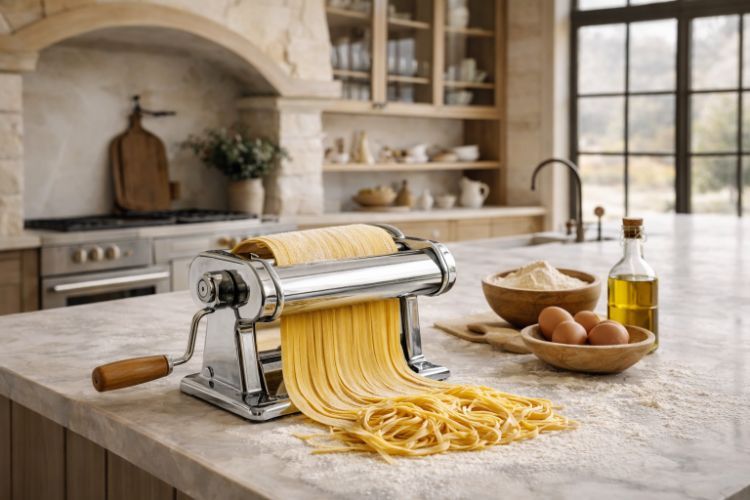
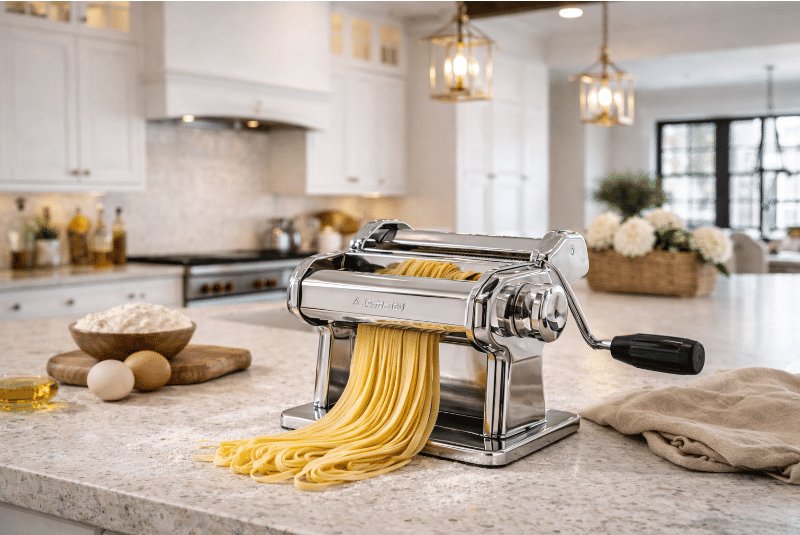
The first decision is manual versus electric operation. Manual pasta makers use a hand crank to roll dough into sheets and cut strands. They provide direct control and a hands-on experience but require time and coordination. Electric models automate rolling or extrusion, which can simplify preparation for larger or more frequent batches.
Next, consider the types of pasta you plan to prepare. Roller-style machines create flat sheets suitable for ribbon pasta or filled varieties. Extrusion-style machines shape dough through dies to form tubular or ridged pasta. Your preferred recipes should guide this choice.
Frequency of use also matters. Occasional use may not justify a larger appliance with multiple attachments. Regular preparation may make automation and durability more relevant to ensure consistent workflow.
Evaluate available counter space and storage. Some models clamp to countertops and require clearance for turning a crank. Others are freestanding appliances with integrated motors that occupy more space. Measuring your kitchen setup in advance can prevent inconvenience.
Finally, consider your interest in process versus convenience. If you enjoy adjusting thickness settings and managing dough texture manually, a simpler machine may feel more satisfying. If efficiency is your priority, automated features may align better with your expectations.
Key Features to Look For
- Adjustable Thickness Settings: A wide range of settings allows for thin sheets suitable for filled pasta as well as thicker cuts for heartier dishes. Limited settings can restrict versatility.
- Construction and Stability: Heavier frames tend to remain stable during operation, reducing movement when processing dense dough. Lighter models may be easier to store but can require additional stabilization.
- Motor Performance (Electric Models): Consistent motor output supports uniform extrusion or rolling speed. Lower-powered units may require slower feeding to maintain even results.
- Attachment and Die Compatibility: Interchangeable cutters or shaping dies expand the range of pasta styles available. However, additional components increase storage and cleaning considerations.
- Ease of Cleaning: Machines designed for partial disassembly or easy access to rollers and chambers can simplify maintenance and reduce buildup of dried dough.
- Clamp or Base Security: A secure attachment system helps maintain steady pressure during rolling or extrusion, contributing to more consistent thickness.
Common Mistakes to Avoid
A frequent mistake is assuming the machine alone determines pasta quality. Dough preparation remains critical. Incorrect hydration or mixing can cause tearing, sticking, or uneven shaping regardless of the equipment used.
Another oversight is prioritizing appearance over functionality. A compact or visually appealing model may not support the shapes or batch sizes you intend to prepare. Matching capability to cooking goals is more important than design details.
Some buyers underestimate the learning curve. Achieving consistent thickness and texture often requires practice. Expecting immediate precision can lead to frustration.
Ignoring cleanup and storage realities is also common. A machine that is cumbersome to clean or difficult to access may see limited use over time.
Who Benefits Most From This Type of Product
Pasta makers are well suited to home cooks who value ingredient control and enjoy participating actively in food preparation. They allow experimentation with alternative flours, flavor infusions, and varied thickness levels.
Families or individuals who regularly prepare filled or specialty pasta dishes may appreciate the added flexibility. Those who view cooking as a creative process rather than a purely functional task may also find the experience rewarding.
Strengths and Limitations
- Strengths: Enables control over ingredients and thickness, supports diverse pasta styles depending on design, and encourages hands-on culinary experimentation.
- Limitations: Requires preparation time and cleanup, involves a learning curve for dough consistency, and may require dedicated counter or storage space.
Making an Informed Decision
Choosing among pasta makers is ultimately about alignment with your cooking habits. Consider how often you plan to make fresh pasta, which shapes matter most in your recipes, and how much time you want to invest in preparation. With these priorities clarified, evaluating available options becomes more straightforward and grounded in practical expectations.

Related Blog Posts