Choosing a Coffee Maker for Your Routine
Posted on Monday, April 06, 2026
To keep this site free for consumers, we receive compensation for customer referrals.
Choosing a Coffee Maker for Your Routine
Coffee makers are less about basic functionality and more about how they integrate into daily patterns. For many users, the decision is not whether a machine can brew coffee, but how it shapes consistency, workflow, and the overall experience. Choosing a coffee maker for your routine involves evaluating how different brewing systems align with time constraints, taste preferences, and the level of control you want to maintain.
At a more advanced level, distinctions between coffee makers become less about capability and more about refinement. Subtle differences in extraction, temperature stability, and usability can influence long-term satisfaction. Understanding these nuances helps frame the category beyond entry-level considerations.
How Brewing Method Influences Outcome
Each coffee maker type relies on a specific extraction approach, and that method directly affects flavor clarity, body, and consistency. Automated systems tend to standardize variables like water flow and temperature, while manual methods allow for deliberate adjustments.
This distinction becomes relevant when considering repeatability versus control. Some users prioritize predictable results with minimal effort, while others prefer the ability to fine-tune variables such as saturation time or pouring technique.
Refined Look at Coffee Maker Types
Beyond general categories, the differences between coffee maker types become more apparent when considering how they perform under regular use.
Drip Coffee Makers
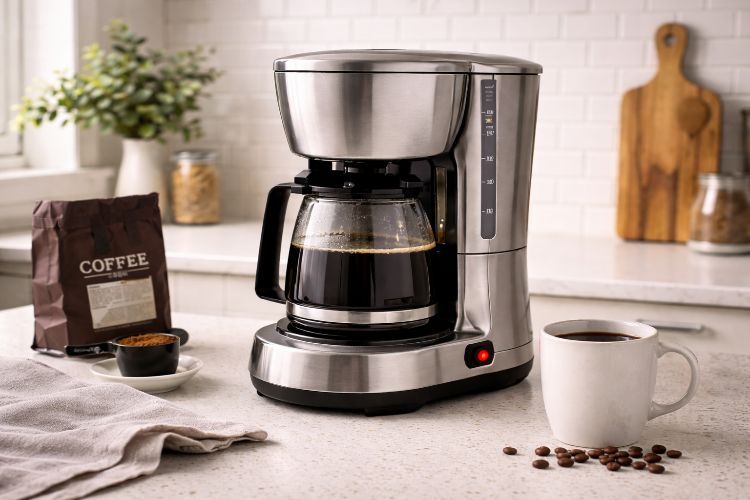
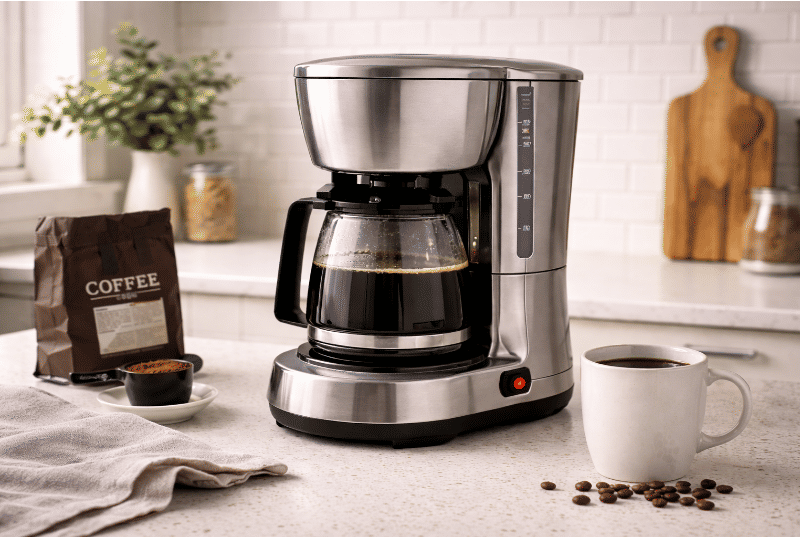
Drip machines are built for consistency and volume, but their performance can vary based on internal heating elements and water distribution. More advanced designs focus on maintaining stable temperatures and even extraction across the coffee bed, which can influence overall balance.
Single-Serve Coffee Makers
Single-serve systems emphasize efficiency and minimal cleanup. In practice, they are often chosen for convenience, though they may offer less flexibility in adjusting brew strength or input variables compared to other methods.
Espresso Machines
Espresso systems introduce pressure as a defining factor, requiring attention to grind size, dose, and extraction time. These machines are often integrated into routines where preparation is more deliberate, and where users are comfortable managing multiple variables.
French Press
The French press offers full immersion brewing, which can produce a heavier body and more pronounced texture. Its simplicity allows for direct control over steep time, but consistency depends on user technique and timing.
Pour-Over Systems
Pour-over setups highlight precision and user involvement. Variations in pouring speed, water distribution, and timing can significantly affect the final result, making this method more sensitive to technique.
Cold Brew Makers
Cold brew systems shift the focus to long extraction periods, typically prepared in advance. This approach fits routines where planning ahead is preferred over daily preparation, and where a different flavor profile is desired.
Key Features That Matter at a Higher Level
For users familiar with basic operation, certain features become more relevant when comparing coffee makers.
- Temperature Stability: Consistent heat throughout the brewing cycle supports more even extraction and balanced flavor.
- Water Distribution: Even saturation of coffee grounds can reduce inconsistencies within a single brew.
- Control Over Variables: The ability to adjust brew time, strength, or pressure can influence how adaptable the machine is to different preferences.
- Workflow Efficiency: Setup, brewing, and cleanup time all contribute to how well the machine fits into daily routines.
- Build Design: Materials and construction can affect durability as well as heat retention during brewing.
- Scalability: Some machines handle both single servings and larger batches more effectively than others.
Performance in Real-World Routines
In practice, the right coffee maker often depends on how consistently it delivers results within the constraints of a routine. A machine that performs well in controlled conditions may feel less practical if it requires too much time or attention during busy periods.
For some users, reliability and speed outweigh the benefits of customization. For others, the ability to adjust brewing variables becomes part of the daily experience, even if it requires additional effort.
Trade-Offs Beyond the Basics
More advanced coffee makers often introduce trade-offs that go beyond initial ease of use. Greater control can mean more variability, especially if inputs are not carefully managed. Conversely, simplified systems may limit experimentation but offer greater consistency.
Maintenance also becomes more relevant at this level. Machines with more components or tighter tolerances may require regular upkeep to maintain performance. Over time, this can influence how convenient the machine feels within a routine.
Space and setup complexity are additional considerations. Some machines are designed to remain in place as part of a dedicated setup, while others are better suited to flexible or shared spaces.
Matching a Coffee Maker to Your Routine
Different routines call for different balances between control, speed, and involvement. A structured morning schedule may favor automation and predictability, while a more flexible routine may allow for hands-on brewing methods.
For those who prepare multiple servings at once, batch-oriented machines can streamline the process. In contrast, single-serving approaches may better suit staggered schedules or individual preferences.
Final Considerations
Choosing a coffee maker for your routine involves looking beyond basic functionality and focusing on how each option performs over time. The interaction between brewing method, feature set, and daily habits ultimately shapes the experience.
With a clearer understanding of these factors, evaluating coffee makers becomes less about general capability and more about alignment with your specific routine. For more insights into kitchen appliance categories and how they fit into everyday use, visit our site to continue exploring your options.

Related Blog Posts