Choosing the Right Food Steamer
Posted on Thursday, April 02, 2026
To keep this site free for consumers, we receive compensation for customer referrals.
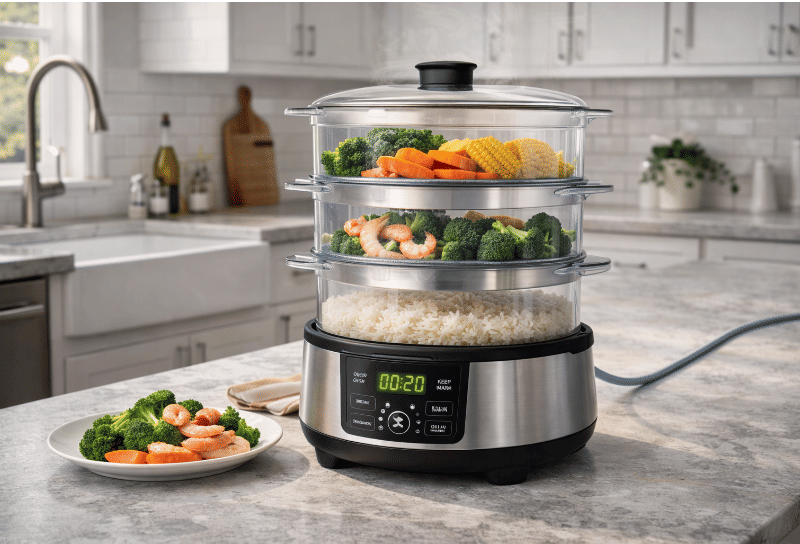
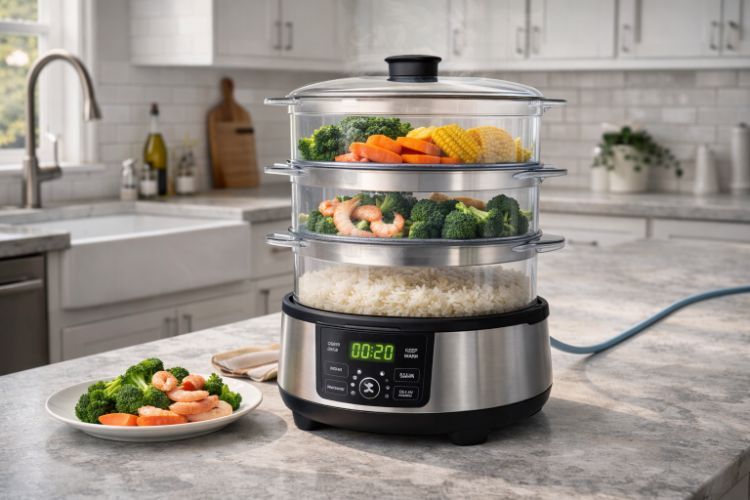
Choosing the Right Food Steamer
Food steamers are kitchen appliances designed to cook ingredients using heated vapor rather than direct contact with water or oil. This approach creates a controlled cooking environment that emphasizes consistency and simplicity, making it a practical method for preparing a wide range of foods. As kitchen routines evolve, steamers are often considered for their straightforward operation and minimal hands-on involvement.
At a glance, many food steamers appear similar. However, differences in structure, controls, and materials can meaningfully affect how they perform in everyday use. Understanding these distinctions helps create a clearer framework for evaluating available options.
How Food Steamers Operate
Food steamers function by heating water in a reservoir until it produces steam, which then circulates around the food. Because the food is suspended above the water rather than submerged, heat is distributed more gently and evenly. This reduces direct exposure to boiling water and helps maintain the integrity of many ingredients.
Most steamers are designed with perforated trays or baskets that allow steam to rise and circulate freely. In multi-tier configurations, steam travels upward through stacked layers, which introduces both efficiency and the need for thoughtful arrangement of ingredients.
Structural Variations Across the Category
The category includes several structural approaches, each offering a different balance between convenience, control, and storage. Electric countertop steamers are fully self-contained, with integrated heating elements and built-in controls. These are often designed for consistent, repeatable operation with minimal oversight.
Stovetop steamers rely on an external heat source and typically consist of a pot paired with a steaming insert or basket. This format offers flexibility and compact storage but requires more active monitoring during cooking. Some kitchen appliances also incorporate steaming as one of several functions, which may appeal to those looking to reduce the number of separate tools in use.
Key Features to Evaluate
When comparing food steamers, several features directly influence usability, flexibility, and overall cooking experience. Paying attention to these elements can help clarify how different models may fit into your routine.
- Capacity and Layout: Steamers range from compact, single-layer units to larger multi-tier systems. The number and size of trays determine how much food can be prepared at once and how easily different ingredients can be separated.
- Control System: Some models use simple mechanical timers, while others feature digital controls with more precise adjustments. The level of control can affect how easily cooking times are managed.
- Water Reservoir Design: Reservoir size influences how long the steamer can operate without refilling. Designs that allow external refilling can extend cooking time without interruption.
- Tray Design and Flexibility: Removable or adjustable trays can make it easier to accommodate different food sizes and shapes. This is especially relevant when preparing larger portions or irregular items.
- Material Construction: Common materials include plastic, stainless steel, and glass. These choices affect durability, weight, heat retention, and how the appliance holds up over time.
- Keep-Warm Function: Some steamers include a setting that maintains temperature after cooking is complete, helping bridge small gaps in meal timing.
- Water Level Indicators: Visible indicators allow you to monitor water levels during use, reducing the need to stop and check manually.
- Cleaning and Maintenance: Detachable components and dishwasher-safe parts can simplify cleanup, which can influence how often the appliance is used.
Everyday Performance and Usability
In regular use, convenience often comes down to how easily a steamer integrates into existing kitchen habits. Models that are quick to assemble, intuitive to operate, and easy to clean tend to require less effort overall. This can make a noticeable difference over time, especially for frequent use.
Steam distribution is another practical factor. Some designs promote even circulation across all tiers, while others may require occasional repositioning of food. Understanding how much involvement is needed during cooking can help set expectations.
Physical footprint also plays a role. Larger steamers provide more capacity but take up more counter or storage space, while compact models are easier to store but may limit batch size.
Design Trade-Offs to Keep in Mind
Each type of food steamer comes with its own set of trade-offs. Multi-tier systems can increase efficiency by allowing simultaneous cooking, but they may also introduce uneven results if foods with different cooking times are placed together. Adjusting placement or staggering timing can help address this.
Material selection introduces additional considerations. Lightweight materials are easier to handle and store, while heavier materials often provide a more durable feel. Over time, certain materials may retain odors or show wear differently depending on usage and care.
It is also important to recognize that steaming produces a specific type of result. While it supports even cooking, it does not create browning or crisp textures. For some cooking styles, this means it works alongside other methods rather than replacing them entirely.
How to Approach the Decision Process
Rather than focusing on a single feature, it is often more useful to consider how different elements work together. Capacity, control style, and ease of maintenance tend to have the most noticeable impact on long-term use. Small differences in these areas can shape how convenient or involved the cooking process feels.
It can also be helpful to think about how much flexibility you want from the appliance. Some designs prioritize simplicity and repeatability, while others allow for more adjustment and customization during cooking.
With a clearer understanding of how food steamers vary in structure and function, evaluating options becomes a more grounded and manageable process. For more guidance on navigating kitchen appliance categories, visit our website for additional insights.

Related Blog Posts