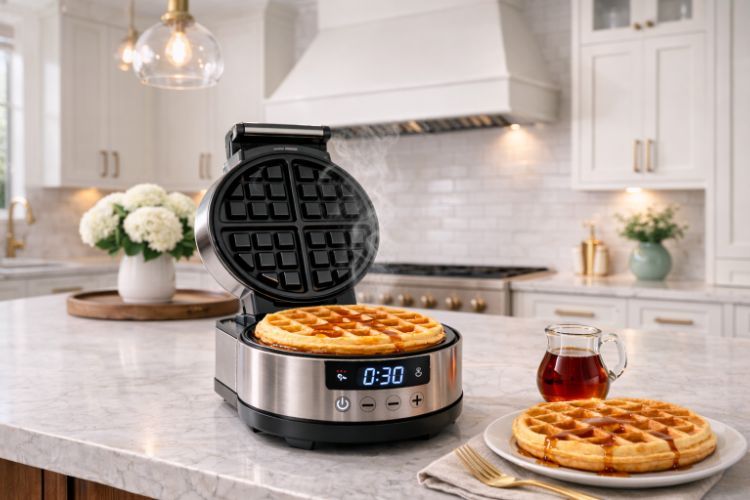
Choosing the Right Waffle Maker
Posted on Friday, March 13, 2026
To keep this site free for consumers, we receive compensation for customer referrals.
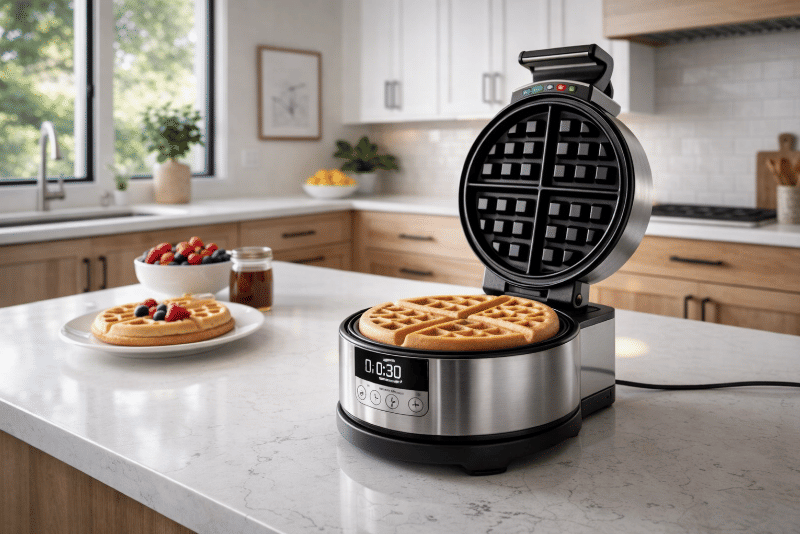
Choosing the Right Waffle Maker
A waffle maker may seem like a simple appliance, but meaningful differences in design, heating performance, and plate configuration can significantly affect results. Texture, browning control, batch capacity, and ease of cleanup vary more across this category than many buyers initially expect. Taking a closer look at these variables helps clarify why two similar-looking units can perform quite differently in everyday use.
Whether used occasionally for weekend breakfasts or integrated into a regular meal routine, a waffle maker functions best when its capabilities align with household expectations. Some designs prioritize speed and compact storage, while others emphasize texture customization or higher output. Understanding these distinctions early on makes the evaluation process more precise and practical.
How a Waffle Maker Influences Texture and Consistency
At its core, a waffle maker cooks batter between two heated plates that define structure and browning. However, plate depth, heating element placement, and temperature stability all influence whether waffles turn out crisp, soft, evenly browned, or unevenly cooked.
Consistent heat distribution plays a central role in repeatable results. Units that maintain stable temperatures between batches tend to produce more uniform browning, while inconsistent recovery times may require adjustments in cooking duration. Steam release during cooking also affects exterior crispness, particularly in thicker waffle styles.
Plate Configuration and Format Variations
One of the primary distinctions within the waffle maker category is plate format. The shape and depth of the grid determine both cooking time and final texture.
- Shallow grid plates: Produce thinner waffles with shorter cook times and lighter interiors.
- Deep grid plates: Create thicker waffles with more defined pockets and longer cooking cycles.
- Round formats: Often divide into sections for portioning and serving flexibility.
- Square formats: Maximize surface area and may provide more uniform edges.
- Rotating designs: Allow batter to spread more evenly during cooking.
- Multiple-waffle capacity units: Support higher output per batch, which may suit larger households.
Each format reflects a different balance between efficiency, portion size, and texture preference. Identifying which characteristics matter most helps narrow the field considerably.
Feature Sets That Shape Everyday Use
Beyond plate style, several functional features influence usability and control. While not every kitchen requires advanced settings, understanding available options provides context when comparing models.
- Adjustable temperature controls: Allow users to select lighter or darker browning levels.
- Preheat and readiness indicators: Help signal when the unit is ready for batter and when cooking is complete.
- Nonstick cooking surfaces: Support easier release and reduce the need for excess oil.
- Removable plates: Simplify cleaning and maintenance.
- Overflow channels: Capture excess batter to reduce countertop mess.
- Locking mechanisms: Maintain consistent pressure during cooking.
- Cool-touch handles: Improve handling during operation.
More features do not necessarily translate to better performance. In some kitchens, simplicity and reliability are prioritized over customization. In others, adjustable controls offer meaningful flexibility.
Performance Considerations in Daily Use
Preheat time and heat recovery between batches can affect overall convenience. Households preparing multiple servings in quick succession may benefit from units that return to cooking temperature efficiently. Slower recovery can extend total preparation time.
Physical footprint also plays a practical role. Compact waffle makers may store vertically or occupy less cabinet space, while larger rotating models typically require more clearance. Cord storage and hinge design can further influence storage efficiency.
Cleaning expectations should not be overlooked. Fixed plates require careful wiping once cooled, while removable plate systems can reduce maintenance effort. The presence of drip trays or batter channels can also affect post-cooking cleanup.
Trade-Offs and Design Constraints
Every waffle maker design involves compromises. Thicker waffle formats generally require longer cooking times, which may not align with fast-paced routines. Conversely, thinner waffles cook quickly but offer a different texture profile.
Rotating mechanisms can promote even batter distribution but add mechanical complexity and increase storage requirements. Higher-capacity models produce more waffles per batch yet typically require more counter space. Nonstick coatings simplify release but benefit from careful cleaning to maintain surface integrity.
Understanding these trade-offs allows buyers to calibrate expectations around speed, texture, and maintenance rather than focusing on a single feature in isolation.
Where a Waffle Maker Makes Sense
A waffle maker is most practical in kitchens where homemade breakfast preparation is a regular activity or where batch cooking for gatherings is common. It may also appeal to those who enjoy experimenting with different batter styles, including savory variations.
Smaller households or limited-storage kitchens may prioritize compact designs with upright storage capability. Larger families might consider batch capacity and heat recovery more carefully. Frequency of use often determines how much value adjustable controls or additional features provide.
Approaching the Category with Clarity
Choosing the right waffle maker begins with identifying texture preferences, serving volume needs, storage limitations, and desired level of control. Examining plate depth, heating stability, cleanup design, and operational footprint offers a clearer picture of long-term suitability.
By focusing on how a waffle maker fits into your routine rather than reacting to surface-level differences, evaluation becomes more structured and less uncertain. With clearly defined priorities, narrowing down available options becomes a more confident and informed process.
For additional appliance category insights and structured buying guidance, visit our site to explore more details.

Related Blog Posts