





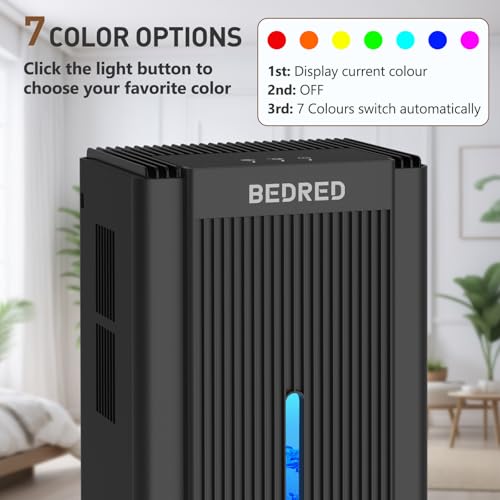


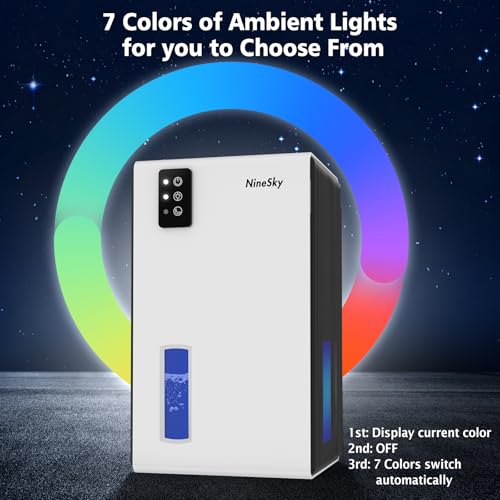


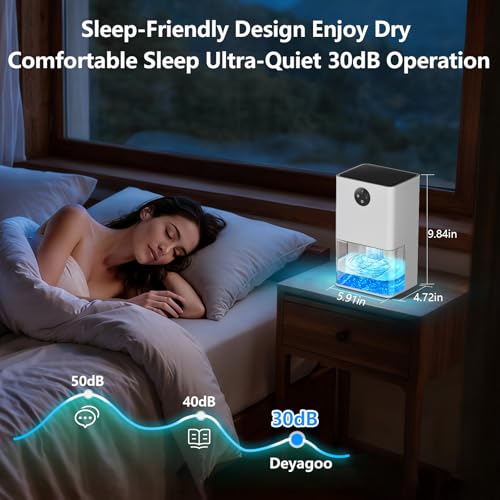


We also considered 10 others:


Our Top Choice
Compare Features


The order above is not editorial opinion, and it is not paid placement. It comes from what shoppers across our network actually do - which bathroom dehumidifiers they compare, and which they ultimately buy. We re-rank as new data comes in, so the long-term favorites have to keep earning their spot against new entrants. The full method, including how we make money.
Bathroom Dehumidifiers Buyer's Guide
Bathroom dehumidifiers have to balance fast post-shower moisture removal with safe, unobtrusive operation in a small wet room. The biggest checks are whether the unit can reduce mirror/window condensation before mildew starts, and whether its tank, cord, drain hose, and placement are safe around splash zones and tight floor space.
Performance
You want a dehumidifier that can pull enough moisture from the air to bring your room to a comfortable humidity level and keep it there, not just collect water occasionally. Look for capacity that matches your space size and dampness level, steady humidity control with an adjustable humidistat, and performance in the temperatures where you’ll use it. Watch out for undersized units, vague moisture-removal claims, or models that run constantly without noticeably reducing humidity.
For bathroom performance, prioritize a unit that can handle short, intense humidity spikes from showers—not just slow background dampness. Look for an active electric dehumidifier with a humidistat, auto mode, and enough stated coverage for the full bathroom; very small units or passive moisture absorbers are better for under-sink cabinets, closets, RV bathrooms, or supplemental use, not for a steamy full bath with poor ventilation. Owner feedback supports this distinction: active units are often credited with quickly pulling noticeable water from the air and leaving small rooms or bathrooms fresher after showers, while moisture absorbers are praised mainly in enclosed spaces such as cabinets, closets, cars, and storage areas.
Ease
You’ll live with a dehumidifier day to day, so ease of use matters as much as moisture removal: look for simple setup, clear controls, an easy-to-read display, and settings that are intuitive enough to adjust without fuss. Pay attention to maintenance, too—features like a removable water tank with a comfortable handle, accessible filter, clear full-tank alerts, and an option for continuous drainage can make the difference between a unit you use consistently and one that becomes a chore.
For ease of use in a bathroom, check the daily water-handling path before buying: the tank should slide out without hitting the toilet, vanity, or wall, and any continuous-drain hose should route securely to a shower, sink, or floor drain without creating a trip hazard. Auto shutoff is especially important because bathroom units may fill quickly after repeated showers, and simple humidity settings or indicator lights make it easier to run only when needed. Owners commonly report that these units are straightforward to set up and operate, with easy controls, plug-and-play startup, auto shutoff, timer modes, humidity displays, casters, and included drain hoses making routine use simpler.
Noise
Noise matters because a dehumidifier may run for hours at a time, especially in bedrooms, living rooms, basements, or home offices where a constant hum can become distracting. Look for quiet operation at the fan speeds you’ll actually use, and watch out for units that are tolerable on low but noticeably loud or rattly on high, especially if you plan to place one near where you sleep, work, or relax.
For bathroom noise, decide whether the dehumidifier will run during showers only, after bedtime, or near an adjoining bedroom. Tile, glass, and closed doors can make fan or compressor noise seem sharper, so look for a low-noise mode if the bathroom is beside a bedroom, nursery, or home office; if you only run it on a timer after bathing, a louder but stronger setting may be acceptable. Owner sentiment is broadly favorable on quiet operation, with many describing units as suitable for bedrooms, living areas, or overnight use, but feedback is mixed enough that some shoppers should expect a noticeable fan-like sound rather than silence.
Build
You want a dehumidifier that feels sturdy and can handle regular vibration, moisture exposure, and frequent bucket removal without cracking, leaking, or becoming noisy over time. Look for solid housing, smooth-fitting water buckets, durable wheels or handles, and owner feedback that points to long-term reliability rather than early failures or rattling parts.
For bathroom build quality, focus on leak resistance, stable footing, and components that tolerate humid, splash-prone surroundings. Avoid placing any non-waterproof appliance where it can be splashed by a tub or shower, and look for a secure tank seal, dependable float shutoff, sturdy drain connection, washable filter, and a cord long enough to reach a GFCI-protected outlet without stretching across wet walking paths. Owners often describe compact units as solid, reliable, leak-free, and easy to maintain, but durability is a real watch point because some units are reported to develop leaks or failures after roughly a year or more despite working well initially.
Size
You need a dehumidifier that fits where moisture actually builds up, whether that’s a basement corner, laundry room, closet, or bedroom. Look at the unit’s footprint, height, and clearance needs so it won’t block walkways, doors, vents, or shelves; a compact size can be easier to place, but watch that it still has enough capacity for the space you need to dry.
For bathroom size, measure the actual safe placement area—not just the room size—because the unit needs clearance for airflow, tank removal, and a power cord while staying away from splash zones. Compact tabletop models can be ideal for half baths, RVs, vanities, and tight bathrooms, but the tradeoff is usually a smaller tank and less drying power; a larger wheeled or continuous-drain unit may be better for a full bath with no exhaust fan, wet towels, or persistent condensation. Owners like compact footprints because they fit bathrooms, closets, RVs, nightstands, and small rooms easily, but some also note that smaller units may require frequent emptying or lack enough power for very damp or larger spaces.
Value
You want a dehumidifier that delivers value for money by matching its price to the space it can handle, its moisture removal performance, and the features you’ll actually use. Look for reliable humidity control, appropriate capacity, easy drainage, and energy-conscious operation, while avoiding paying extra for oversized units or convenience features that do not fit your needs.
For bathroom value, judge the purchase by whether it prevents mildew, odors, peeling paint, swollen cabinetry, and damp towels with minimal babysitting—not by decorative extras alone. It is usually worth paying for the right capacity, auto shutoff, humidistat or auto mode, safe drain option, and durable tank design; passive disposable absorbers may be inexpensive and useful inside cabinets, but they are a continuing cost and usually not a substitute for active drying after showers. Owner feedback generally frames small dehumidifiers as good value for bathrooms, smaller rooms, pool houses, and supplemental use, while also showing that value depends heavily on expectations, especially for disposable moisture absorbers.
1,000,000+ shoppers use Buyer's Guide every week to find the best products and services online.

Helping millions of users make smarter purchases online.


