











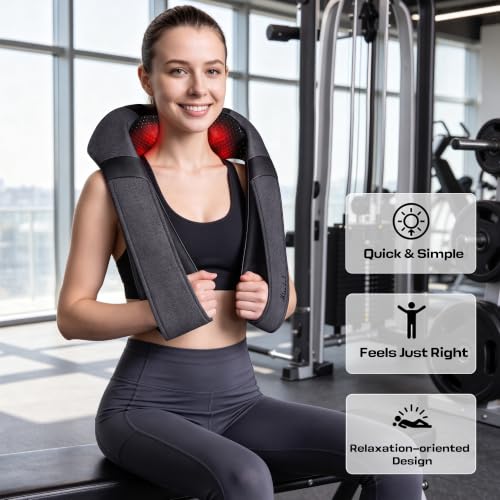


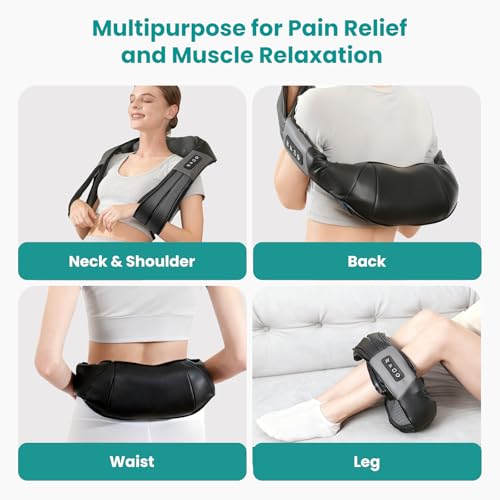


We also considered 10 others:







Our Top Choice
Compare Features


The order above is not editorial opinion, and it is not paid placement. It comes from what shoppers across our network actually do - which back massagers they compare, and which they ultimately buy. We re-rank as new data comes in, so the long-term favorites have to keep earning their spot against new entrants. The full method, including how we make money.
Back Massagers Buyer's Guide
Back massagers trade convenience and intensity against fit, control, and safety: the best one for this niche is not simply the strongest, but the one that can reach your actual pain pattern without bruising, overheating, or forcing an awkward posture. Pay closest attention to massage mechanism, body-area coverage, heat behavior, and whether you can reposition or soften the pressure when a shiatsu node lands on bone instead of muscle.
Relief
Relief is the main reason to buy a massager: you want it to reduce soreness, loosen tight muscles, and leave you feeling noticeably better after use. Look for a massager that matches the areas you need treated, such as your neck, shoulders, back, or legs, and offers enough intensity and control to be effective without feeling harsh. Be cautious of models that feel relaxing but don’t provide lasting muscle relief, or that rely on skin-level sensation rather than meaningful pressure or kneading.
For real knot and trigger-point relief, prioritize a massager with firm rotating shiatsu nodes, adjustable intensity or a way to control pressure with your body position, and enough travel or targeting control to reach the neck, shoulder blades, lower back, and hips as needed; avoid vibration-only pads if you need deep muscle work rather than light relaxation. Owner feedback strongly supports this distinction: shoppers repeatedly credit deep kneading, firm shiatsu pressure, and combined heat with loosening neck, back, shoulder, and trigger-point tension more effectively than simple vibration.
Build
You want a massager that feels solid in your hand and keeps working consistently under regular pressure and repeated use. Look for sturdy housing, secure attachments, durable seams or fabric, and controls that don’t feel flimsy; watch out for rattling parts, weak connectors, overheating, or materials that seem likely to crack, stretch, or wear down quickly.
Check the physical build around the moving nodes first: a back massager should feel stable when you lean into it, have smooth node movement that does not grind or stall, and use materials that can tolerate repeated pressure without the cover bunching, tearing, or exposing hard parts. Owners tend to describe well-liked units as sturdy, dependable, powerful, and smooth in operation, with repeat users reporting that the kneading functions keep working as expected over time.
Value
A massager can feel like a good value for money when it delivers reliable relief, useful intensity options, and durable construction without making you pay for features you will not use. Look for the right balance of performance, comfort, attachments or modes, and build quality for your needs, and watch out for models that seem inexpensive but feel weak, noisy, uncomfortable, or prone to wearing out quickly.
Judge value by whether the unit solves your specific recurring use case: deep lower-back knots, neck-and-shoulder tension, sitting-related hip discomfort, or broad relaxation; extra modes are only worthwhile if they improve targeting, pressure control, heat, or daily convenience. Owner sentiment suggests buyers feel the best value when the massage is strong enough to replace some professional sessions or pricier chair-style options, especially when the unit feels durable and offers multiple useful massage settings.
Heat
Heat can make a massager feel more soothing by helping tense areas relax, but it only adds value if it gets comfortably warm and stays steady through the session. Look for heat output that feels even and gentle rather than spotty, weak, or overly hot, and consider whether it works in the areas you actually want treated. If you have sensitive skin or circulation concerns, prioritize adjustable heat or an easy way to turn it off.
For heat, look for optional, separately controlled warmth that reaches the area you actually need—lower back, hips, full back, or neck—without becoming uncomfortably hot or masking excessive pressure; automatic shutoff is especially important if you might relax or fall asleep during use. Owners consistently treat heat as a major benefit when it warms quickly, feels noticeable but moderate, and works with deep kneading to soothe back, neck, hip, and post-sitting tension.
Comfort
Comfort matters because even a powerful massager won’t help if the pressure, shape, or skin feel makes you tense up or stop using it. Look for a fit and surface material that feel soothing on your body, with adjustable intensity or attachments so you can ease into pressure rather than tolerate it. Watch out for designs that pinch, feel too hard or scratchy, or don’t sit naturally on the area you want to treat.
Comfort depends on fit as much as softness: make sure the node spacing matches your body, the massage path does not press directly on the spine or shoulder blades, and there is a removable flap, cushion, or intensity adjustment if deep shiatsu feels too sharp. Owners praise units that feel close to a hands-on chair massage and relax lower-back, hip, neck, shoulder, and sitting-related tension, especially when heat makes the pressure feel soothing rather than harsh.
Usability
A massager is more likely to become part of your routine if it’s easy to turn on, adjust, and position without interrupting your comfort. Look for intuitive controls, clearly different intensity or mode settings, and a design you can manage on the areas you actually want to reach. Watch out for confusing button layouts, awkward grip angles, or settings that are hard to change mid-use.
For regular use, favor controls you can operate while the massager is behind you: a simple remote, reachable buttons, clear zone selection, optional cordless operation, hand loops or straps for positioning, and settings that are easy to change mid-session. Owner feedback supports these features, with buyers valuing cordless designs, simple setup, accessible controls, easy targeting, lightweight portability, and quick integration into a daily routine.
Don't miss the latest sales on Back Massagers and more. Get the best Black Friday deals today!

1,000,000+ shoppers use Buyer's Guide every week to find the best products and services online.

Helping millions of users make smarter purchases online.