

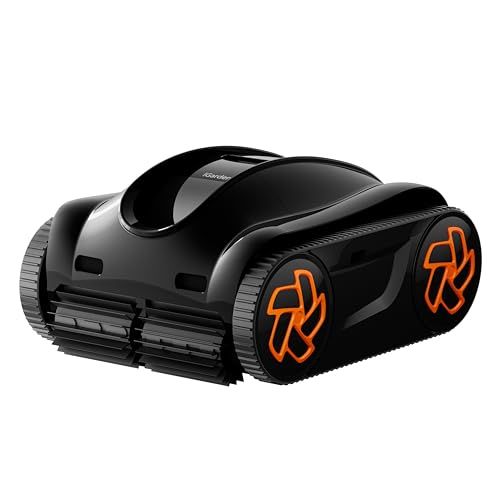
- Max Pool size: 3814 sq ft
- Debris Removal: Filter basket
- Power: 220-minute battery
- Pool Type: Above & in-ground
- Ideal For: Floors, walls, & waterline





iGarden Pool Cleaner K36
Performance, Cleaning Coverage, and Everyday Use

The iGarden Pool Cleaner K36 is designed for pool owners who want a more hands-off approach to routine cleaning without stepping up to the cost and complexity of premium, feature-heavy robotic systems. In day-to-day use, the biggest question is simple: does it reliably pick up what you actually get in your pool? The K36 generally targets the common mix of debris that most homeowners battle—fine grit, dust, sand, small leaves, and the occasional larger bits that drift in after wind or heavy use. When conditions are typical, it can meaningfully reduce the time you spend skimming and vacuuming manually, especially if your pool tends to collect settled debris on the floor.
Where the K36 shines most is consistency over time. Rather than a single “deep clean” that you hope lasts, it’s better thought of as a routine-maintenance tool that keeps the pool from reaching that point where cleaning becomes a bigger weekend project. If you run it regularly, you’ll likely notice the water looks clearer and the pool floor stays tidier between chemical maintenance cycles. That said, performance always depends on matching the cleaner to the realities of your pool: heavy leaf loads, frequent storms, or lots of nearby trees can overwhelm many mid-range cleaners, and that’s where you should set expectations accordingly.
Maneuverability and coverage are also central to satisfaction. Many pool cleaners do well in open areas but can struggle with tight corners, steps, or unusual contours. The K36 is best evaluated by how it navigates your pool’s specific geometry. If your pool is a straightforward rectangle or oval with a gently sloped floor, you’re far more likely to be happy with its ability to cover the majority of the surface area. If your pool has complex features such as deep creases, sharp transitions, or lots of built-in seating and ledges, you may find it cleans the main floor effectively but leaves certain stubborn areas for occasional touch-up. In practical terms, the K36 is most helpful when it reduces 80 to 90 percent of the routine debris burden, allowing you to treat the remaining edges and corners as quick spot-cleaning rather than a full vacuuming session.
Noise level and ease of use matter more than many buyers expect. A cleaner that performs well but is frustrating to set up, heavy to handle, or awkward to maintain can become something you run less often. The K36 aims for a straightforward user experience: get it in the water, run a cycle, remove it, empty the collected debris, and store it. If you value a cleaner you’ll actually use on schedule, convenience becomes a key part of “performance,” because the best cleaner is the one that gets used consistently.
What to Consider Before Buying (and What Matters Most)
Before purchasing the iGarden Pool Cleaner K36, users should think carefully about a few practical factors that determine whether it will be a great fit or a mild disappointment. The first factor is pool type and size. A cleaner can be excellent in a smaller pool and feel underpowered or inefficient in a larger one. Consider not just the surface area but the typical debris load your pool sees. A pool under heavy tree cover demands a different approach than a pool in an open yard that mostly collects dust and light debris. If your pool is frequently hit with leaves and seed pods, the most important compatibility factor becomes the cleaner’s ability to handle larger debris without constant interruption.
The second factor is the kind of surfaces and features your pool has. Vinyl, fiberglass, and plaster can each affect traction, and features like steps, benches, and tanning ledges can create “dead zones” for some cleaners. For many buyers, this ends up being the most important real-world factor after basic size: a cleaner that cannot effectively navigate your pool’s contours will feel like it’s missing too much, even if it technically works. If your pool has a lot of vertical surfaces you want cleaned, pay close attention to whether you’re prioritizing floor-only cleaning or expecting wall and waterline attention. Many owners assume comprehensive cleaning, but in practice some cleaners are primarily optimized for the floor. Setting expectations here will prevent frustration.
The third factor is filtration and the type of debris you want to remove. Fine silt, pollen, and dusty sediment require good filtration to be captured rather than stirred up and redistributed. If your pool often gets that “dust layer” after windy days, the most important thing to prioritize is how well the cleaner captures fine debris and how easy it is to rinse out the filter after each run. A cleaner that captures fine particles but is tedious to clean may save time in the pool but cost time at the sink. Conversely, if your main issue is occasional leaves and bugs rather than silt, you may care more about debris capacity than ultra-fine filtration.
The fourth factor is maintenance and long-term ownership costs. Hoses, brushes, filters, tracks, and seals wear over time. Even the most convenient cleaner becomes expensive if replacement parts are hard to source or if common wear items fail frequently. While it’s tempting to focus on the upfront price, the most important “hidden” consideration is how easy it will be to maintain over multiple seasons. Look for signs that routine upkeep is simple: easy access to the debris basket or filter area, parts that can be cleaned without tools, and clear instructions. Ease of storage also matters if you don’t have a dedicated equipment area; a cleaner that’s awkward to move or store can be more trouble than it’s worth.
Finally, consider how you want to integrate pool cleaning into your routine. If you want to run the cleaner often, ease of setup and cycle reliability are critical. If you only plan to run it once a week, you might prefer a stronger “catch-up” clean. The K36 is best for owners who want a dependable routine cleaner that reduces manual work significantly, but who also understand that every cleaner has edge cases where a quick manual skim or spot-clean still makes sense.
Common Questions
Does the iGarden Pool Cleaner K36 work for pools with lots of leaves? It can handle light to moderate leaf load, but if your pool regularly fills with large leaves or heavy organic debris after storms, you may need to empty the debris container more frequently and still do occasional manual removal. For heavy leaf environments, choosing a cleaner with high debris capacity becomes especially important.
Will it clean steps, ledges, and tight corners? It can improve overall cleanliness, particularly on the main floor areas, but steps and ledges are often the hardest zones for any automated cleaner to address consistently. Expect strong help on open surfaces and be prepared for occasional touch-ups in corners or around complex features.
How much maintenance does it require? Routine maintenance typically involves removing the unit, emptying collected debris, and rinsing the filter or collection area so suction and flow remain strong. Keeping it clean after each cycle tends to preserve performance and reduce the chance of clogging.
Is it easy to use for someone new to pool ownership? For most users, yes, as long as you’re comfortable with basic pool equipment handling and you follow the setup and cleaning steps consistently. New pool owners often appreciate tools that reduce the learning curve and lower the frequency of full manual vacuuming.
What is the single most important thing to check before buying? Match the cleaner to your pool’s size, surface type, and debris reality. A perfect fit on paper can still disappoint if your pool has complex contours or consistently heavy debris loads that demand a different style of cleaner.
Overall, the iGarden Pool Cleaner K36 is a practical choice for pool owners who want reliable, repeatable cleaning that reduces the weekly workload and keeps the pool looking consistently cared for. If you prioritize matching it to your pool’s shape and typical debris load, and you’re willing to do simple after-cycle maintenance, it can be a worthwhile upgrade from manual cleaning and an effective way to keep everyday debris under control.