











We also considered 10 others:


Our Top Choice
The order above is not editorial opinion, and it is not paid placement. It comes from what shoppers across our network actually do - which apple charging stations they compare, and which they ultimately buy. We re-rank as new data comes in, so the long-term favorites have to keep earning their spot against new entrants. The full method, including how we make money.
Apple Charging Stations Buyer's Guide
Apple charging stations are a tradeoff between one tidy bedside or desk hub and the compatibility limits of magnetic wireless charging, watch modules, and earbud cases. The sharpest buying concerns are whether all of your devices charge at the same time without alignment fuss, and whether the station stays compact, stable, and fast enough for daily use.
Device Fit
A charging station is only useful if each charging spot matches the devices and cases you actually use. In this category, small compatibility gaps can turn a tidy 3-in-1 dock into a stand that only charges one or two items reliably.
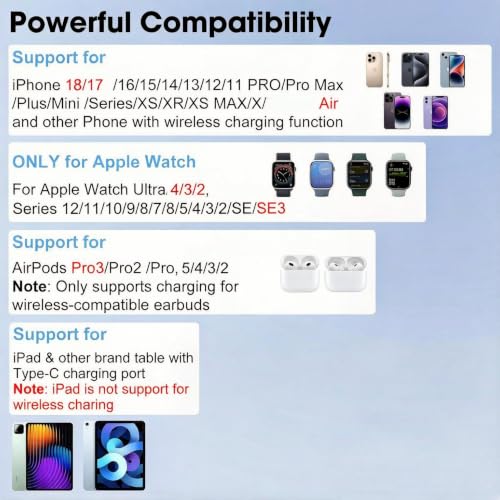
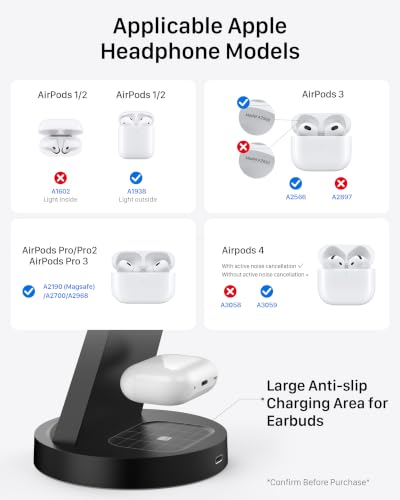
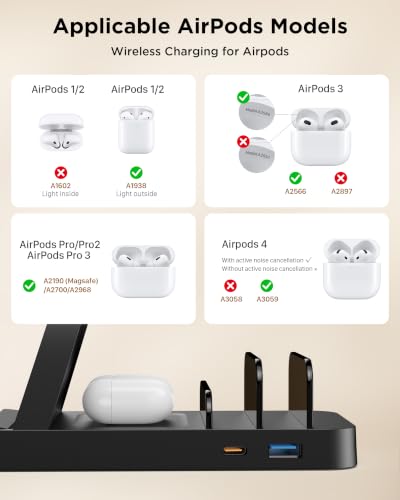
Choose a station that explicitly supports all three device roles you need: a magnetic phone pad for compatible phones, a watch charging module, and a wireless earbud pad that matches your case type. Check whether the watch module is built in or requires you to insert your own puck, and avoid vague “3-in-1” listings that do not state which earbud cases or phone charging standards they support. Owner feedback strongly favors stations that can charge a phone, watch, and compatible earbuds together in one simple dock, but mixed reports show that day-to-day results depend on actual device compatibility rather than the number of pads alone.
Power Speed
Multi-device stations divide power across several coils and modules, so speed can drop when everything charges at once. Reliable overnight charging and dependable top-ups matter more than a single peak-speed claim.
Look for clear output ratings for each charging position, not just one total wattage number, and make sure the included or recommended wall adapter can supply enough power when all pads are occupied. If you expect true fast charging, verify support for the relevant magnetic wireless standard and fast watch charging rather than relying on marketing language. Owners often report quick, consistent charging as a major strength, but others describe some stations as merely “quick enough” rather than true fast charging, so advertised capability should be checked against the power specs and your nightly charging habits.
Magnetic Hold
Magnetic alignment affects both convenience and charging reliability because a slightly misaligned phone can charge slowly or not at all. The case is often the hidden variable, so the best dock for one setup may feel weak with another.
For magnetic phone charging, confirm that your phone supports magnetic alignment or that your case has a proper magnetic ring; thick, wallet, metal, or non-magnetic cases can weaken attachment or stop alignment. A good station should hold the phone securely at the intended viewing angles without sliding, buzzing, or requiring careful repositioning every time. Owner sentiment highlights strong magnetic attachment and secure angled viewing as a clear positive, while also warning that older phones or non-magnetic cases may not attach as expected.
Travel Footprint
Apple-device charging often means carrying separate cables and adapters unless the station is genuinely portable. A compact station should save space without becoming unstable, awkward to unfold, or dependent on loose accessories.
If the station will move between home, office, and trips, prioritize a fold-flat hinge, low weight, one-cable operation, and a compact shape that protects the watch and phone charging areas in a bag. For a nightstand, also consider whether the folded or upright footprint leaves room for glasses, a lamp, or other bedside items. Owners repeatedly praise foldable, lightweight, compact designs because they pack flat, reduce cable clutter, and work well for both travel and bedside use.
Build Stability
A charging station is handled every day, so weak hinges, light bases, and poor alignment can become frustrating quickly. Stable construction also helps devices stay seated correctly, which protects charging consistency.
Check hinge stiffness, base stability, non-slip feet, coil housings, and cable strain relief, especially if the dock will be folded often or used one-handed at night. Avoid flimsy stands that tip when removing a phone or expose the watch module to twisting stress. Owners describe well-built stations as dependable and useful for keeping desks and nightstands organized, with solid construction supporting daily reliability.
Total Value
The best value in this category comes from reducing clutter without creating compatibility or speed compromises. Comparing only the upfront cost misses extras such as adapters, cables, case changes, and the reliability of charging all devices together.
Judge value by the complete kit: whether it includes the right wall adapter and cable, whether every pad works with your devices, and whether it replaces enough separate chargers to simplify your setup. A cheap-looking station that needs extra accessories or cannot charge through your case may be poor value even if the upfront cost seems attractive. Owner feedback shows value for money is a common positive when a station works well for the setup, especially when the charging performance and convenience match expectations.
1,000,000+ shoppers use Buyer's Guide every week to find the best products and services online.

Helping millions of users make smarter purchases online.


