
Join the millions that have trusted BuyersGuide.org to help them make smarter buying decisions. Let our independent expert reviews and data-driven shopping recommendations help you find the one that's right for you.





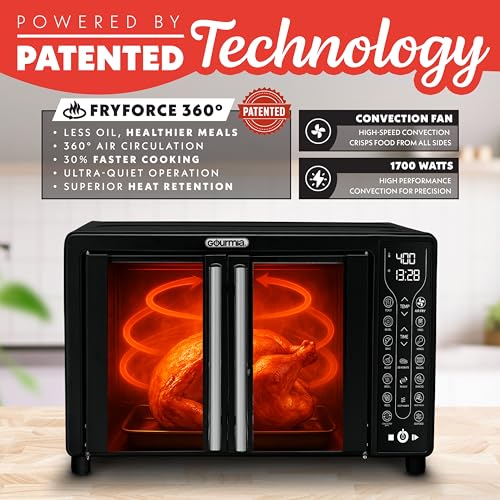




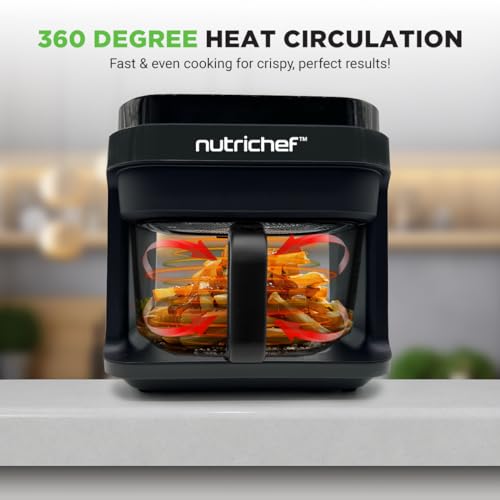
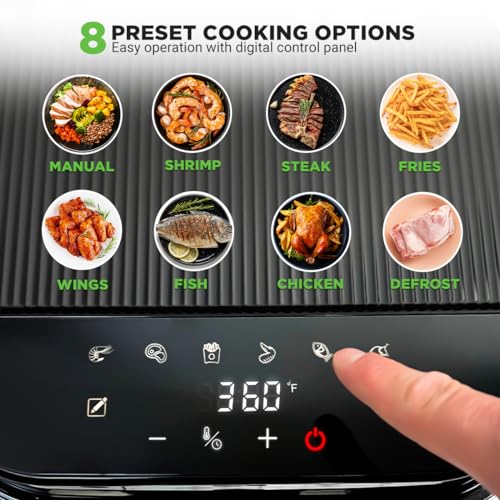

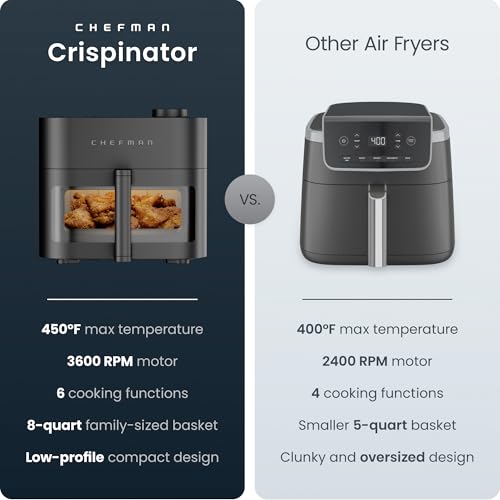





We also considered 10 others:


Our Top Choice
Compare Features


Why These Features Matter:
Air fryers are, essentially, countertop convection ovens with better PR. The good ones don’t just make fries vaguely crisp — they make Tuesday dinner feel less like a negotiation. The bad ones make your kitchen smell like hot plastic and give you one more awkward appliance to Tetris into a cabinet that already hates you.
I’ve spent an embarrassing amount of time reading owner reviews (the unhinged ones, too), asking friends what they actually use their air fryer for after the honeymoon period, and noticing the same truth: the “best” air fryer is the one you’ll use on a weeknight without resenting it. That comes down to a handful of features that sound boring until you live with them.
Basket vs. Oven-Style: Choose Your Daily Annoyance
Most people end up in one of two camps:
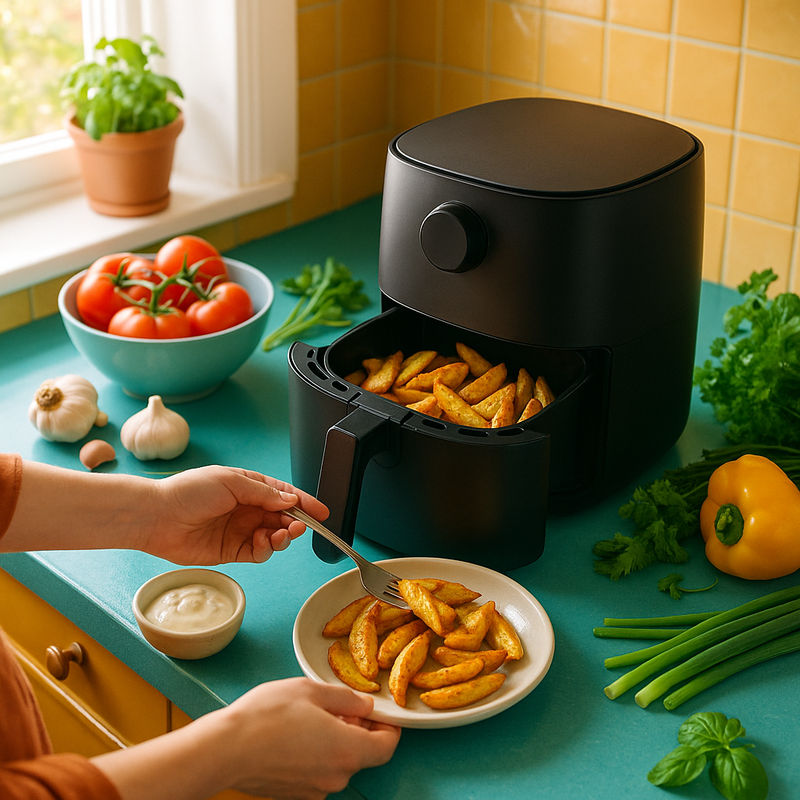
- Basket-style air fryers are the weeknight workhorses. They heat fast, crisp well, and don’t ask for much brainpower. You shake, you flip, you move on with your life.
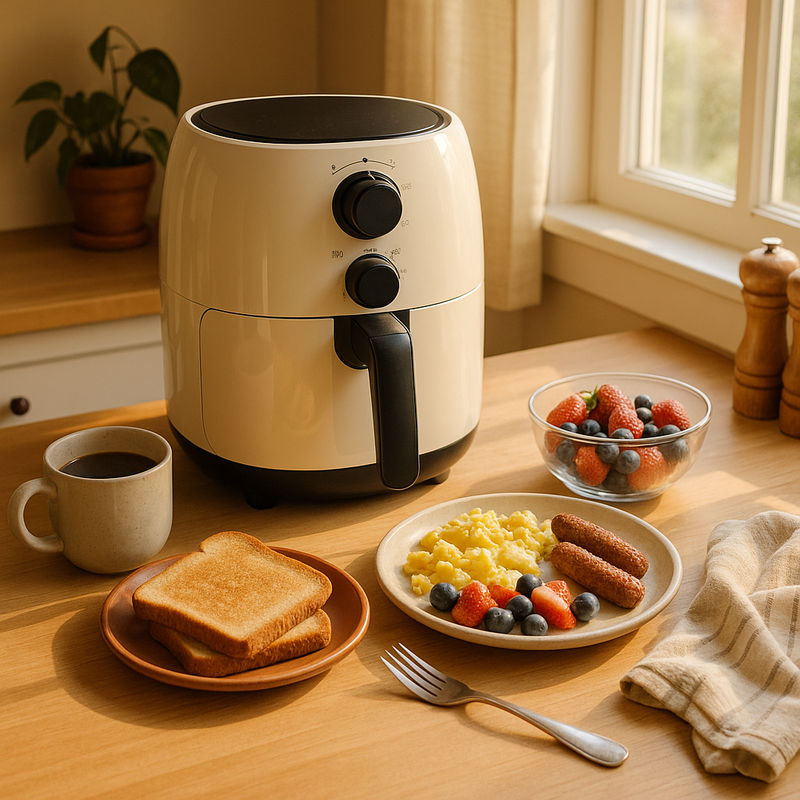
- Oven/toaster-oven-style air fryers are nicer if you cook for more than one person or you’re trying to replace multiple appliances. They’re also… more to clean, more to store, and more likely to become a permanent fixture on your counter (which is either fine or emotionally devastating, depending on your kitchen).
If you’re the kind of person who wants exactly one appliance to do six things, the oven style will tempt you. If you want something you can run while you answer emails and pretend you’re “meal prepping,” basket style wins on pure frictionlessness.
Capacity Isn’t a Number — It’s a Lifestyle
Capacity is where marketing and real life part ways. A big capacity sounds responsible until you realize you’ve bought a small dorm fridge that only cooks in a single layer if you want actual crispness.
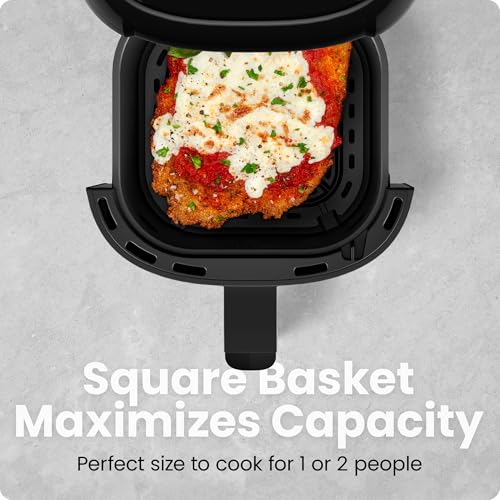
- Cooking for one or two: A compact-to-medium basket is usually plenty — and it preheats faster, which matters more than people admit.
- Cooking for a family: Look for a wider basket or a dual-zone setup. Tall baskets can be deceptively “large” but still force you into stacking, which leads to soggy middles and resentful flipping.
The best capacity is the one that fits your most common meal, not your most ambitious Sunday.
Crispness Is Mostly About Airflow (And Not Overcrowding)
Everyone says they want “crispy.” What they really want is: browned edges, no limp spots, and a texture that doesn’t scream “microwave.” That comes down to two things: strong airflow and space between pieces.
- Wide baskets tend to crisp more evenly because food can spread out.
- Racks and trays (in oven-style models) can work beautifully, but only if you actually rotate trays and accept that you now have opinions about hot spots.
If you’re hoping to dump in a whole bag of frozen fries and walk away, you can — you’ll just need to shake the basket like you mean it. If “shaking” feels like one more chore, prioritize a design that makes turning food easy (and doesn’t require oven mitt origami).
Controls: If It Makes You Feel Dumb, You Won’t Use It
Touchscreens look sleek until your fingers are slightly greasy and the panel decides you’ve asked it to start a nuclear program. Dials look less “design-forward” but tend to be more forgiving when you’re hungry and impatient.
- Simple presets are nice if they’re honest (not every food needs its own button).
- Manual control matters more: temperature and time you can change quickly, without beeping at you like a smoke detector with opinions.
The ideal interface is the one you can operate while holding tongs in one hand and a child’s lost shoe in the other.
Noise: The Quiet Ones Feel Expensive (Even If They Aren’t)
Air fryers are fans and heating elements. They will make noise. But there’s a difference between a steady, low whoosh and a high-pitched whine that makes you question your choices.
- Lower, steadier fan sounds fade into the background.
- Rattly baskets and buzzy fans feel cheap fast — especially in open-plan apartments where the kitchen is also your office, dining room, and existential crisis zone.
If you’re sensitive to noise, pay attention to reviews that mention pitch, not just “loud.”
Cleaning: The Thing That Decides If This Becomes a Habit
A truly great air fryer is easy to clean in a way that makes you smug. A bad one is a grease-scented chore that lives in your sink until you “get to it,” which is never.
- Nonstick baskets are convenient, but they vary wildly in durability. If you’re an aggressive scrubber, you’ll eventually learn regret.
- Dishwasher-safe parts can be helpful, but only if the shape actually fits your dishwasher without playing utensil Jenga.
- Crumb trays and extra racks (common in oven-style) add performance, and also add stuff to wash. There’s no free lunch — only extra trays.
If it takes longer to clean than it took to cook, you’ll start ordering takeout “just this once” and suddenly it’s been three weeks.
Smell, Smoke, and the Great Plastic Question
A faint “new appliance” smell at first use is normal. A persistent plastic odor that lingers in your fries is not. Some air fryers off-gas more than others; some people are more sensitive. Either way, you want a model that stops smelling like a factory after a couple of runs.
- Grease management matters: poor airflow plus drippy food can lead to smoky surprises.
- If you cook bacon often, pick something that’s easy to degrease and doesn’t let fat pool against the heating element.
If you live in a small space, smells don’t stay politely contained. They move in, unpack, and become your new personality.
Storage and Counter Life: Be Honest About Your Kitchen
Air fryers are bulky in a way that defies logic. Even the “compact” ones tend to have big footprints because physics, airflow, and marketing photos.
- If you’ll store it: weight and awkward handles matter. Some are deceptively heavy, and the cord always seems 20% shorter than you want.
- If it’ll live out: choose something you don’t hate looking at. You can pretend aesthetics don’t matter, but you will not enjoy staring at a spaceship-shaped appliance next to your nice olive oil.
Also: measure the height under your cabinets. People forget. Then they’re stuck dragging the air fryer forward every time like it’s a stubborn suitcase.
Heat, Speed, and the Preheat Myth
Air fryers are beloved because they’re fast — but speed depends on how quickly they heat and how consistently they hold temperature once you add cold food.
- Fast preheat is nice, but some models don’t need much preheating at all for most frozen foods.
- Recovery time matters more: when you open the basket to shake, does it bounce back quickly or sulk?
In real life, “fast” means you can start cooking after you’ve already realized you’re hungry. That’s the magic.
Little Details That Separate “Fine” From “I Use This Constantly”
- A basket that slides smoothly, not one that feels like it’s catching on something every time.
- A handle that stays comfortable even when the fryer’s been running — and doesn’t feel loose after two months.
- Clear viewing (window or light) if you’re a checker. If not, it’s just another surface to clean.
- A beep that isn’t hostile. Some air fryers sound like they’re scolding you for daring to be alive.
Honest Caveats: Air Fryers Are Not Tiny Miracles
A few truths, delivered gently:
- You still have to flip or shake for truly even browning. Yes, even with fancy circulation.
- They don’t replace deep frying if your heart is set on shatteringly crisp battered food. Some batters do fine; others become sad jackets.
- They can dry out lean proteins if you treat them like set-it-and-forget-it ovens. Chicken breast will betray you quickly.
- They’re not always quieter than an oven — they’re just faster, so the noise ends sooner.
How to Pick the Right Air Fryer for You (A Practical Cheat Sheet)
- If you want low effort and high use: go basket-style, medium capacity, simple controls, easy-clean basket.
- If you cook for 3–5 people nightly: prioritize width and/or dual zones over “tall” capacity claims.
- If you hate cleaning: fewer parts, fewer racks, fewer crevices. Nonstick that reviewers say holds up.
- If your kitchen is tiny: measure your counter depth and cabinet clearance; prioritize lighter weight and a cord that reaches without gymnastics.
- If you care about aesthetics: choose something you’d leave out without apologizing for it.
The Bottom Line
The best air fryer isn’t the one with the most buttons or the loudest fan promising “extra crisp.” It’s the one that fits your kitchen, your tolerance for cleanup, and the way you actually eat: lots of small, repeatable meals that need to be hot and good now.
Aim for strong airflow, a shape that encourages single-layer cooking, controls you won’t curse at, and cleaning that won’t ruin your evening. Accept that you will occasionally have to shake the basket like you’re making a point. And if an air fryer can deliver reliably crisp tofu, reheat pizza without turning it into cardboard, and make frozen dumplings feel intentional — it’s earned its counter space.
1,300+ shoppers have used Buyer's Guide in the last week to help find the best Air Fryers.

Helping millions of users make smarter purchases online.

