













We also considered 10 others:


Our Top Choice
Compare Features


The order above is not editorial opinion, and it is not paid placement. It comes from what shoppers across our network actually do - which air fryers for family of 4 they compare, and which they ultimately buy. We re-rank as new data comes in, so the long-term favorites have to keep earning their spot against new entrants. The full method, including how we make money.
Air Fryers for a Family of 4 Buyer's Guide
For a family of 4, the core tradeoff is capacity versus countertop bulk: the air fryer must hold enough food for dinner without forcing so many batches that the speed advantage disappears. The sharpest concerns are usable cooking area, not just quart rating, and whether the unit can handle mixed meals—mains, sides, frozen foods, and leftovers—cleanly and consistently on busy weeknights.
Performance
You want an air fryer that cooks food evenly, crisps the outside without drying out the inside, and delivers reliable heat across everyday foods like fries, chicken, vegetables, and frozen snacks. Look for strong, consistent cooking performance with minimal shaking or rearranging required, and watch out for models that brown unevenly, run too hot or too cool, or produce crisp-looking food that is still undercooked inside.
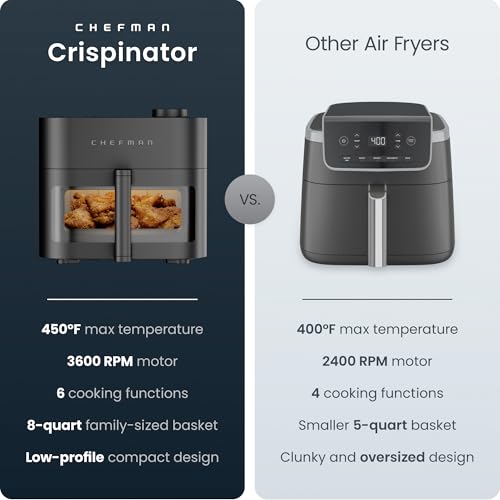
For a family of 4, prioritize an air fryer that can cook a real entrée portion in one pass: a wide basket or dual-zone layout is often more useful than a tall narrow basket because food needs space for airflow, not just stated quart capacity. Look for strong high-heat performance, even circulation, and the ability to handle common family staples like wings, frozen foods, vegetables, meat portions, and a small whole chicken without constant shaking or rotating. Owner feedback supports this focus: the best-liked models are praised for fast, crisp, evenly cooked results, especially on frozen foods, wings, vegetables, meats, whole chickens, and full-meal cooking where separate foods finish together.
Usability
Usability matters because an air fryer you can operate quickly and confidently is more likely to fit into everyday cooking. Look for clear controls, readable labels, simple presets, and a basket or drawer that’s easy to insert, remove, and clean. Watch out for cramped displays, confusing button sequences, or settings that require frequent manual checking to get consistent results.
For weeknight family use, choose controls that let you start dinner quickly without digging through an app or complex presets; clear temperature/time controls, readable labels, and easy basket switching matter more than a long feature list. If choosing a dual-basket or oven-style unit, check that timing sync features are simple enough to use while managing multiple foods for kids and adults at once. Owners consistently value straightforward controls, easy setup, simple mode switching, and appliances they reach for constantly rather than leave unused, which is especially important when cooking several nights a week for four people.
Build
Build quality matters because an air fryer is exposed to repeated heat cycles, handling, and cleaning, so sturdier materials and solid assembly can help it last longer and feel safer to use. Look for a stable body, a basket or drawer that slides smoothly without wobbling, durable nonstick or cooking surfaces, and controls that feel secure; watch out for flimsy plastic, loose handles, rattling parts, or coatings that seem prone to scratching or peeling.
For a family of 4, build quality should be judged by daily-use stress: sturdy basket rails, a handle that does not flex when loaded, a drawer that seats cleanly, durable nonstick coating, and a stable body that will not shift when pulling out a heavy basket. Avoid flimsy trays, loose racks, or lightweight doors on oven-style models, because family portions mean more weight, more heat cycles, and more frequent washing. Owner sentiment aligns with this: well-regarded units are described as reliable, high-quality countertop appliances suited to everyday cooking, with solid day-to-day performance and enough versatility to replace multiple tools.
Cleaning
You’ll clean an air fryer often, so the basket, tray, and interior surfaces should be easy to wipe down and free of tight corners where grease and crumbs collect. Look for removable, dishwasher-safe parts and a durable nonstick coating, but watch out for designs with mesh, exposed seams, or accessories that require extra scrubbing.
For a family of 4, cleaning is not a minor convenience—it determines whether the air fryer actually gets used after saucy wings, breaded foods, vegetables, and multiple batches. Look for dishwasher-safe baskets and crisper plates, removable racks or trays with minimal crevices, and a nonstick surface that can be wiped without aggressive scrubbing; if using liners, make sure they do not block airflow or touch the heating element. Owners repeatedly cite low-effort cleanup as a major reason they use these appliances often, especially when nonstick baskets, removable crisper plates, dishwasher-safe parts, or silicone liners make weeknight maintenance easier.
Size
Size matters because an air fryer has to fit both your counter and the way you cook. Look at the countertop footprint as well as the stated basket capacity, and remember that usable space can be smaller than it sounds if food needs room for airflow. If you cook for one or two, a compact model may be easier to store, while larger households should watch for enough capacity to avoid cooking in multiple batches.
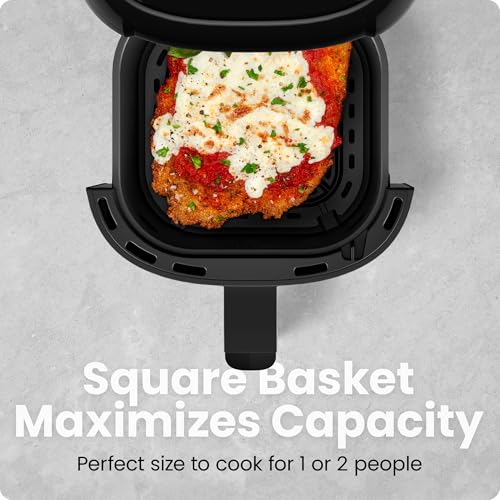
For a true family of 4, do not buy only by quart rating: check the usable floor area and whether it can fit four servings of chicken, fries, vegetables, or leftovers without piling food too deep. A roughly mid-to-large basket, dual baskets, or a vertical high-capacity design can work, but compact 4-quart units may require batch cooking for full family dinners, while very large oven-style units need enough counter clearance and storage space. Owner feedback reflects this tradeoff: smaller units are loved for tight kitchens and quick meals, while larger capacities and dual-basket layouts are appreciated for family meals, meal prep, and reducing repeated batches.
Speed
Speed matters because an air fryer that preheats quickly and cooks evenly can get weeknight meals or snacks on the table with less waiting. Look for clear preheat guidance, strong airflow, and reliable cooking times, but watch out for models that are fast only with small portions or require extra shaking and batch cooking that adds time overall.
For a family of 4, speed should mean finishing the whole meal faster, not just cooking one small basket quickly. Look for fast preheat, enough capacity to avoid repeated batches, and—if you often cook mains and sides together—dual-zone timing or an oven-style layout that lets different foods finish at the same time. Owners strongly support this advantage, praising air fryers for quick, crisp results compared with a full oven, fast reheating and roasting, and time savings that make weeknight meals easier, especially when capacity or synchronized cooking prevents batch after batch.
1,000,000+ shoppers use Buyer's Guide every week to find the best products and services online.

Helping millions of users make smarter purchases online.


