







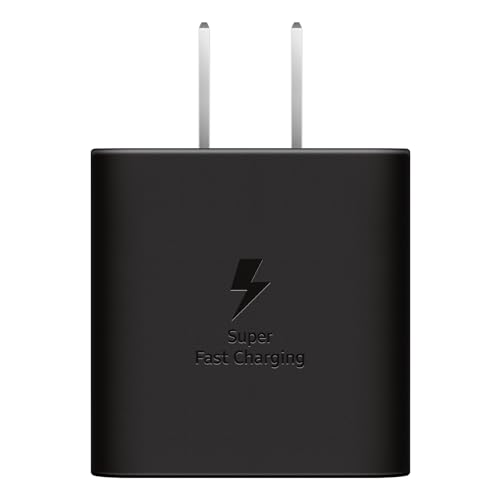


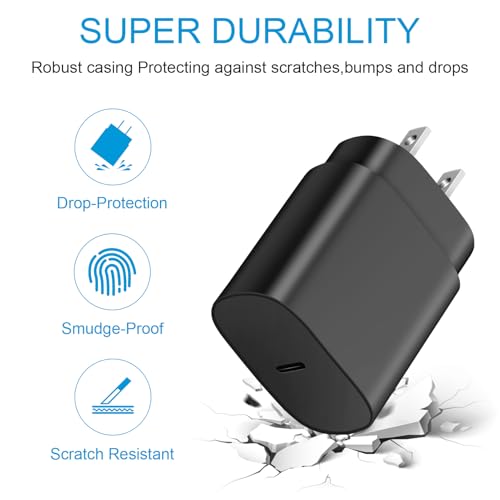





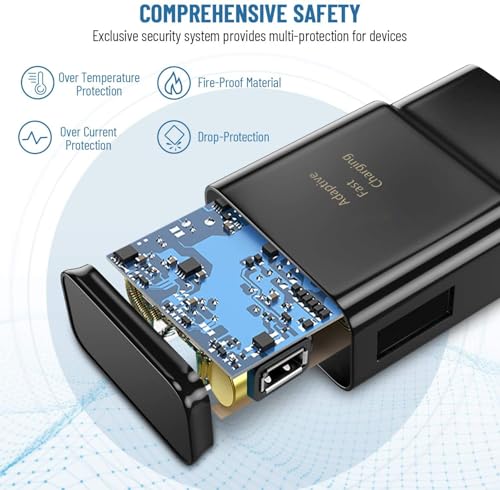
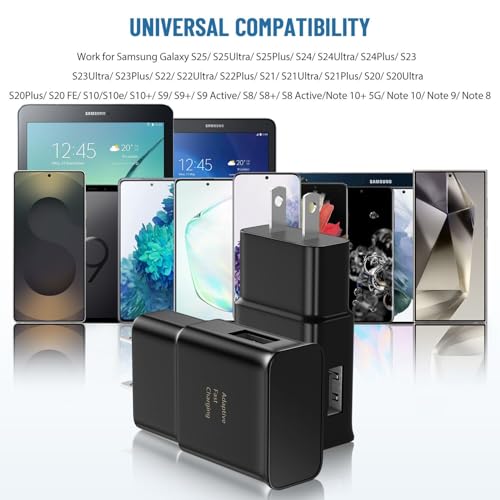

We also considered 10 others:


Our Top Choice
The order above is not editorial opinion, and it is not paid placement. It comes from what shoppers across our network actually do - which samsung chargers they compare, and which they ultimately buy. We re-rank as new data comes in, so the long-term favorites have to keep earning their spot against new entrants. The full method, including how we make money.
Samsung Chargers Buyer's Guide
Samsung chargers are really a three-part decision: the wall block, the USB-C fast-charge protocol, and the cable all have to line up before a phone will charge at its highest speed. The sharpest tradeoff is chasing maximum wattage and bundled value without ending up with weak cables, loose connections, or a charger that drops out of super-fast charging over time.
Fast Charging
In this category, speed depends on more than the watt number printed on the charger. The charger, cable, and phone must all support the right fast-charge standard, or the phone will fall back to ordinary charging even if the hardware looks powerful.
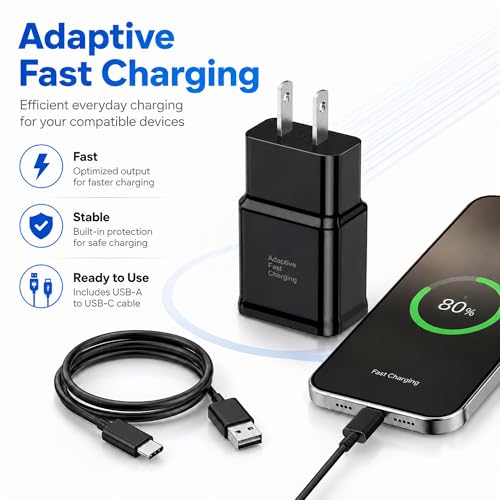
For Samsung super-fast charging, look for USB-C Power Delivery with PPS support, not just generic “fast charge” wording. For many phones, a 25W PPS charger is enough; for models that support the higher tier, a 45W PPS charger usually also needs a 5A/e-marked USB-C cable to reach peak speed. Avoid chargers that advertise high wattage but do not clearly state PPS output ranges, because they may charge quickly on some devices yet miss the Samsung super-fast indicator. Owner sentiment strongly supports prioritizing this: the best-liked chargers are repeatedly praised for genuinely fast charging, living up to “super fast” claims, topping up phones quickly, and feeling like a real upgrade over standard phone chargers. The main caution is that some units reportedly stop delivering super-fast charging after a couple of months, so speed should be considered alongside long-term reliability.
Device Fit
A charger can be technically capable and still be the wrong match for a particular phone, tablet, or accessory. Compatibility matters because fast charging is negotiated between the device, charger, and cable every time it is plugged in.
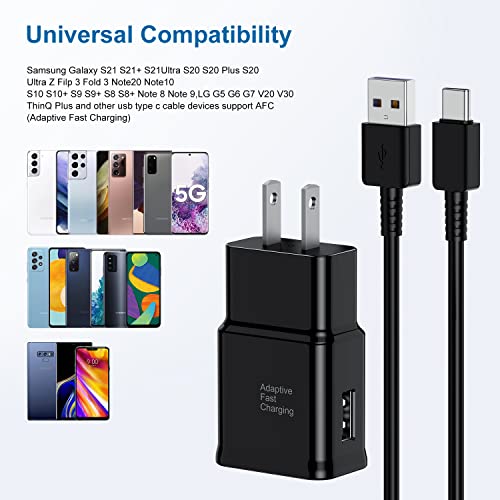
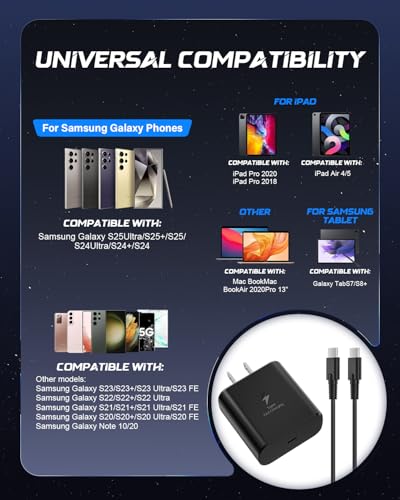
Check your exact device’s supported charging tier before buying: some Samsung phones cannot use the full output of a 45W charger, while others need the higher-output PPS profile and correct cable to show the fastest mode. If you also charge earbuds, tablets, handheld devices, or laptops, confirm the charger supports safe lower-power negotiation as well as higher USB-C PD output. Be especially cautious with newer or less common models, where “works with Samsung” may not guarantee the fastest available mode. Owner feedback says compatibility is generally good with Samsung phones, but it is more mixed for some newer or specific models. Dual-port designs are also appreciated when they reliably charge two Type-C devices at once, though the output may be shared when both ports are in use.
Cable Setup
For USB-C fast charging, the cable is part of the charging system, not just an accessory. Length, connector fit, and current rating can affect convenience, durability, and whether the charger reaches its advertised speed.
For bedside, couch, car-seat-adjacent, or travel use, choose a cable length that matches the outlet location: 6 to 6.6 feet is often the practical middle ground, while 10 feet is useful when outlets are far away but can add bulk and more strain at the connector. For 45W Samsung super-fast charging, verify that the included cable is rated for the needed current, especially if the set claims maximum speed. Avoid thin, mystery-rated cables and loose USB-C connections, since a poor fit can interrupt charging or cause the cable to fall out of the adapter. Owner sentiment strongly favors longer cords: 10-foot, 6.6-foot, and 6-foot options are repeatedly called convenient for bedsides, bags, travel, and rooms with distant outlets. The key caveat is a reported loose cable connection in some cases, plus some uncertainty about thinner cables holding up over time.
Ports & Travel
Many shoppers in this niche need more than one charging point because phones, tablets, watches, and travel kits all compete for outlets. Port count and bundled extras are useful only if each port still supplies the right charging profile for the device being used.
If you charge multiple Samsung phones or Type-C devices, consider whether you need several single-port chargers, a dual-port charger, or a travel bundle with extra cables. For dual-port chargers, check the per-port output when both ports are occupied; some chargers advertise a high total wattage but reduce each device to slower charging under shared load. For travel, compact blocks and a spare cable matter, but so does reliable high-output PD/PPS support if you plan to top up a phone quickly or occasionally power a USB-C laptop. Owner sentiment supports this use case: multi-packs are seen as useful for households and travel setups, assorted cable lengths help across rooms and bags, and dual-port designs are liked when they reliably charge two phones or Type-C devices at the same time. Some buyers also value sets that can handle travel use with a larger USB-C device, but reliability remains important when a charger is part of a travel kit.
Reliability
Chargers are safety-critical electronics that may run near beds, bags, and outlets for hours. Strong construction, stable output, and protection circuitry reduce the chance of early failure, overheating, or inconsistent charging.
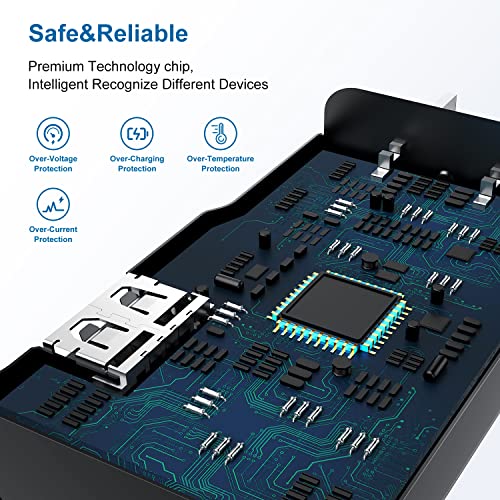
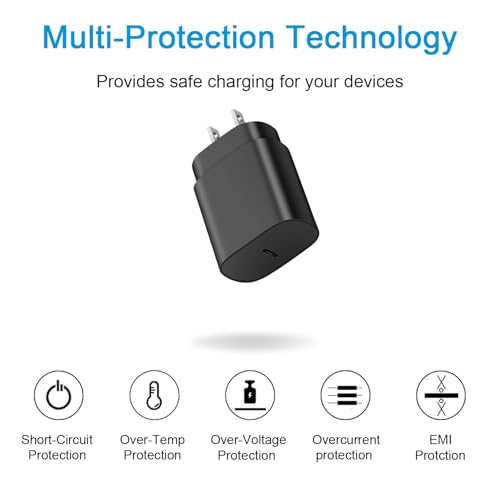
Look for a solid-feeling wall block, reinforced cable ends, cleanly fitting USB-C ports, and stated protections against over-current, over-voltage, short circuit, and overheating. A good Samsung charger should stay reasonably cool under normal fast charging and continue negotiating the same fast mode over months of daily use. Be cautious with very lightweight blocks, flimsy cables, or bundles where one charger in the set seems inconsistent, because multi-packs can hide uneven unit quality. Owner feedback is positive on overall construction, with many buyers describing charging blocks and cables as solid, well made, and able to hold up under everyday use. At the same time, durability is the main uncertainty: some chargers fail sooner than expected, some arrive not working, and some stop super-fast charging after a couple of months.
Bundle Value
Value in this category comes from getting the right charger and cable combination, not simply the most pieces in the box. A bundle is only a good deal if every included block and cable supports the charging mode and durability you need.
Judge value by the full usable setup: wall block wattage, PPS support, cable rating, cable length, number of ports, and whether the bundle gives you spares for home, office, bedside, or travel. A cheap-looking kit with under-rated cables may cost less upfront but fail to deliver Samsung super-fast charging, while a well-matched block-and-cable set can save the hassle of buying compatible parts separately. If buying a two-pack or multi-pack, make sure each included charger has the same claimed specs and inspect both promptly for defects. Owner sentiment repeatedly frames bundled chargers as strong value when they include both charging blocks and USB-C cables that work well for daily use. Buyers especially like two-packs for households and travel, and many describe quality-plus-value as a reason the chargers are easy to recommend.
1,000,000+ shoppers use Buyer's Guide every week to find the best products and services online.

Helping millions of users make smarter purchases online.


