















We also considered 10 others:


Our Top Choice
The order above is not editorial opinion, and it is not paid placement. It comes from what shoppers across our network actually do - which pla filament they compare, and which they ultimately buy. We re-rank as new data comes in, so the long-term favorites have to keep earning their spot against new entrants. The full method, including how we make money.
PLA Filament Buyer's Guide
PLA filament is the default choice for many FDM printers because it is easy to print, colorful, and low-warp, but the real tradeoff is between effortless reliability and specialty looks. Careful shoppers should focus on extrusion consistency, spool feeding, moisture-related brittleness, and whether the finish or bundle format fits the way they actually print.
Print Consistency
PLA is often bought for easy printing, but not every roll behaves the same once it is running for hours. Consistent diameter, clean material, and predictable melt flow reduce failed prints and make slicer profiles reusable across projects. This matters most for long parts, batches, and detailed models where small extrusion changes become visible.
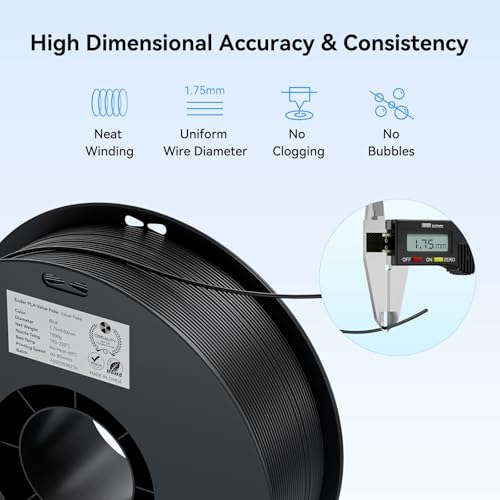
Start by checking the basics that keep PLA predictable: the filament diameter must match your printer, the strand should be round and uniform, and the maker should publish a tight diameter tolerance. Inconsistent PLA shows up as under-extrusion, rough walls, zits, weak layers, or random failures on long prints, even when the slicer profile looks correct. For everyday printing, favor filament known for smooth extrusion, clean layers, minimal warping, and consistent behavior from spool to spool; owner feedback strongly favors rolls that print cleanly over long jobs and need little special tuning, while mixed reports show that some rolls still require dialing in before results become dependable.
Feed Reliability
PLA failures are often mechanical before they are material failures: a crossed winding, tight spool path, or draggy holder can stop a print even if the filament itself is good. Reliable feeding is especially important for overnight prints, multi-spool projects, and small printers with tighter filament paths. A filament that unwinds cleanly reduces jams, grinding, and mid-print pauses.
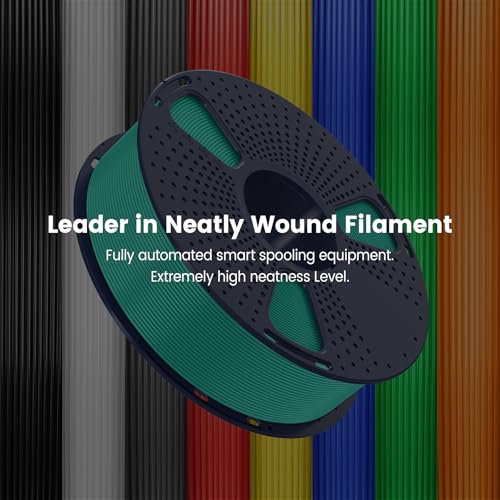
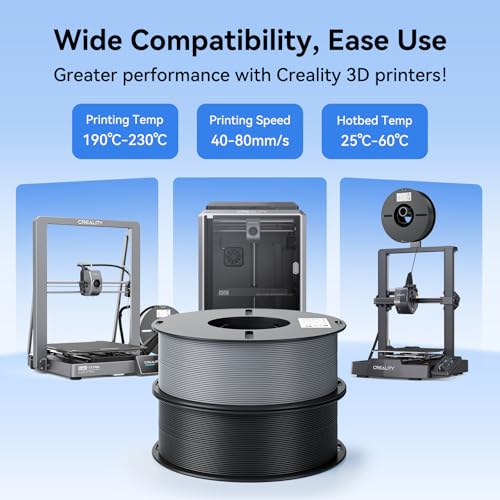
Look closely at spool winding, hub size, and printer compatibility before treating any PLA as a safe long-print choice. A good spool should unwind smoothly without crossed loops, fit your spool holder or enclosed feeder path, and feed without sharp bends that can drag on compact or direct-drive machines. Avoid rolls with reports of winding overlaps, recurring feed interruptions, or clogging; owner sentiment repeatedly praises smooth, tangle-free feeding and clean extrusion, but also flags tangling, clogs, and nozzle clogging as the specific failures that can ruin otherwise good filament.
Dryness & Handling
PLA is easier to print than many materials, but it can still degrade with poor storage and handling. Brittle filament is frustrating because it may break before the printer can even complete a job. Good packaging and dry storage help preserve consistent extrusion and reduce troubleshooting.
Choose PLA that arrives well sealed, with desiccant and packaging that protects the roll until use, then store opened spools in a dry box or sealed bag if they will sit for more than a short period. PLA that has absorbed moisture or become brittle can snap in the extruder path, pop during extrusion, string more, or clog the nozzle after retractions. Owner feedback specifically calls brittleness a watch-out, including filament breaking during use and some rolls needing drying before they print reliably, so handling and storage should be part of the buying decision rather than an afterthought.
Adhesion Window
PLA is known for low warping, but the first layer still determines whether the print survives. Adhesion depends on filament formulation, bed surface, temperature, cooling, and calibration working together. A wider adhesion window makes the filament easier to use across different printers and build plates.
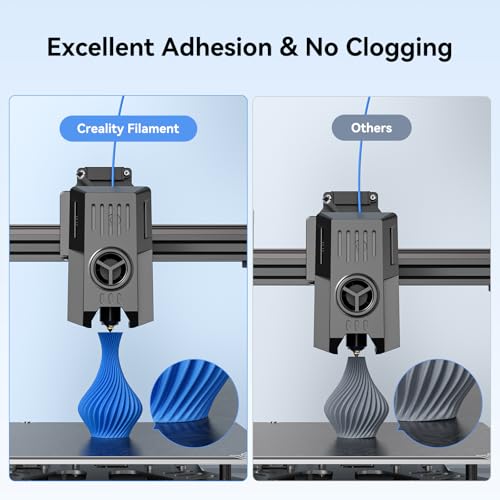
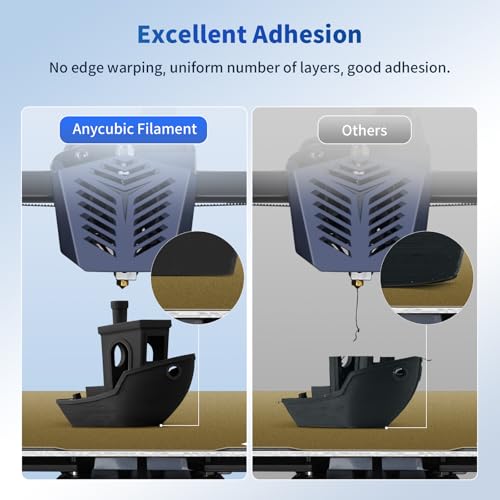
Buy PLA that matches your bed surface and tuning tolerance: smooth PEI, textured PEI, glass, coated plates, and flexible sheets can all prefer slightly different bed temperatures, first-layer squish, and cooling behavior. Good PLA should stick during printing but release without tearing the surface once cool; poor adhesion causes lifted corners, shifted parts, elephant-foot overcompensation, or failed first layers. Sentiment shows adhesion can be excellent when dialed in, but it is more mixed than basic extrusion quality, with some buyers needing temperature tweaks, bed setup changes, or slower speeds to avoid sticking issues.
Finish & Color
PLA is often chosen as much for appearance as for function. The same model can look very different in matte, silk, sparkle, translucent, or color-shift material. Specialty finishes can improve the look of decorative prints, but they may require more tuning than plain solid colors.
Pick the finish for the actual object you are printing: matte or darker sparkle can hide layer lines, silk and dual-color PLA make small display pieces pop, and translucent PLA is usually more light-catching than optically clear. Check whether glitter, filled, silk, or color-shift blends need slower speeds, a larger nozzle, or more careful temperature tuning, because specialty appearances can trade off against ease of printing or fine detail. Owner sentiment strongly supports color and appearance as major differentiators, with praise for vivid shifts, shiny finishes, darker sparkle that hides layers, and clean uniform colors, while also noting that transparency expectations and color-transition consistency can vary.
Usable Value
PLA is a consumable, so small reliability differences matter over many prints. The best value comes from filament that produces successful parts consistently, not from material that needs constant troubleshooting. For routine prototypes, fixtures, and batches, repeatability is often more important than novelty.
Judge value by usable meters of successful printing, not just how many spools are in the box. Frequent printers should prioritize repeatable quality, consistent color, reliable winding, and easy reordering of the same material, because a cheap roll that causes failed jobs wastes time, filament, and wear on the printer. Owner sentiment repeatedly praises multi-spool and bulk buying when the filament remains dependable across full spools, but the strongest value signals are tied to reliability, clean output, and regular-use consistency rather than volume alone.
1,000,000+ shoppers use Buyer's Guide every week to find the best products and services online.

Helping millions of users make smarter purchases online.


