

The LG OLED C5 TV is overwhelmingly praised for its sharp, realistic picture, rich colors, and impressive 4K performance even with lower-quality video.
Setup and everyday use are described as easy, fast, and user-friendly, making the TV feel like a smooth upgrade from older models.
The remote gets split reactions because some like its pointer-style controls and scroll wheel, while others need time to learn LG’s smaller buttons and symbols.
The LG OLED C5 TV is overwhelmingly praised for its sharp, realistic picture, rich colors, and impressive 4K performance even with lower-quality video.
Setup and everyday use are described as easy, fast, and user-friendly, making the TV feel like a smooth upgrade from older models.
The remote gets split reactions because some like its pointer-style controls and scroll wheel, while others need time to learn LG’s smaller buttons and symbols.


The LG OLED C5 TV is overwhelmingly praised for its sharp, realistic picture, rich colors, and impressive 4K performance even with lower-quality video.
Setup and everyday use are described as easy, fast, and user-friendly, making the TV feel like a smooth upgrade from older models.
The remote gets split reactions because some like its pointer-style controls and scroll wheel, while others need time to learn LG’s smaller buttons and symbols.


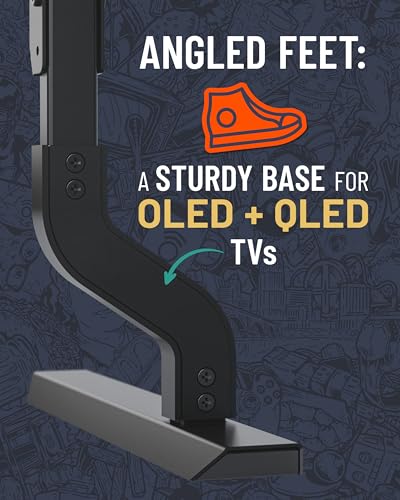

The ECHOGEAR stand gets especially strong praise for giving large TVs heavy-duty, secure support without needing a wall mount.
The adjustable fit helps solve common setup problems, including replacing overly wide factory feet and raising the TV enough for a soundbar.
Assembly is usually straightforward because the instructions are clear, practical, and unusually easy to follow.
The ECHOGEAR stand gets especially strong praise for giving large TVs heavy-duty, secure support without needing a wall mount.
The adjustable fit helps solve common setup problems, including replacing overly wide factory feet and raising the TV enough for a soundbar.
Assembly is usually straightforward because the instructions are clear, practical, and unusually easy to follow.
The ECHOGEAR stand gets especially strong praise for giving large TVs heavy-duty, secure support without needing a wall mount.
The adjustable fit helps solve common setup problems, including replacing overly wide factory feet and raising the TV enough for a soundbar.
Assembly is usually straightforward because the instructions are clear, practical, and unusually easy to follow.
The TCL T7 TV’s biggest strength is its bright, sharp, colorful picture with smooth motion for movies, sports, and gaming.
The overall quality feels like a strong deal for the money, especially for buyers who want 4K resolution and gaming features without paying premium-TV prices.
Setup is generally easy and guided, with Google Home making account entry and passwords simpler for some buyers.
The TCL T7 TV’s biggest strength is its bright, sharp, colorful picture with smooth motion for movies, sports, and gaming.
The overall quality feels like a strong deal for the money, especially for buyers who want 4K resolution and gaming features without paying premium-TV prices.
Setup is generally easy and guided, with Google Home making account entry and passwords simpler for some buyers.


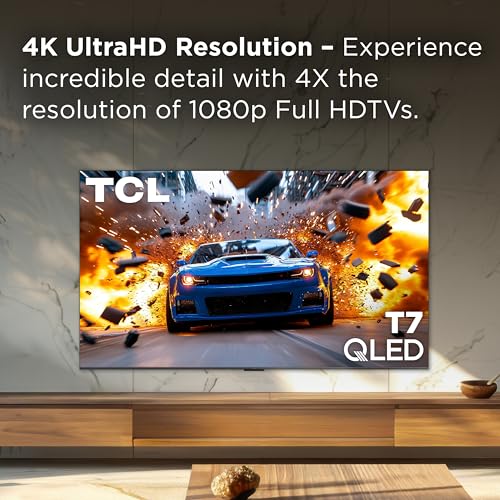

The TCL T7 TV’s biggest strength is its bright, sharp, colorful picture with smooth motion for movies, sports, and gaming.
The overall quality feels like a strong deal for the money, especially for buyers who want 4K resolution and gaming features without paying premium-TV prices.
Setup is generally easy and guided, with Google Home making account entry and passwords simpler for some buyers.
The Hisense U6 Pro’s picture is the standout draw, with buyers praising Mini-LED brightness, deep blacks, sharp 4K detail, and strong contrast for movies, sports, and gaming.
It is widely seen as a strong value buy, delivering a premium-feeling big-screen experience and feature set for much less than many higher-end TVs.
Setup and everyday navigation feel quick and low-friction, from unboxing and installation to moving through apps and streaming services.
The Hisense U6 Pro’s picture is the standout draw, with buyers praising Mini-LED brightness, deep blacks, sharp 4K detail, and strong contrast for movies, sports, and gaming.
It is widely seen as a strong value buy, delivering a premium-feeling big-screen experience and feature set for much less than many higher-end TVs.
Setup and everyday navigation feel quick and low-friction, from unboxing and installation to moving through apps and streaming services.


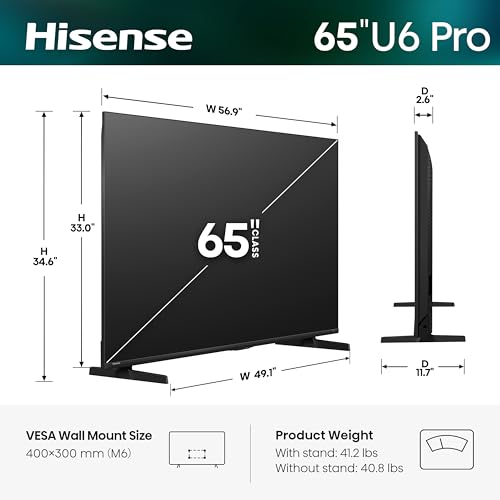


The Hisense U6 Pro’s picture is the standout draw, with buyers praising Mini-LED brightness, deep blacks, sharp 4K detail, and strong contrast for movies, sports, and gaming.
It is widely seen as a strong value buy, delivering a premium-feeling big-screen experience and feature set for much less than many higher-end TVs.
Setup and everyday navigation feel quick and low-friction, from unboxing and installation to moving through apps and streaming services.
Color performance is a clear strength, with buyers calling out bright, adjustable, dynamic color and strong clarity across the screen.
Connectivity and day-to-day performance satisfy many buyers with useful ports and smooth app behavior, but broader feedback is more mixed on reliability and connection convenience.
Setup is generally straightforward right out of the box, and many feel the TV delivers strong value for the price.
Color performance is a clear strength, with buyers calling out bright, adjustable, dynamic color and strong clarity across the screen.
Connectivity and day-to-day performance satisfy many buyers with useful ports and smooth app behavior, but broader feedback is more mixed on reliability and connection convenience.
Setup is generally straightforward right out of the box, and many feel the TV delivers strong value for the price.

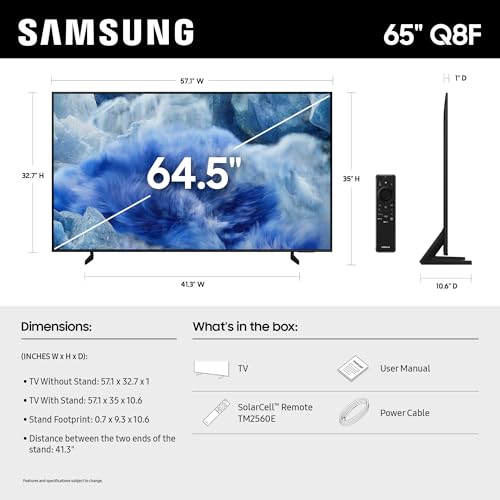

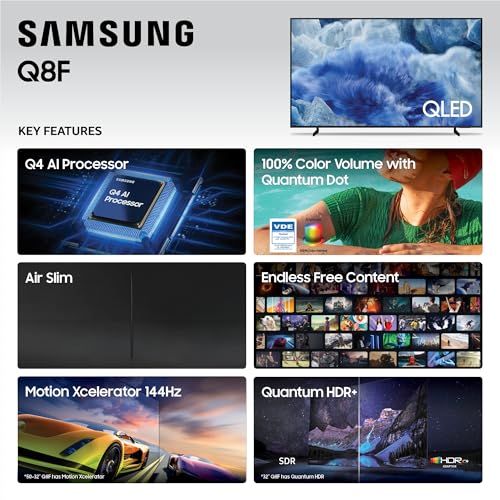

Color performance is a clear strength, with buyers calling out bright, adjustable, dynamic color and strong clarity across the screen.
Connectivity and day-to-day performance satisfy many buyers with useful ports and smooth app behavior, but broader feedback is more mixed on reliability and connection convenience.
Setup is generally straightforward right out of the box, and many feel the TV delivers strong value for the price.


The LG TV’s picture is the main reason happy buyers like it, but reactions are split because some call the display amazing while others find the image too dark, too warm, or merely OK.
Built-in sound is not a clear strength, and at least some buyers expect to add a soundbar even when they otherwise like the TV.
Setup and smart-TV operation can be uneven, with some owners settling in easily after account and app setup while others find the process slow, inconsistent, or frustrating.
The LG TV’s picture is the main reason happy buyers like it, but reactions are split because some call the display amazing while others find the image too dark, too warm, or merely OK.
Built-in sound is not a clear strength, and at least some buyers expect to add a soundbar even when they otherwise like the TV.
Setup and smart-TV operation can be uneven, with some owners settling in easily after account and app setup while others find the process slow, inconsistent, or frustrating.


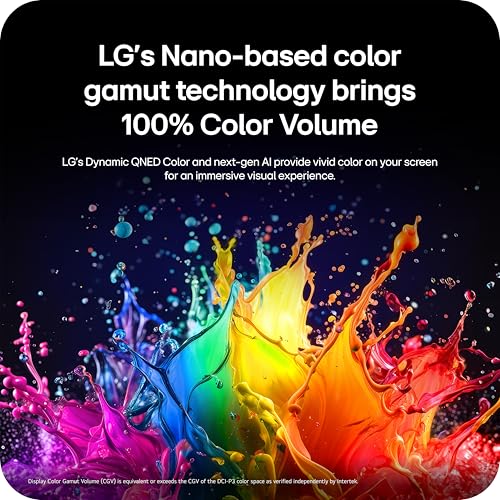


The LG TV’s picture is the main reason happy buyers like it, but reactions are split because some call the display amazing while others find the image too dark, too warm, or merely OK.
Built-in sound is not a clear strength, and at least some buyers expect to add a soundbar even when they otherwise like the TV.
Setup and smart-TV operation can be uneven, with some owners settling in easily after account and app setup while others find the process slow, inconsistent, or frustrating.
The LG OLED C4 delivers the standout OLED picture buyers expect, with crisp clarity, deep blacks, bright HDR highlights, and smooth 4K motion.
Reliability and the smart-TV control experience are the main mixed areas, since most units perform beautifully but some buyers run into frustrating app or technical issues.
Built-in audio is a pleasant surprise for many buyers, with sound that is good enough for casual viewing without immediately needing a soundbar.
The LG OLED C4 delivers the standout OLED picture buyers expect, with crisp clarity, deep blacks, bright HDR highlights, and smooth 4K motion.
Reliability and the smart-TV control experience are the main mixed areas, since most units perform beautifully but some buyers run into frustrating app or technical issues.
Built-in audio is a pleasant surprise for many buyers, with sound that is good enough for casual viewing without immediately needing a soundbar.


The LG OLED C4 delivers the standout OLED picture buyers expect, with crisp clarity, deep blacks, bright HDR highlights, and smooth 4K motion.
Reliability and the smart-TV control experience are the main mixed areas, since most units perform beautifully but some buyers run into frustrating app or technical issues.
Built-in audio is a pleasant surprise for many buyers, with sound that is good enough for casual viewing without immediately needing a soundbar.


The LG TV’s picture comes across as very clear, which is the strongest concrete praise in the reviews.
Overall quality is received positively, with buyers giving simple but favorable feedback after using the item.
The bundle is viewed as a good value overall, supported by generally favorable ratings and no clear complaints in the sampled reviews.
The LG TV’s picture comes across as very clear, which is the strongest concrete praise in the reviews.
Overall quality is received positively, with buyers giving simple but favorable feedback after using the item.
The bundle is viewed as a good value overall, supported by generally favorable ratings and no clear complaints in the sampled reviews.
The LG TV’s picture comes across as very clear, which is the strongest concrete praise in the reviews.
Overall quality is received positively, with buyers giving simple but favorable feedback after using the item.
The bundle is viewed as a good value overall, supported by generally favorable ratings and no clear complaints in the sampled reviews.
The LG TV’s 4K picture is a standout, with buyers praising its brightness, contrast, depth, and crisp detail for streaming, sports, and everyday viewing.
Overall quality comes across as strong, with a nice-looking build and performance that fits well into home setups, including custom media-wall installations.
The main watch-outs are the smart-TV controls and connectivity, with complaints about an unresponsive remote, slow navigation, and Wi-Fi or Bluetooth connections that do not always hold.
The LG TV’s 4K picture is a standout, with buyers praising its brightness, contrast, depth, and crisp detail for streaming, sports, and everyday viewing.
Overall quality comes across as strong, with a nice-looking build and performance that fits well into home setups, including custom media-wall installations.
The main watch-outs are the smart-TV controls and connectivity, with complaints about an unresponsive remote, slow navigation, and Wi-Fi or Bluetooth connections that do not always hold.




The LG TV’s 4K picture is a standout, with buyers praising its brightness, contrast, depth, and crisp detail for streaming, sports, and everyday viewing.
Overall quality comes across as strong, with a nice-looking build and performance that fits well into home setups, including custom media-wall installations.
The main watch-outs are the smart-TV controls and connectivity, with complaints about an unresponsive remote, slow navigation, and Wi-Fi or Bluetooth connections that do not always hold.
We also considered 7 others:


Our Top Choice
The LG OLED C5 TV is overwhelmingly praised for its sharp, realistic picture, rich colors, and impressive 4K performance even with lower-quality video.
Setup and everyday use are described as easy, fast, and user-friendly, making the TV feel like a smooth upgrade from older models.
The remote gets split reactions because some like its pointer-style controls and scroll wheel, while others need time to learn LG’s smaller buttons and symbols.
The LG OLED C5 TV is overwhelmingly praised for its sharp, realistic picture, rich colors, and impressive 4K performance even with lower-quality video.
Setup and everyday use are described as easy, fast, and user-friendly, making the TV feel like a smooth upgrade from older models.
The remote gets split reactions because some like its pointer-style controls and scroll wheel, while others need time to learn LG’s smaller buttons and symbols.
The LG OLED C5 TV is overwhelmingly praised for its sharp, realistic picture, rich colors, and impressive 4K performance even with lower-quality video.
Setup and everyday use are described as easy, fast, and user-friendly, making the TV feel like a smooth upgrade from older models.
The remote gets split reactions because some like its pointer-style controls and scroll wheel, while others need time to learn LG’s smaller buttons and symbols.
Compare Features


The order above is not editorial opinion, and it is not paid placement. It comes from what shoppers across our network actually do - which lg 65-inch tvs they compare, and which they ultimately buy. We re-rank as new data comes in, so the long-term favorites have to keep earning their spot against new entrants. The full method, including how we make money.
LG 65-Inch TVs Buyer's Guide
A 65-inch TV lives in the high-stakes middle ground: large enough to reveal weak upscaling, reflections, audio limits, and mounting mistakes, but still common enough that shoppers may underestimate the setup details. The sharpest concerns are matching the panel to your room brightness and use case, and making sure the stand, wall mount, HDMI/eARC chain, and controls will work smoothly in a main living space.
Quality
You want a smart TV that feels well built, runs consistently, and keeps delivering stable performance after the novelty wears off. Look for signs of solid construction, dependable software behavior, sturdy ports and stand hardware, and owner feedback about long-term reliability; watch out for reports of freezing, random restarts, loose panels, weak stands, or performance that degrades with regular use.
For a 65-inch TV, prioritize panel integrity, processing, and physical support: check for uniformity issues, dead pixels, bent/thin-panel damage on delivery, enough HDMI 2.1 inputs for your sources, and whether the included or planned stand is rated for the TV’s weight and width. If buying refurbished or open-box, verify return terms, panel hours if available, and that all ports and smart features work immediately. Owner feedback supports this focus: buyers repeatedly praise sharp 4K performance, realistic color, premium gaming responsiveness, sleek thin construction, and easy day-to-day use, while refurbished units and heavy-duty stands are often described as arriving solid, secure, and reassuringly high quality.
Controls
You’ll interact with a smart TV every time you turn it on, switch apps, adjust picture settings, or search for something to watch, so the controls can make a big difference in daily satisfaction. Look for a remote that feels intuitive, menus that are easy to navigate, and a system that responds quickly without lag; watch out for cluttered settings, buried options, or controls that make simple tasks feel slow.
For this category, make sure the control style fits everyone who will use the TV: pointer-style remotes, small symbol-heavy buttons, voice/search shortcuts, input switching, and app navigation can be a bigger daily friction point than picture quality. Also check whether the TV reliably remembers HDMI devices, game mode, eARC audio settings, and app logins, because a 65-inch main-room TV is usually shared by streamers, gamers, and cable/satellite users. Owner sentiment is mixed here: some like the pointer and scroll-wheel approach, but others need time to learn the smaller buttons and symbols, and a minority report frustrating smart-TV or technical-control issues.
Picture
Picture quality determines how clear, natural, and immersive everything looks, from dark movie scenes to bright sports broadcasts. You should look for a TV with accurate color, strong contrast, enough brightness for your room, and good motion handling, while watching out for sets that look vivid in a showroom but make skin tones, shadows, or fast action appear unnatural.
Choose the picture type around your room: OLED-style 65-inch screens are excellent for dark-room movies, HDR contrast, and gaming, but bright rooms need careful attention to peak brightness, reflection handling, and whether sunlight will hit the panel directly. For sports and gaming, confirm 4K/120 support, low-latency game mode, motion handling, and enough full-bandwidth HDMI inputs; for streaming, look for strong upscaling because a 65-inch screen exposes compression flaws. Owners strongly reinforce the picture advantage, praising crisp clarity, deep blacks, vivid color, bright HDR highlights, smooth 4K motion, and impressive results even with lower-quality video.
Setup
Setup matters because a smart TV can be large, fragile, and awkward to position, especially if you plan to wall-mount it or connect multiple devices. Look for clear instructions, stable stand assembly, accessible ports, straightforward Wi-Fi and account sign-in, and a guided on-screen setup that helps you tune channels and configure picture, sound, and apps without guesswork. Watch out for TVs that require extra tools, uncommon mounting hardware, or two-person lifting beyond what your space and setup plan can handle.
Before buying, measure the actual furniture, wall, and viewing distance: a 65-inch TV needs a wide, stable surface or a compatible wall mount, enough clearance for cables, and help during lifting because thin panels can flex or crack if handled wrong. Check VESA pattern, stand footprint, outlet location, Wi-Fi strength, receiver/eARC compatibility, and whether your cabinet leaves room for a soundbar without blocking the screen or remote sensor. Owner feedback is encouraging: setup is often described as fast, straightforward, and user-friendly, with clear instructions, smooth receiver or ARC connections, and only some extra time needed to fine-tune the many picture and app settings.
Sound
Sound quality affects how clear dialogue, music, and effects feel, especially when you’re watching movies, sports, or shows without extra speakers. Look for a TV that can get loud enough for your room without sounding harsh, thin, or distorted, and pay attention to whether voices remain easy to understand. If the built-in speakers seem weak or lack bass, plan on pairing the TV with a soundbar or external audio system.
Do not assume a 65-inch premium picture comes with theater-grade audio: decide upfront whether you need a soundbar or receiver, and confirm eARC/ARC support, HDMI placement, audio-format passthrough needs, Bluetooth/headphone use, and whether the stand height leaves room for external speakers. Built-in speakers may be fine for news and casual streaming, but large rooms, dialogue clarity, bass, and gaming surround setups usually benefit from external audio. Owners are generally pleasantly surprised by clear built-in sound and positive eARC/home-theater support, though sentiment is less consistent than picture quality and includes occasional syncing, speaker, or broader reliability complaints.
Value
You want a smart TV that delivers strong picture quality, smooth performance, and useful streaming features without making you pay for extras you won’t use. Look for a balanced mix of display quality, app support, connectivity, and reliability at your budget level, and watch out for models that seem inexpensive but cut corners on brightness, processing speed, or long-term software support.
Judge value by the full 65-inch system cost, not just the screen: include mount or stand, delivery, installation help, soundbar/receiver needs, cable upgrades for HDMI 2.1, protection plan, and the risk tolerance of refurbished units. The best value comes when the TV’s panel type, gaming features, brightness, and port selection match your actual room and devices; paying more for a higher tier is less worthwhile if you will not use the extra brightness, processing, or design features. Owners often feel the performance justifies the cost, especially when picture quality, gaming capability, premium-feeling construction, bundled accessories, free shipping, deals, or refurbished savings make the upgrade feel hard to beat.
1,000,000+ shoppers use Buyer's Guide every week to find the best products and services online.

Helping millions of users make smarter purchases online.


