

















We also considered 10 others:


Our Top Choice
Compare Features


The order above is not editorial opinion, and it is not paid placement. It comes from what shoppers across our network actually do - which flir cameras they compare, and which they ultimately buy. We re-rank as new data comes in, so the long-term favorites have to keep earning their spot against new entrants. The full method, including how we make money.
FLIR Cameras Buyer's Guide
A FLIR/thermal camera is only as useful as its ability to turn invisible heat patterns into defensible decisions, so the biggest tradeoff is between true thermal resolution/sensitivity and convenience features like phone attachment or simple point-and-shoot use. Shoppers should be especially careful about temperature range, emissivity controls, focus, fusion alignment, and device compatibility, because the wrong model can miss small insulation voids, misread shiny electrical parts, or become useless on the phone or job site where it is needed.
Function
A thermal camera’s usefulness depends on whether its features match the jobs you need it to handle, from spotting insulation gaps and moisture patterns to checking electrical panels, HVAC issues, or mechanical heat buildup. Look for practical diagnostics such as clear image blending, adjustable emissivity, temperature markers, and easy reporting or storage, and be wary of models that offer flashy extras while lacking the accuracy, resolution, or controls needed for dependable troubleshooting.
Look first at whether the camera fits the actual inspection work: building diagnostics need enough sensitivity to reveal drafts, wet insulation, radiant-floor lines, and thermal bridging; electrical, automotive, HVAC, boiler, and equipment checks need a temperature range high enough for hot components and a field of view that lets you inspect safely from a distance. Avoid treating any thermal camera as a “see-through-walls” tool—it finds surface temperature patterns, so function depends on the right conditions, surface materials, and interpretation. Owner feedback supports this practical-use focus: buyers report these cameras being useful for walls, pipes, insulation gaps, HVAC ducts, boilers, electronics, vehicle issues, oil-field checks, 3D-printer beds, and other heat-source troubleshooting, with many finding them capable enough for both home and work tasks.
Build
A thermal camera’s build quality matters because it affects whether you can trust it in real job-site, inspection, or outdoor conditions. Look for a solid housing, protected lens and ports, reliable controls, and clear durability ratings for drops, dust, and water; watch out for flimsy attachments, loose battery doors, or designs that feel more like fragile electronics than field tools.
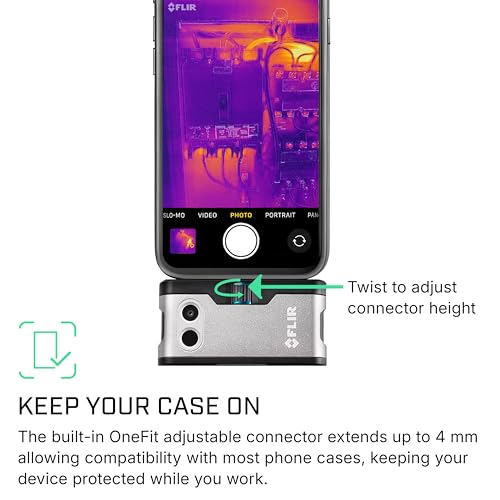
For build quality, prioritize the form factor that will survive the way you inspect: a handheld unit should have a protected lens, grippy housing, reliable battery door/ports, tripod or lanyard options if needed, and a case; a phone-connected unit should have a strong connector and not rely on a loose adapter that can snap off in a crawlspace, garage, or panel-room environment. If you will use it around dust, ladders, mechanical bays, or job sites, check drop resistance, storage protection, and whether the screen or connector is the weak point. Owner sentiment generally backs the better-built options, with buyers describing many units as solid, compact, sturdy, and job-site capable, and noting that included storage cases and clearer thermal output made them feel more dependable than cheaper no-name alternatives.
Ease
A thermal camera should let you start scanning quickly, adjust key settings without digging through confusing menus, and understand what the image is telling you with minimal trial and error. Look for clear controls, intuitive temperature palettes, easy image capture or transfer, and straightforward calibration or focus steps; watch out for cameras that hide basic functions behind awkward interfaces or require a steep learning curve before you can trust what you’re seeing.
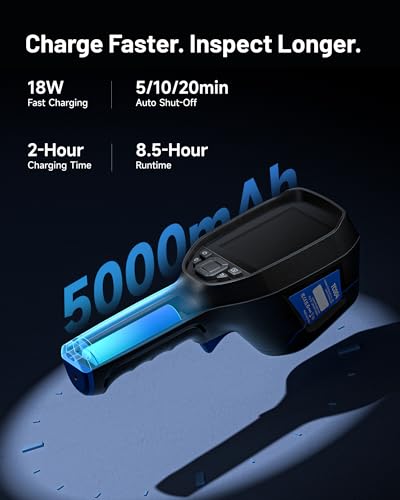
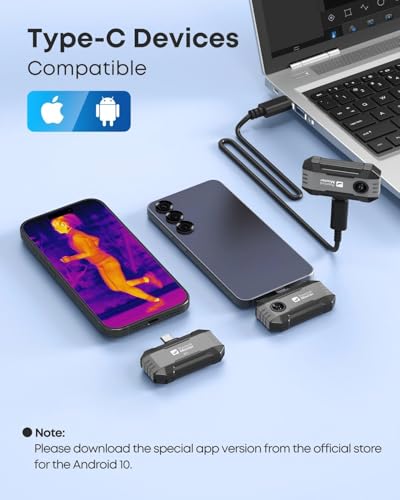
Ease of use matters most when the inspection window is short: choose a camera with fast startup, clear palettes, easy spot/area temperature tools, emissivity adjustment that is not buried, and simple image/video capture for documenting a suspect breaker, duct leak, or insulation void. For phone-based cameras, verify exact operating-system and connector compatibility before buying, including whether the app works on your phone model and whether the connector orientation fits with your case removed. Owner reports reinforce this: many buyers say setup and operation are approachable for non-specialists, with intuitive controls, plug-and-play behavior on compatible phones, smooth scanning, long battery life on some dedicated units, and recording/review features that make field documentation easier.
Image
Clear thermal imagery helps you spot temperature differences accurately, especially when you’re inspecting small components, hidden leaks, electrical hot spots, or insulation gaps. Look for enough thermal resolution and image detail to make targets easy to distinguish, plus a display that stays readable in the lighting conditions where you’ll use it. Be cautious of cameras that produce blurry, overly blocky, or hard-to-interpret images, because they can make diagnosis slower and less reliable.
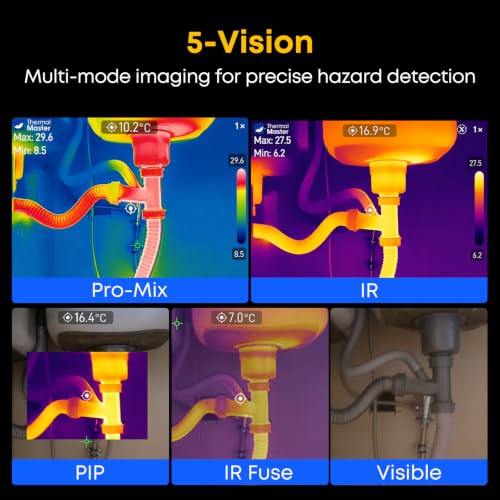
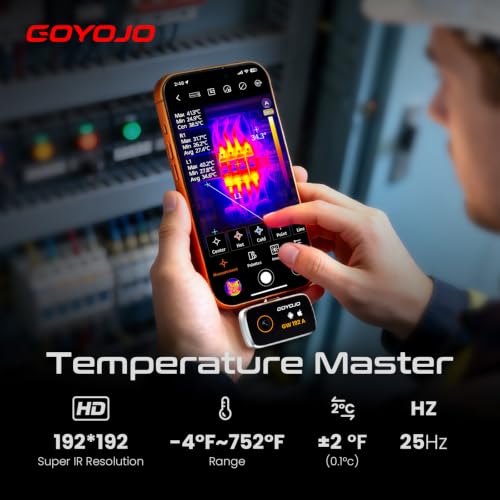
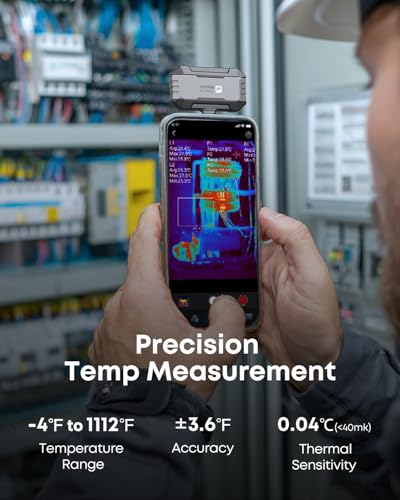
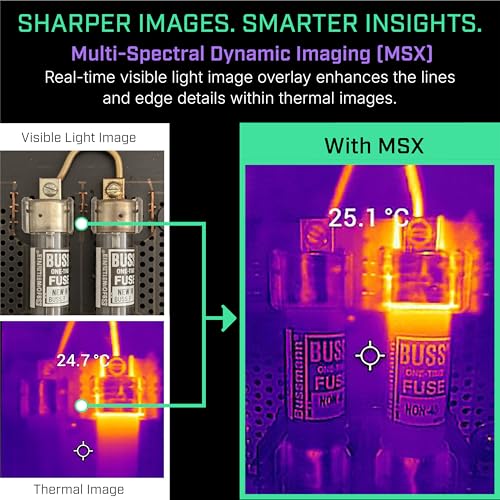
Do not judge image quality by display size alone; check true thermal sensor resolution, thermal sensitivity, focus type, refresh rate, field of view, and whether visual/thermal fusion is well aligned at the distances you will inspect. Small problems—overheating terminals, narrow radiant tubing, missing insulation between studs, or a tiny air leak—can disappear on low-resolution or fixed-focus imagers, even if the screen looks colorful. Owner feedback is strongest where images are sharp enough to separate subtle hot and cold areas: buyers praise clear thermal views for drafts, insulation gaps, hot components, mechanical issues, radiant lines in slabs, and fusion views that help identify the physical object behind the heat pattern, though some feedback suggests image quality can be usable without being consistently top-tier.
Accuracy
You need reliable accuracy so the hot or cold spots you see actually reflect real conditions, especially when you’re troubleshooting electrical systems, insulation gaps, HVAC issues, or machinery. Look for clear stated temperature accuracy, stable repeat readings, adjustable emissivity settings, and a suitable temperature range for your work; be cautious of cameras that produce impressive images but lack trustworthy measurement specs or consistent monitoring performance.
For accuracy, confirm the camera’s rated temperature accuracy, measurement range, emissivity settings, reflected-temperature compensation if offered, minimum focus distance, and whether it stores radiometric images rather than only screenshots. Be cautious on shiny metal, glass, wet surfaces, and angled electrical parts, because infrared reflections and incorrect emissivity can produce misleading readings; use thermal readings to locate anomalies, then confirm critical temperatures with proper contact or electrical test methods when safety or compliance is involved. Owner sentiment supports these cameras as practical diagnostic tools rather than lab instruments: buyers often find readings precise and responsive enough to track hot/cold changes, identify overheating connections, locate leaks or insulation gaps, and follow heat-up or cool-down behavior in equipment, vehicles, home systems, and hidden radiant lines.
Value
Value matters because thermal cameras can vary widely in what they deliver for the money, from basic heat-spotting to sharper imaging and more useful analysis features. Look for a camera that matches your actual use case rather than paying for specs you will not use, and watch out for low-cost options that save money upfront but compromise too much on image clarity, accuracy, durability, or software support.
Value in this niche comes from buying enough thermal capability for the smallest defect or safest standoff distance you need—not from the lowest-cost color heat map. Pay for resolution, sensitivity, usable temperature range, focus, documentation features, ruggedness, and app/device support before extras that do not improve diagnosis; also avoid overbuying if you only need occasional home insulation or HVAC checks. Owner feedback aligns with that capability-first view: buyers frequently describe these cameras as strong values when they deliver clear thermal images, real-time display, compact construction, practical accessories, and performance that handles real troubleshooting without requiring far more expensive professional gear.
1,000,000+ shoppers use Buyer's Guide every week to find the best products and services online.

Helping millions of users make smarter purchases online.


