





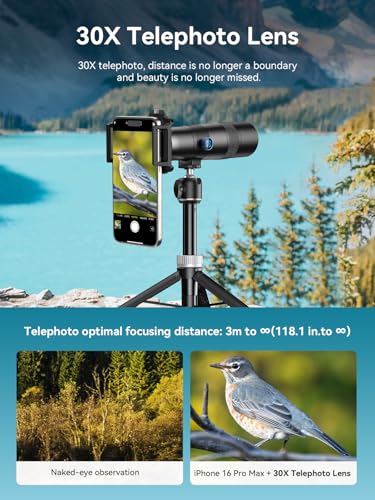


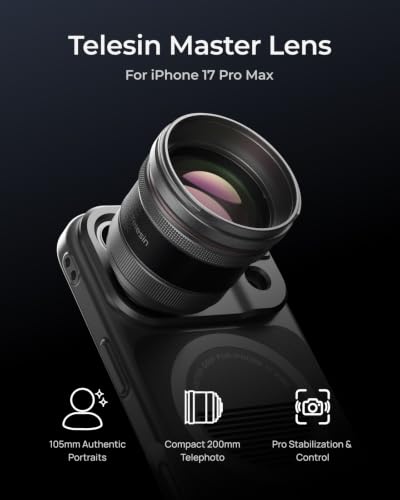


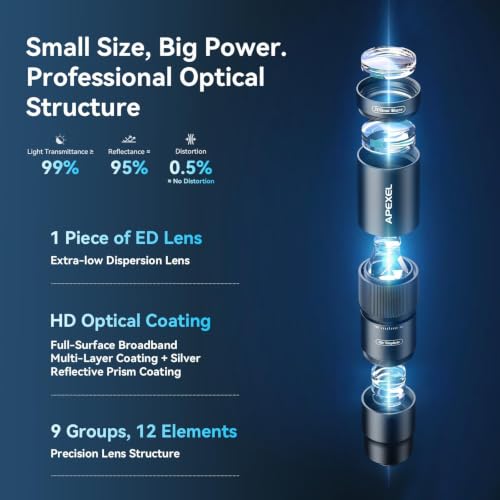


We also considered 10 others:


Our Top Choice
The order above is not editorial opinion, and it is not paid placement. It comes from what shoppers across our network actually do - which zoom lens for iphones they compare, and which they ultimately buy. We re-rank as new data comes in, so the long-term favorites have to keep earning their spot against new entrants. The full method, including how we make money.
Zoom Lens for iPhones Buyer's Guide
A zoom lens for iPhones has to trade pocketable convenience against optical reach, alignment precision, and shake control. The sharpest buying risks are inflated magnification claims that produce a dim, shaky image, and clips that do not line up cleanly with the active camera on a multi-lens iPhone.
Subject Match
Phone zoom lenses are not interchangeable in purpose: distant birds, stages, landscapes, and tiny close-up subjects need different optics. A careful pick starts with the subject and shooting distance, because the wrong lens type can be frustrating even if it is well made.
Choose a true telephoto or monocular-style lens for birds, wildlife, scenic overlooks, sports, and stage views; choose a macro lens only if your main goal is flowers, textures, insects, jewelry, or other small nearby subjects. Check both maximum magnification and minimum focus distance, because a lens that reaches far may not focus close, while a macro lens will not replace a long-distance zoom. Owner feedback supports this split: buyers most appreciated powerful zoom for distant landscapes, birds, stages, and small details, while macro-focused lenses were praised for detailed close-ups of small subjects.
Image Clarity
The number printed as magnification matters less than whether the image remains bright, sharp, and usable at that reach. Small add-on optics can lose contrast, vignette at the corners, or soften heavily if the glass, coatings, and alignment are weak.
Look for coated glass optics, a clean circular image without heavy edge darkening, and sample photos taken through an iPhone rather than only through the lens by eye. Be wary of very high zoom claims if the field of view becomes narrow, dim, or hard to focus; good daylight performance is usually the safest expectation, while indoor concerts and dusk wildlife are harder because the lens admits less light and the phone raises noise. Owners consistently report the best results in good lighting, with sharp outdoor shots and enough detail to pick out distant leaves, birds, and other small subjects.
iPhone Fit
Modern iPhones often have multiple rear cameras, raised camera islands, and software that may switch lenses automatically. A zoom attachment only works well when it is centered over the intended active lens and held there without sliding.
Confirm the clip or mount fits your exact iPhone camera layout, clears the camera bump, and can clamp securely with your case on or off. Prefer mounts with alignment markings, soft non-slip pads, enough jaw depth for thicker cases, and a way to keep the phone from auto-switching away from the lens you aligned; if needed, use a camera app that locks the active lens. Owner sentiment says clip-on setups are generally convenient and quick, but the key caveat is that setup becomes straightforward only once the clip is lined up correctly over the phone camera.
Focus Control
Every increase in magnification also magnifies hand shake and makes moving subjects harder to track. Smooth focus and stable handling are essential because the iPhone’s autofocus cannot correct for a poorly focused external optic.
For high-zoom use, look for a smooth focus ring, enough focus travel for fine adjustment, a tripod socket or phone clamp compatibility, and a comfortable barrel or grip that lets you brace the setup with two hands. A remote shutter or timer helps because tapping the screen can shake the image, and fast-moving birds or sports are easier when the focus mechanism is not stiff or jumpy. Owners praised smooth adjustments and simple operation, especially because they helped beginners lock onto distant or moving objects more quickly.
Carryability
A phone zoom lens is most useful when it is easy enough to carry before you know you need it. If it is bulky, slow to assemble, or awkward to protect, it is likely to stay at home instead of being used on hikes, walks, travel, and events.
Pick a lens kit that fits your actual carry style: pocketable for walks, a small pouch for hikes, or a more stable monocular-style setup if reach matters more than compactness. For outdoor use, look for lens caps, a protective case, and quick attachment so you are not exposing glass to dust, rain, or fingerprints while a bird or stage moment passes. Owner feedback strongly favors compact, lightweight designs that fit into pockets or backpacks and are easy to bring on hikes, walks, travel, concerts, sporting events, backyard birding, scenic overlooks, and quick wildlife viewing.
Mount Durability
The lens glass can be good, but the experience fails if the clip, threads, or mount flexes and loses alignment. Durability is especially important for a phone accessory that gets attached, removed, pocketed, and adjusted repeatedly.
Inspect the mount as closely as the lens: prefer rigid clamps, metal threads where possible, smooth but tight hinges, padded contact points, and a design that does not press dangerously on the iPhone screen or camera glass. Avoid flimsy plastic mounts that twist under the weight of a long lens, because even small flex can cause blur, vignetting, or the lens slipping off during outdoor use. Owner sentiment is split here: some buyers find these accessories well made and a strong value, while others report that plastic mounts can feel flimsy or fragile over time.
1,000,000+ shoppers use Buyer's Guide every week to find the best products and services online.

Helping millions of users make smarter purchases online.


