


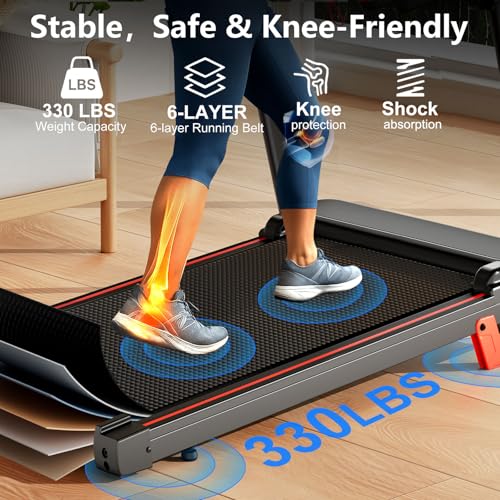
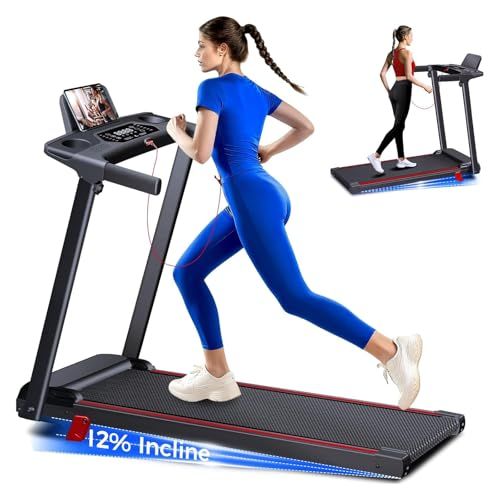
- Speed: 0.6 - 6.2 mph
- Incline: 0 - 8 %
- Presets: 12 workouts
- Belt: 15" wide x 28" long
- Weight Limit: 330 lbs





ZPUFDYM Treadmill with Incline
Overall Performance, Comfort, and Everyday Use

The ZPUFDYM Treadmill with Incline is designed for people who want a practical way to walk, jog, or run at home while still having the option to add incline-based intensity. In daily use, the biggest appeal is convenience: you can fit in structured workouts without commuting, waiting for equipment, or being limited by weather. If you’re building consistency, a treadmill that is easy to start, comfortable to use, and simple to adjust tends to get used more often, and that is ultimately what drives results.
On the belt, the experience typically comes down to three things: how stable the deck feels underfoot, how smoothly speed changes occur, and whether the incline adds challenge without feeling awkward. A good incline feature should provide noticeable effort increases for brisk walking and moderate jogging, especially for users targeting cardio improvement or calorie burn without dramatically increasing speed. If the incline range is moderate rather than extreme, it can still be valuable because even small elevation changes shift more work to the posterior chain and raise heart rate quickly.
Noise and vibration matter more than many shoppers expect. In apartments or shared homes, a treadmill that transmits less vibration through the floor is a significant quality-of-life improvement. The ZPUFDYM Treadmill with Incline is best evaluated in the context of where it will live: a bedroom, a living room, or a garage. If you plan early-morning sessions, you’ll want to pay attention to how the motor sounds at walking pace as well as at steady jogging pace, because some machines are quiet when walking but grow noticeably louder at higher speeds.
Comfort also includes the running surface. A belt that feels too short or too narrow can make you unconsciously shorten your stride, especially during runs. Walkers may not notice this as much, but runners often will. If you’re primarily power walking on an incline, surface length is still important for tall users or for those who like longer strides. For joint comfort, many buyers look for some level of shock absorption, not because it replaces good shoes and good form, but because it can make frequent sessions feel more sustainable over time.
Finally, the overall usability of the console and controls affects how fluid your workouts are. You want speed and incline adjustments that can be made quickly without breaking rhythm. Even if you prefer manual workouts, basic metrics such as time, distance, speed, and estimated calories are helpful for tracking progress. If your plan includes interval training, the ability to change settings rapidly and reliably becomes even more important than fancy training programs.
What to Consider Before Buying (and What Matters Most)
Before purchasing the ZPUFDYM Treadmill with Incline, it’s worth clarifying how you expect to use it over the next year rather than how you hope to use it in a single burst of motivation. The most important factors are fit for your body and goals, suitability for your space, and long-term reliability. Features are nice, but if the fundamentals don’t match your needs, even a well-priced treadmill can become an underused piece of furniture.
Space and storage are often the first real constraint. Measure the area where you intend to place the treadmill, and consider not only the footprint but also clearance behind and beside it for safe use. If you live in a smaller home, storage design becomes crucial. A treadmill that folds or stores more easily can be the difference between daily workouts and a constant hassle. Just as important is the path the treadmill takes to reach that room. Door widths, tight turns in hallways, and stairs can complicate delivery and setup.
Next, consider your primary workout style. If you’re mostly walking, incline becomes a central value feature because it can raise intensity without requiring fast speeds. If you plan to jog or run, top speed, belt size, and stability become the priority, since runners place higher demands on the frame, the motor, and the deck. In that case, you should also think about your current and future fitness level. Buying for today is sensible, but buying something that cannot keep up with moderate progression can lead to an early upgrade.
Weight capacity is another key consideration and should be treated as a durability signal rather than just a limit. A treadmill that comfortably supports the user’s weight with some margin tends to feel more stable and may experience less strain over time. If multiple people in a household will use the machine, choose with the heaviest user in mind and consider the most intense intended use as well. Household sharing is also where ease of adjustment matters, such as quickly changing incline and speed and having straightforward controls.
Incline implementation deserves special attention because it affects both workout quality and maintenance expectations. Some treadmills offer automatic incline changes controlled by the console, while others rely on manual adjustments. Automatic incline is more convenient for intervals and hill workouts, while manual incline can be simpler and may suit users who set an incline once and keep it there. The “most important” part here is aligning the incline type with your routine. If you want structured hill repeats, automatic incline can be a deciding factor; if you want steady incline walks while watching a show, manual may be perfectly fine.
Noise, floor protection, and power requirements are practical details that many shoppers only confront after purchase. If you’re in an upstairs room, consider a treadmill mat to reduce vibration and protect flooring. Also check whether the treadmill requires a standard outlet and whether the circuit in that room is shared with other high-draw appliances. These details are not exciting, but they prevent the common frustrations of tripped breakers, scuffed floors, and complaints from neighbors or family members.
Finally, think about serviceability and parts availability. A treadmill is a machine with moving components, and regular maintenance like belt lubrication and tension checks is normal. What matters most is that you can reasonably maintain it and get help if something goes wrong. Clear warranty terms, responsive support, and accessible replacement parts can be as valuable as an extra program mode on the display.
Common Questions
Is incline really useful if I’m not a runner? Yes. Incline walking is one of the most efficient ways to raise heart rate while keeping impact relatively manageable. It can improve cardiovascular fitness and leg strength without requiring fast speeds, which many users find more comfortable than jogging.
How do I know if the belt size will work for me? Consider your height and stride, plus whether you’ll walk, jog, or run. Walkers can often use shorter decks comfortably, but runners typically need more length to avoid feeling cramped. If you are tall or like a longer stride, prioritize a roomier running surface.
Will it be too loud for an apartment? It depends on your pace, the flooring, and the building. Walking is usually much quieter than running. Using a quality treadmill mat, placing it on a more stable surface, and keeping the belt properly maintained can reduce noise and vibration significantly.
What maintenance should I expect? Most treadmills require periodic belt lubrication (if the model calls for it), cleaning around the motor area to reduce dust buildup, and occasional belt alignment or tension adjustment. Keeping up with basic maintenance often improves performance and extends lifespan.
Is this a good choice for multiple family members? It can be, as long as the treadmill’s weight capacity and performance match the heaviest user and the most intense planned workouts. Shared use also makes intuitive controls and quick adjustments more important, since people will want to switch settings without fuss.
Overall, the ZPUFDYM Treadmill with Incline is best viewed as a home fitness tool that can make consistent training easier, especially for walkers and joggers who want the added challenge of incline. The smartest purchase decision comes from matching belt space, incline style, stability, and noise level to your home environment and workout goals, then confirming that maintenance and support expectations feel realistic. If those fundamentals line up for you, this treadmill can be a practical, motivating way to stay active year-round.